Private Label, White Label, Wholesale partnerships available - EU, USA and UK - Free shipping from €75

How to ensure lab purity for peptide research success
Master essential techniques to maintain lab purity in peptide research. Learn preparation, execution, and verification protocols that protect experimental integrity and ensure reproducible results.
Contamination threatens every peptide research project, turning months of careful work into unusable data. A single breach in lab purity can compromise experimental integrity, waste valuable reagents, and delay critical discoveries. This guide provides a comprehensive stepwise approach to maintaining uncontaminated conditions in your peptide research environment, from initial preparation through verification protocols that ensure reproducible results and protect your investment in time and materials.
Table of Contents
- Key takeaways
- Preparation: essential tools and materials for lab purity
- Execution: step-by-step protocol to prevent contamination
- Verification and troubleshooting: confirming and maintaining lab purity
- Ensure lab purity with trusted supplies from Herbilabs
- How to ensure lab purity: frequently asked questions
Key Takeaways
| Point | Details |
|---|---|
| Sterile supplies foundational | Assemble certified sterile gloves, calibrated pipettes with disposable filter tips, autoclaved glassware or single use plasticware, and bacteriostatic water to create a clean starting point for experiments. |
| Laminar flow precautions | Position the laminar flow hood away from high traffic and HVAC vents, run it for fifteen minutes before use, and wipe the interior surface with seventy percent isopropanol before loading materials. |
| Storage discipline | Refrigerate opened bacteriostatic water at two to eight degrees Celsius and store lyophilized peptides frozen in desiccated containers to maintain stability. |
| Clean handling protocols | Wash hands, don sterile gloves without touching their exterior, inspect glove integrity, and disinfect container exteriors with seventy percent alcohol wipes to prevent contaminants from entering the clean workspace. |
Preparation: essential tools and materials for lab purity
Successful contamination prevention starts long before you handle your first peptide sample. Your lab environment and supply choices directly impact experimental outcomes.
Every peptide research setup requires specific sterile supplies. You need certified sterile gloves that fit properly without restricting movement, calibrated pipettes with disposable filter tips, and autoclaved glassware or single-use plasticware. Lab grade bacteriostatic water serves as your primary reconstitution medium because it contains benzyl alcohol preservative that inhibits bacterial growth during multi-dose use. Clean benchtops made from non-porous materials allow thorough disinfection between procedures.
Your choice of sterile water type affects both immediate purity and long-term sample stability. Different applications demand different specifications.
| Water Type | Preservative | Shelf Life After Opening | Best Use Case |
|---|---|---|---|
| Bacteriostatic Water | 0.9% Benzyl Alcohol | 28 days refrigerated | Multi-dose peptide reconstitution |
| Sterile Water for Injection | None | Single use only | Immediate single-dose applications |
| Nuclease-Free Water | None | Varies by manufacturer | Molecular biology protocols |
| HPLC-Grade Water | None | Until contamination risk | Analytical chemistry procedures |
Environmental control matters as much as supply quality. Laminar flow hoods create positive pressure that pushes room air away from your work surface, protecting samples from airborne particles. Position your hood away from high-traffic areas and HVAC vents that create turbulent airflow. Clean the interior work surface with 70% isopropanol before each session, allowing it to air dry completely before placing materials inside.
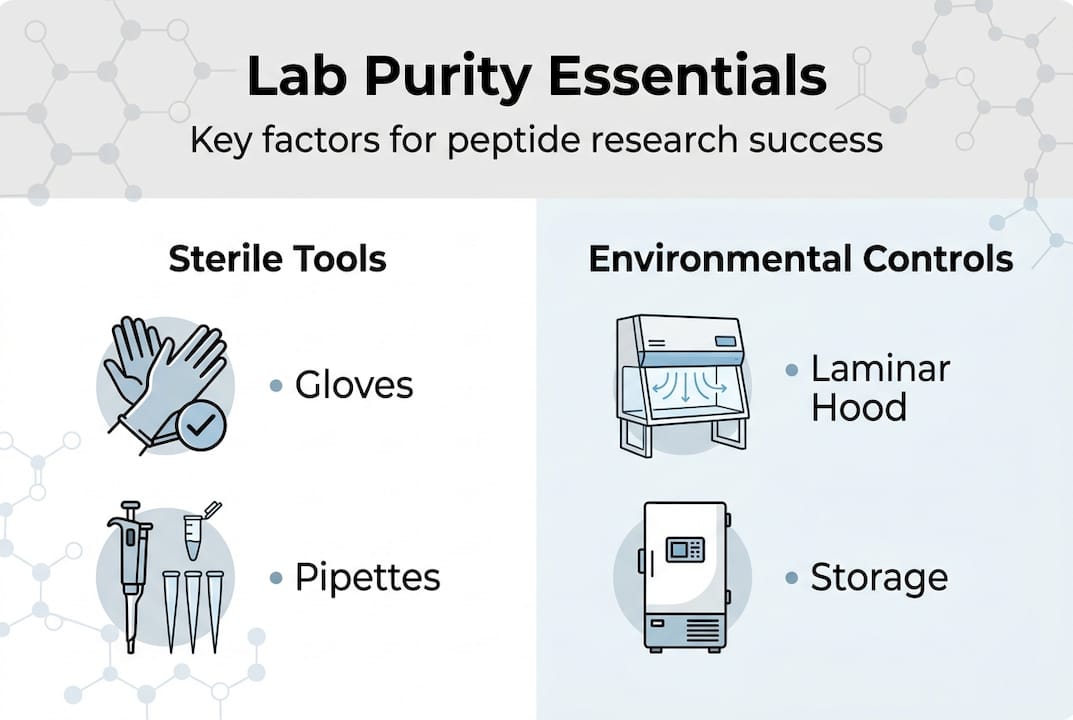
Pro Tip: Run your laminar flow hood for 15 minutes before starting work to establish stable airflow patterns and flush any settled particles from the workspace.
Benchtop organization prevents cross-contamination between clean and potentially contaminated items. Designate specific zones for unopened sterile supplies, active work area, and waste disposal. Never place used pipette tips or empty vials back in clean zones. Use color-coded containers to separate different categories of materials and make protocol deviations immediately obvious.
Temperature-controlled storage protects reagent integrity between uses. Refrigerate opened bacteriostatic water at 2-8°C and allow it to reach room temperature before use to prevent condensation inside vials. Store lyophilized peptides in freezers at -20°C or colder in desiccated conditions. Document storage dates on every container to track shelf life compliance.
With the right tools and environment ready, let’s walk through the actual steps to execute protocols ensuring lab purity.
Execution: step-by-step protocol to prevent contamination
Systematic execution transforms preparation into protected experiments. Following structured procedures reduces contamination risk at every transfer and manipulation point.
Sample handling begins before you touch any materials. Wash hands thoroughly with antimicrobial soap, then don sterile gloves without touching the exterior surfaces. Inspect glove integrity for tears or punctures that compromise the barrier. Disinfect the exterior of all containers entering your clean workspace using 70% alcohol wipes, paying special attention to vial caps and bottle necks where handling concentrates contaminants.
Proper bacteriostatic water use in protocols requires specific technique to maintain sterility throughout multi-dose applications. Follow this sequence for every reconstitution:
- Remove the flip-top cap from your bacteriostatic water vial and wipe the rubber stopper with a fresh alcohol pad, allowing it to air dry for 30 seconds.
- Draw air into your sterile syringe equal to the volume of water you plan to withdraw, then insert the needle through the center of the rubber stopper at a 90-degree angle.
- Inject the air into the vial headspace to equalize pressure, then invert the vial and withdraw your required volume without introducing air bubbles.
- Remove the needle from the bacteriostatic water vial and immediately insert it into your peptide vial using the same stopper preparation technique.
- Direct the water stream against the inside vial wall rather than directly onto the lyophilized peptide cake to prevent foaming and protein denaturation.
- Withdraw the needle and gently swirl the vial in circular motions until the peptide fully dissolves, avoiding vigorous shaking that can damage peptide structure.
- Label the reconstituted vial with contents, concentration, date, time, and your initials for complete traceability.
Timing affects contamination risk more than most researchers realize. Minimize the duration that sterile surfaces remain exposed to room air. Complete each transfer in under 30 seconds from opening to resealing. Never leave vial stoppers removed or needles uncapped while attending to other tasks. If you must pause mid-procedure, reseal everything and restart the sterile preparation sequence.
Pro Tip: Work during low-traffic periods when fewer people move through the lab, reducing airborne particle counts and interruption-related protocol breaks.
Personnel hygiene extends beyond handwashing. Avoid touching your face, hair, or phone while working with open samples. Tie back long hair and remove jewelry that can harbor bacteria. Change gloves immediately after touching non-sterile surfaces, even briefly. Use dedicated lab coats that never leave the research area to prevent bringing outdoor contaminants into your workspace.
Once the protocol is executed, it’s essential to verify purity and troubleshoot if problems arise, which we cover next.
Verification and troubleshooting: confirming and maintaining lab purity
Verification transforms assumptions into documented proof that your purity protocols work. Testing before use catches problems while solutions remain possible.
Purity verification starts with visual inspection under good lighting. Examine reconstituted peptide solutions for clarity, looking for any cloudiness, particulates, or color changes that indicate contamination or degradation. Clear solutions should remain transparent without visible suspended matter. Check vial integrity for cracks, chips, or compromised stoppers that allow environmental exposure.
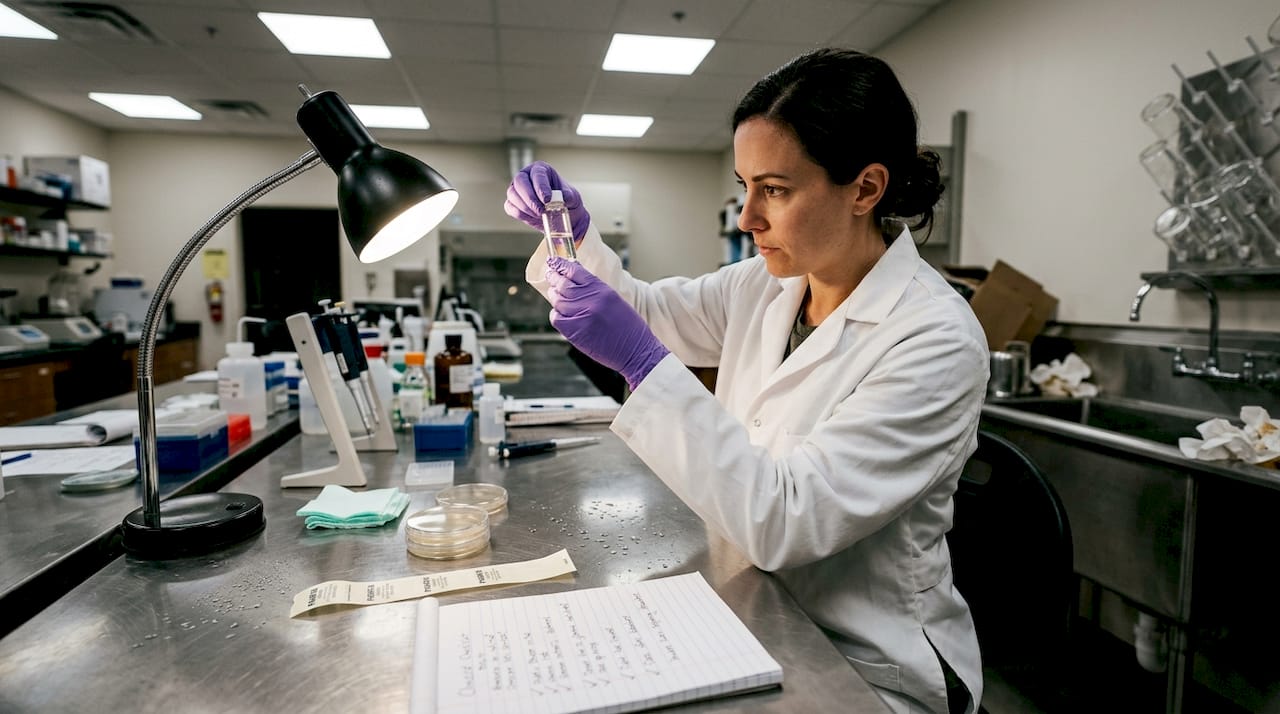
Microbiological testing provides definitive contamination assessment. Plate a small sample aliquot on nutrient agar and incubate at 37°C for 48 hours. Any bacterial growth indicates sterility breach requiring immediate sample disposal. For critical experiments, send samples for independent laboratory testing that includes endotoxin analysis and mycoplasma screening. These tests detect contaminants invisible to standard culture methods.
Common contamination issues follow predictable patterns with specific solutions. Recognizing symptoms quickly limits experimental damage.
| Contamination Sign | Likely Cause | Resolution Strategy |
|---|---|---|
| Cloudy solution after reconstitution | Bacterial growth or particulate matter | Discard sample, verify water sterility, check storage conditions |
| Unexpected pH shift | Chemical degradation or microbial metabolites | Test fresh reagents, verify storage temperature compliance |
| Visible particles or precipitate | Incomplete dissolution or contamination | Filter through 0.22 micron sterile filter, optimize reconstitution technique |
| Color change in stored samples | Oxidation or bacterial pigment production | Review storage conditions, reduce air headspace in vials |
| Inconsistent experimental results | Cross-contamination between samples | Implement stricter cleaning protocols, dedicate equipment to specific projects |
Quick troubleshooting saves experiments when early warning signs appear. Address these issues immediately:
- Repeat sterility testing if initial results seem questionable rather than proceeding with uncertainty
- Replace all opened reagents if contamination source remains unidentified after investigation
- Review and document any protocol deviations that occurred before contamination detection
- Increase environmental monitoring frequency until you identify and eliminate the contamination source
- Consult with experienced colleagues when facing unfamiliar contamination patterns
Proper storage practices prevent degradation between preparation and use. Store reconstituted peptides at 2-8°C for short-term use up to 30 days, or freeze at -20°C for longer preservation. Divide large volumes into single-use aliquots that eliminate repeated freeze-thaw cycles damaging to peptide structure. Use amber or opaque vials for light-sensitive compounds and wrap clear containers in aluminum foil.
Documentation creates accountability and enables troubleshooting. Maintain detailed logs recording reagent lot numbers, preparation dates, storage locations, and any observations about appearance or performance. When contamination occurs, these records help identify the introduction point and prevent recurrence. Digital photos of questionable samples provide visual references for comparing future preparations.
Understanding the differences between bacteriostatic and sterile water helps you select appropriate reagents for specific applications. Bacteriostatic water’s preservative prevents bacterial growth in multi-dose vials, while sterile water lacks preservatives for single-use applications where any additive might interfere with sensitive assays. Choose based on your experimental timeline and sample sensitivity requirements.
With verification methods clear, it’s time to see how our offerings can support your lab purity efforts.
Ensure lab purity with trusted supplies from Herbilabs
Maintaining lab purity demands reliable supplies manufactured to exacting standards. Herbilabs provides research-grade bacteriostatic water and sterile reagents produced in dedicated facilities with rigorous quality control at every production stage.
Our bacteriostatic water meets pharmaceutical-grade specifications for purity, sterility, and preservative concentration. Each batch undergoes independent testing to verify absence of contaminants that compromise peptide research. Explore our comprehensive FAQ section for detailed information about product specifications, storage requirements, and application guidelines.
Researchers across the UK and Europe trust Herbilabs for consistent quality that supports experimental reproducibility. Our complete bacteriostatic water guide explains proper handling techniques and answers common questions about integrating these products into your protocols. Visit our product shop to browse our full range of lab supplies designed specifically for the peptide research community.
Having learned expert best practices and where to find quality supplies, let’s answer common questions researchers ask about lab purity.
How to ensure lab purity: frequently asked questions
How often should equipment be sterilized?
Sterilize reusable equipment before each use to eliminate accumulated contaminants from previous sessions. Autoclaving at 121°C for 20 minutes provides effective sterilization for heat-stable glassware and metal instruments. Chemical sterilization using appropriate disinfectants works for heat-sensitive items, requiring full contact time as specified by manufacturer guidelines.
What is the difference between bacteriostatic and sterile water?
Bacteriostatic water contains 0.9% benzyl alcohol preservative that inhibits bacterial growth, making it suitable for multi-dose applications over 28 days when refrigerated. Sterile water lacks preservatives and must be used immediately after opening because it provides no protection against bacterial contamination once the seal breaks. Choose bacteriostatic water for peptide reconstitution requiring multiple withdrawals, and sterile water for single-use applications where preservatives might interfere with assays.
How can I tell if my lab samples are contaminated?
Contaminated samples often appear cloudy or contain visible particles when held against white backgrounds under bright light. Unusual odors, color changes, or pH shifts indicate possible microbial growth or chemical degradation. Plate samples on nutrient agar and incubate at body temperature for 48 hours to detect viable bacteria invisible to visual inspection.
What storage conditions best preserve reagent purity?
Refrigerate opened bacteriostatic water at 2-8°C and use within 28 days to maintain sterility and preservative effectiveness. Store lyophilized peptides at -20°C or colder in desiccated conditions protected from light and moisture. Always allow refrigerated items to reach room temperature before opening to prevent condensation that introduces water and potential contaminants.
What is the simplest step to reduce contamination risk?
Minimize exposure time by completing all transfers and manipulations as quickly as possible while maintaining careful technique. Each additional second that sterile surfaces remain open to room air increases particle deposition and contamination probability. Practice your procedures to develop smooth, efficient movements that protect sample integrity.