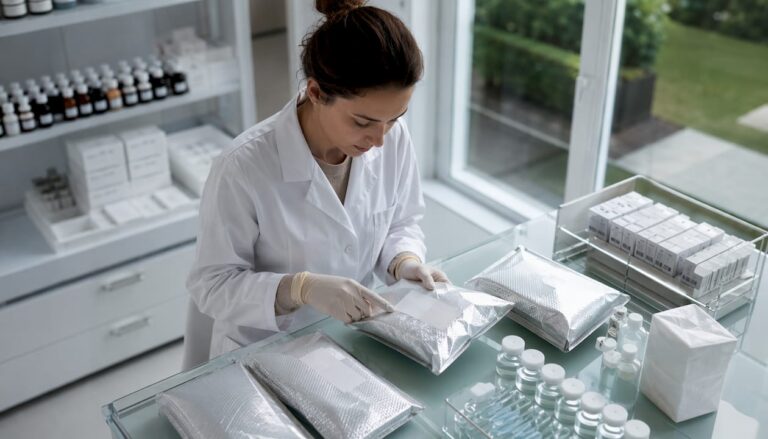
Private Label, White Label, Wholesale partnerships available - EU, USA and UK - Free shipping from €75

What Are Injectable Research Reagents: A Lab Guide
Learn what are injectable research reagents, their types, protocols, and applications. Enhance your lab practice with our comprehensive guide.
TL;DR:
- Injectable research reagents are chemicals designed for direct administration in experiments, offering predictable bioavailability by bypassing metabolism. Proper selection of diluents, delivery devices, and strict documentation ensures reproducible results and high-quality data. Researchers must follow strict standards and use specialized tools to avoid biases and experiment failures.
Injectable research reagents are chemical substances formulated for direct administration into biological systems during experimental protocols. The term covers a broad class of compounds, most commonly called injectable lab reagents in formal laboratory contexts, that bypass gastrointestinal metabolism to deliver more predictable bioavailability in in vivo models. Researchers working in peptide biology, pharmacology, and molecular science rely on these reagents because oral delivery degrades many compounds before they reach target tissues. This guide covers the main types, reconstitution protocols, delivery tools, and quality standards that define professional injectable reagent practice.
What are injectable research reagents and how are they classified?
Injectable research reagents are strictly laboratory chemicals, labeled “for research use only, not for human or animal use,” and are never classified as FDA-approved medicines. That classification matters because it governs how suppliers manufacture, label, and ship these compounds, and how researchers must handle and document them. The most common form is the lyophilized peptide, a short amino acid chain of 2–50 residues synthesized under controlled conditions and freeze-dried into a white powder sealed in a glass vial. Other categories include recombinant proteins, transfection vectors, and biologics, each serving a distinct experimental role.
The lyophilized format is the industry standard for a practical reason. Freeze-drying removes water, which dramatically extends shelf life and prevents degradation during shipping. Researchers receive a stable powder that requires reconstitution before use, giving them control over concentration and solvent choice at the point of experiment.
What types of injectable reagents are commonly used in labs?
The categories of injectable compounds for research map closely to the biological targets researchers study. Each class has distinct physical properties and experimental applications.
- Lyophilized peptides. Short amino acid chains (2–50 residues) are the most widely used injectable reagents in peptide research. They model endogenous signaling molecules and are used to study receptor binding, metabolic pathways, and immune responses.
- Recombinant proteins. Larger than peptides, these include growth factors, cytokines, and enzymes produced in bacterial or mammalian expression systems. They require careful handling because their tertiary structure is sensitive to temperature and pH.
- Transfection vectors. Lipid nanoparticles and viral vectors carry nucleic acid payloads into cells or tissues. Injectable delivery is preferred when systemic or localized gene expression is the experimental goal.
- Biologics and antibody fragments. These are used in immunology and oncology research to block or activate specific molecular targets with high selectivity.
- Sterile diluents and reconstitution solutions. While not reagents themselves, bacteriostatic water, sterile saline, and phosphate-buffered saline (PBS) are classified as injectable research tools because they directly determine reagent behavior after reconstitution.
Each class carries a “research use only” label, which excludes it from clinical or therapeutic application. Researchers sourcing these compounds must verify that suppliers manufacture under conditions that meet purity and sterility expectations for experimental work.
How are injectable research reagents prepared for experimental use?
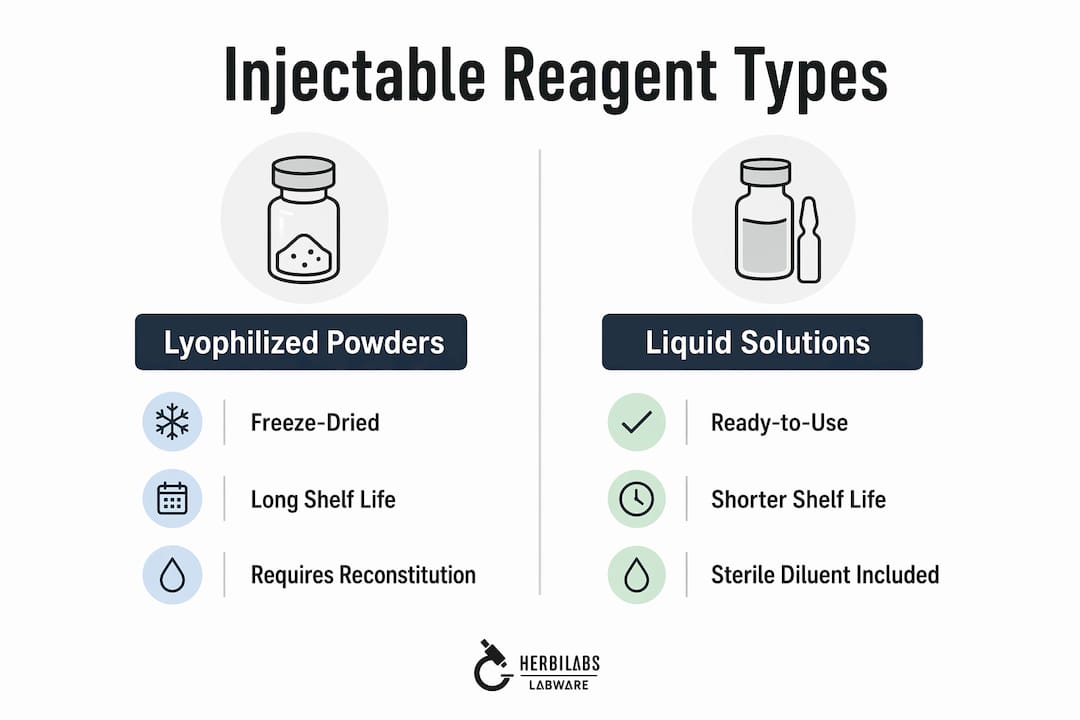
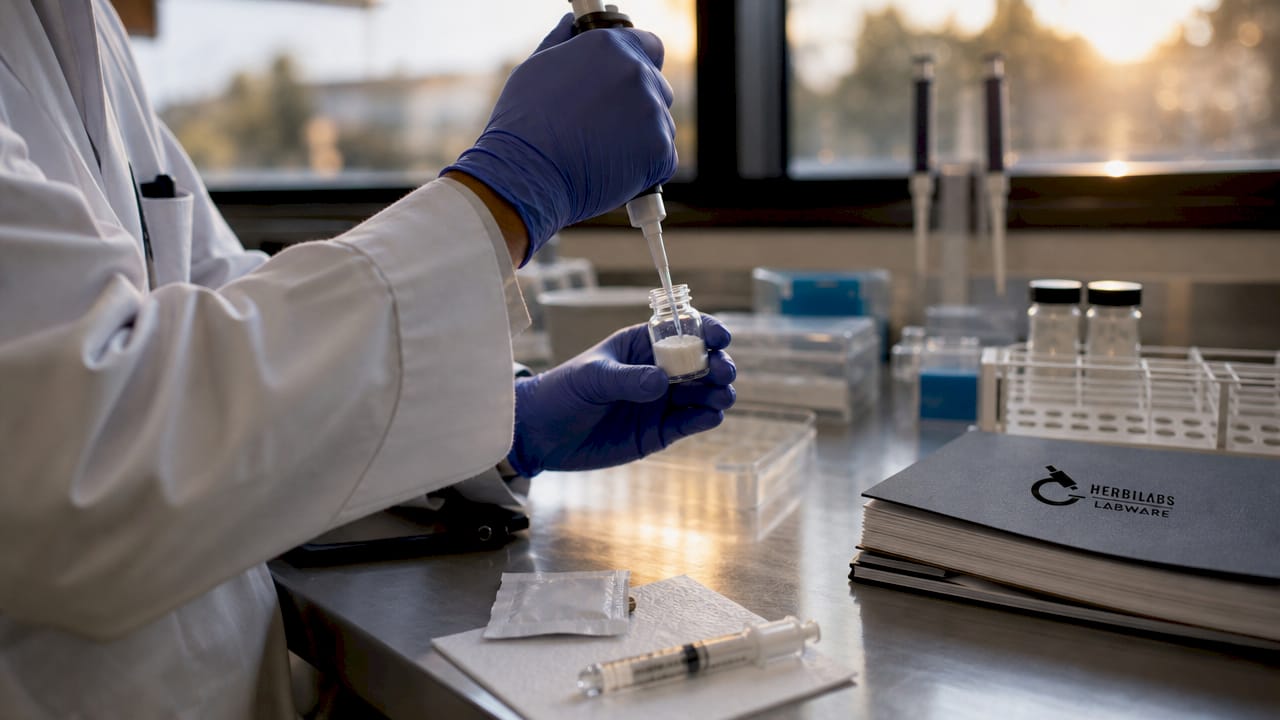
Reconstitution is the process of dissolving a lyophilized powder into a sterile liquid to create an injectable solution. The diluent choice is not a passive decision. Sterile diluents act as active media that influence compound stability and experimental reproducibility, not simply as carriers. Selecting the wrong solvent can denature a protein, accelerate aggregation, or alter the pH enough to change receptor binding characteristics.
The four main sterile diluents each serve a specific role:
| Diluent | Preservative | Use case | Vial type |
|---|---|---|---|
| Bacteriostatic water (BAC) | 0.9% benzyl alcohol | Multi-dose peptide vials | Multi-dose, up to 28 days |
| Sterile water for injection | None | Single-use or same-day use | Single-use only |
| Sterile saline (0.9% NaCl) | None | Isotonic single-use applications | Single-use only |
| Phosphate-buffered saline (PBS) | None | pH-sensitive proteins, isotonic buffers | Single-use only |
Bacteriostatic water contains 0.9% benzyl alcohol, which inhibits bacterial growth and allows repeated withdrawals from the same vial over 28 days. That makes it the standard choice for most small and mid-sized peptide protocols. Sterile water for injection carries no preservative and is appropriate only for single-use or same-day applications where preservative interference is a concern.
Benzyl alcohol does present one documented risk. Benzyl alcohol can accelerate protein aggregation in larger or highly purified peptides under certain conditions. Researchers working with sensitive biologics must verify compatibility before committing to a multi-dose protocol. For a detailed comparison of diluent options, the bacteriostatic vs sterile water guide covers the practical tradeoffs in depth.
Pro Tip: Always add diluent slowly along the vial wall rather than directly onto the lyophilized cake. Direct injection creates shear forces that can fragment peptide chains and reduce yield.
Reconstitution errors are among the most common sources of failed experiments. Reviewing common lab reconstitution errors before starting a new protocol saves both reagent and time.
What delivery technologies support injectable research reagents?
The syringe is not a neutral tool. Dead volume in a standard insulin syringe can represent a meaningful fraction of a small reagent dose, biasing results in experiments where dose precision is critical. Dead volume in standard syringes can skew results when working at sub-microliter scales, making specialized delivery devices necessary for sensitive protocols.
Current delivery tools used in injectable reagent research include:
- Open-source footswitch-controlled microinjectors. These nanoliter-scale microinjectors deliver volumes as low as 25 nanoliters with approximately 15% error margin and cost around $130 as of may 2026. They are well suited for zebrafish embryo injections, single-cell work, and other applications where reagent volume is extremely small.
- Mechanical click-dose peptide pens. Specialized injection pens reduce human error and provide consistent dosing across multiple administrations. They are particularly valuable when working with expensive or limited-supply reagents where variability between doses would compromise the dataset.
- Sub-microliter glass syringes. Devices designed for sub-microliter delivery eliminate dead-volume loss and allow precise control over injection rate, which matters when studying pharmacokinetic profiles in small animal models.
- Wireless neuromodulators and co-designed delivery systems. Future injectable technology focuses on co-designing reagents with delivery devices, including wireless neuromodulators, to improve precision and miniaturization in neuroscience and implantable research applications.
Pro Tip: Choose your delivery device before finalizing your reagent concentration. Working backward from device dead volume and minimum deliverable dose prevents under-dosing errors that are invisible until data analysis.
The choice of delivery technology directly affects experimental reproducibility. A reagent prepared to the highest purity standard still produces unreliable data if the delivery method introduces dose variability. Integrating device selection into the experimental design phase, rather than treating it as a procurement afterthought, is one of the clearest separators between well-designed and poorly designed injectable reagent studies.
What are the quality standards for using injectable reagents effectively?
Quality in injectable reagent work is not a single checkpoint. It is a continuous practice that spans sourcing, storage, reconstitution, and documentation. The following protocol covers the critical steps.
- Source USP-compliant diluents. USP standards such as <1> and <788> define particle limits and purity requirements for injectable solutions. Diluents that meet these standards and include endotoxin testing provide a documented baseline for regulatory compliance and data integrity.
- Verify peptide-diluent compatibility before scaling. Run a small-scale compatibility test before committing a full vial of reagent to a new diluent. Check for visible aggregation, pH shift, and turbidity within the first hour after reconstitution.
- Apply aseptic technique at every step. Preservatives like benzyl alcohol inhibit bacterial growth but do not sterilize a contaminated solution. Work in a laminar flow hood or biosafety cabinet, use sterile needles for each withdrawal, and swab vial septa with 70% isopropyl alcohol before each access.
- Store reconstituted solutions correctly. Most reconstituted peptides require refrigeration at 2–8°C and protection from light. Consult the reagent’s technical data sheet for specific conditions. For multi-dose vials reconstituted with bacteriostatic water, the 28-day window is a hard limit, not a guideline.
- Document every batch with full traceability. Record the reagent lot number, reconstitution date, diluent lot, concentration, storage conditions, and each withdrawal date and volume. Batch tracking is the foundation of reproducible research and is required for any publication or regulatory submission. The research reagents supply chain guide explains how to build traceability into procurement workflows.
Endotoxin contamination is the most underappreciated failure mode in injectable reagent work. A reagent can be chemically pure and still trigger inflammatory responses in cell culture or animal models if the diluent carries endotoxin loads above acceptable thresholds. Always request certificates of analysis that include endotoxin data, not just sterility confirmation.
Key Takeaways
Injectable research reagents require precise diluent selection, compatible delivery tools, and documented handling protocols to produce reproducible experimental data.
| Point | Details |
|---|---|
| Definition and classification | Injectable reagents are research-only chemicals, never FDA-approved medicines, most often supplied as lyophilized powder. |
| Diluent choice is active, not passive | Bacteriostatic water supports multi-dose use for 28 days; sterile water is single-use only; PBS suits pH-sensitive proteins. |
| Delivery device affects data quality | Dead volume in standard syringes biases small-dose experiments; specialized pens and microinjectors reduce variability. |
| USP compliance is non-negotiable | Diluents meeting USP <1> and <788> with endotoxin testing protect both data integrity and regulatory standing. |
| Batch documentation enables reproducibility | Recording lot numbers, reconstitution dates, and withdrawal logs is required for publication-grade research. |
Why delivery device selection is the step most researchers get wrong
Most researchers I have worked alongside treat the syringe as an afterthought. They spend weeks optimizing peptide concentration and reconstitution protocol, then inject with whatever device is available in the lab. That decision quietly destroys dose consistency, and the problem rarely shows up until the data is already collected.
The uncomfortable truth is that device selection belongs in the experimental design phase, not the procurement phase. When you are working with reagents at nanoliter or sub-microliter scales, the dead volume of a standard insulin syringe is not a minor inconvenience. It is a systematic bias that shifts every data point in the same direction. I have seen well-funded studies produce inconclusive results for exactly this reason, and the fix would have cost less than $200.
The trend toward co-designed reagents and delivery systems is the right direction. When the reagent formulation and the delivery mechanism are developed together, the variables that typically introduce noise are controlled from the start. That is where injectable reagent research is heading, and labs that adopt specialized delivery tools now will have a methodological advantage as protocols become more demanding.
The other underappreciated factor is documentation. Batch tracking is not bureaucracy. It is the only way to distinguish a failed experiment from a failed reagent lot. Every withdrawal from a multi-dose vial should be logged. Every reconstitution should be dated. That discipline takes five minutes per session and has saved more than a few datasets I have been involved with.
— Ragnar
Herbilabs bacteriostatic water and sterile diluents for research labs
Reliable injectable reagent work starts with a diluent you can trust. Herbilabs manufactures bacteriostatic water and sterile reconstitution solutions to strict purity standards, with endotoxin testing and USP-compliant production built into every batch.

Herbilabs products are designed for researchers running multi-dose peptide protocols across the UK and Europe. The bacteriostatic water guide covers formulation, storage, and compatibility in detail. For answers to the most common lab questions, the bacteriostatic water FAQ addresses reconstitution volumes, shelf life, and diluent selection in a format built for working researchers. Herbilabs also offers wholesale pricing for institutions and resellers, with secure ordering and reliable delivery to research facilities across Europe.
FAQ
What are injectable research reagents used for?
Injectable research reagents are used in in vivo and in vitro experiments to study receptor binding, metabolic pathways, gene expression, and pharmacokinetics. The injectable format bypasses gastrointestinal degradation, producing more predictable systemic exposure than oral delivery routes.
What is the difference between bacteriostatic water and sterile water for injection?
Bacteriostatic water contains 0.9% benzyl alcohol, which inhibits bacterial growth and allows multi-dose use for up to 28 days. Sterile water for injection contains no preservative and is intended for single-use or same-day applications only.
Can benzyl alcohol damage research peptides?
Benzyl alcohol can accelerate aggregation in larger or highly purified peptides under certain conditions. Most small and mid-sized peptides tolerate bacteriostatic water well, but researchers should verify compatibility before committing to a multi-dose protocol.
Why are specialized injection devices better than standard insulin syringes?
Standard insulin syringes retain dead volume that can represent a significant fraction of a small reagent dose, introducing systematic bias. Specialized devices such as mechanical click-dose pens and sub-microliter glass syringes eliminate dead-volume loss and improve dose consistency across repeated administrations.
What USP standards apply to injectable research diluents?
USP standards <1> and <788> define particle limits and purity requirements for injectable solutions. Sourcing diluents that meet these standards and include endotoxin testing supports both data integrity and compliance in regulated research environments.