Private Label, White Label, Wholesale partnerships available - EU, USA and UK - Free shipping from €75

What Is Microbially Safe Water: A Complete Guide
Discover what is microbially safe water and how it protects health. Learn key standards and insights to ensure your water is truly safe.
TL;DR:
- Microbially safe water is free from pathogens, viruses, and parasites, with risks managed through validated treatment.
- Water safety relies on continuous risk management, not just a single negative E. coli test, across the entire supply chain.
Microbially safe water is defined as water free from pathogenic bacteria, viruses, and parasites, with health risks managed to levels that pose no significant threat to human or animal health. The gold-standard indicator for recent fecal contamination is the absence of E. coli, a marker used by public health agencies worldwide. The World Health Organization frames microbial safety not as a single test result but as a continuous, system-wide commitment to risk management. For researchers working with lab-grade water and for individuals relying on municipal supplies, understanding what microbially safe water actually means is the foundation of every sound safety decision. Clear water is not necessarily safe water. That distinction matters more than most people realize.
What microbial safety standards govern water quality?
WHO’s drinking-water guidelines represent over 65 years of accumulated guidance and form the most authoritative international framework for microbial safety in water. The 2026 edition reinforces a “catchment to consumer” model, meaning safety must be managed at every stage of the water supply chain, not just at the point of delivery. This shift from reactive testing to preventive risk management is the defining feature of modern microbial safety practice.
Health-based targets set the acceptable level of risk for a given pathogen in a given population. These targets guide treatment design, monitoring frequency, and emergency response protocols. Water safety plans, the WHO’s preferred management tool, translate those targets into site-specific actions for utilities and operators.
Indicator organisms sit at the center of routine monitoring. E. coli signals recent fecal contamination with high reliability, which is why its absence is the primary criterion for declaring water microbiologically acceptable. However, indicator organisms have real limits. Standard chlorine disinfection that eliminates E. coli may leave certain viruses and protozoa, such as Cryptosporidium, fully intact. That gap is why multi-barrier treatment exists.
- Water safety plans (WSPs): Systematic risk assessments covering the entire supply system, from source water to the tap.
- Health-based targets: Quantitative benchmarks that define acceptable pathogen concentrations for specific exposure scenarios.
- Indicator organisms: Proxy measures, primarily E. coli and total coliforms, used to infer the likely presence or absence of fecal pathogens.
- Independent surveillance: Third-party verification that WSP controls are functioning as designed.
Pro Tip: Never treat a single negative E. coli result as proof of complete microbial safety. Viruses and protozoa require separate validated treatment barriers to confirm true safety.
How is microbial contamination detected and managed effectively?
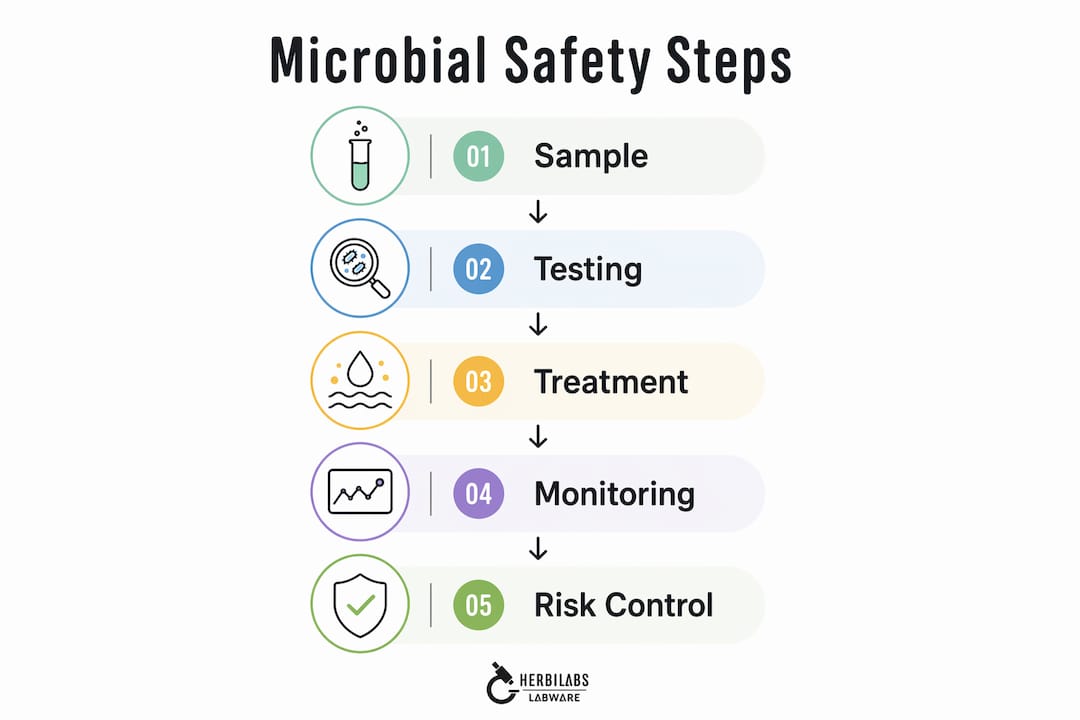
Detection and management of microbial contamination require layered methods, not a single test or treatment. Water safety plans are the most effective tool for preventing contamination because they integrate continuous risk assessment with system monitoring rather than relying on endpoint testing alone. That distinction separates reactive programs from genuinely protective ones.
The standard detection and management sequence follows a clear logic:
- Microbiological testing: Culture-based methods detect E. coli and total coliforms. Molecular methods, including quantitative PCR, identify specific pathogens with greater speed and sensitivity.
- Filtration: Physical removal of particles, protozoa, and some bacteria before disinfection. Membrane filtration and slow sand filtration are the two most common approaches in municipal systems.
- Chemical disinfection: Chlorination remains the most widely used method globally. Chloramination extends residual protection through distribution networks.
- UV disinfection: Effective against protozoa like Cryptosporidium that resist chlorine. UV does not provide residual protection, so it is typically combined with chemical disinfection.
- Residual disinfectant maintenance: Residual disinfectant levels in distribution systems prevent regrowth and biofilm-associated contamination after treatment. Maintaining these levels is as critical as the initial treatment step.
- Biofilm monitoring: Biofilms on pipe surfaces create ongoing re-contamination risks even after water leaves a treatment plant. Routine pipe inspection and flushing programs address this directly.
- Sanitary inspections: Infrastructure vulnerability assessments identify physical risks, such as cross-connections and aging pipes, that lab testing alone cannot reveal.
Quantitative Microbial Risk Assessment (QMRA) adds a predictive layer to this process. QMRA models infection probability for specific pathogens under specific treatment scenarios, allowing operators to prioritize interventions before a contamination event occurs.
Pro Tip: Combine QMRA modeling with routine indicator testing to identify which treatment barriers carry the highest risk reduction value. This prevents over-reliance on any single method.
What are the health risks of consuming microbially unsafe water?
Contaminated water causes serious diseases including cholera, dysentery, and typhoid fever. Millions of people globally suffer waterborne illnesses each year due to inadequate sanitation infrastructure. The burden falls hardest on children under five and immunocompromised individuals, for whom even low pathogen doses can be fatal.
Acute illness is only part of the picture. Chronic exposure to microbially contaminated water produces long-term neurological and developmental complications. Children exposed repeatedly to waterborne pathogens during critical growth periods show measurable deficits in cognitive development. Adults with persistent low-level exposure face elevated risks of gastrointestinal disease and systemic infection.
“Multi-contaminant exposure increases both the susceptibility and severity of health outcomes. Microbial contamination does not act in isolation. Chemical and radiological co-exposures compound the damage, making integrated risk assessment the only defensible approach to water safety.”
Source: Water quality impacts on human health
Vulnerable populations face compounded risk from several directions:
- Infants and young children: Immature immune systems cannot clear pathogens that healthy adults suppress without symptoms.
- Elderly individuals: Reduced immune function and pre-existing conditions amplify pathogen impact.
- Immunocompromised patients: Cancer patients, transplant recipients, and people living with HIV face life-threatening risk from organisms that cause mild illness in healthy adults.
- Pregnant women: Waterborne infections during pregnancy carry risks of miscarriage, preterm birth, and fetal developmental harm.
Healthcare settings carry a specific and often underestimated Legionella risk from water systems, particularly in hospitals where immunocompromised patients are concentrated. Integrated microbial risk management in healthcare water systems is not optional. It is a patient safety requirement.
What are the practical applications of microbially safe water in research?
Microbial safety in research water is not the same concept as in drinking water, but the underlying principle is identical: the water must not introduce contaminants that compromise the intended use. In laboratory settings, microbially unsafe water corrupts experimental results, invalidates assays, and wastes reagents. The stakes are methodological rather than immediately clinical, but the consequences are equally serious.
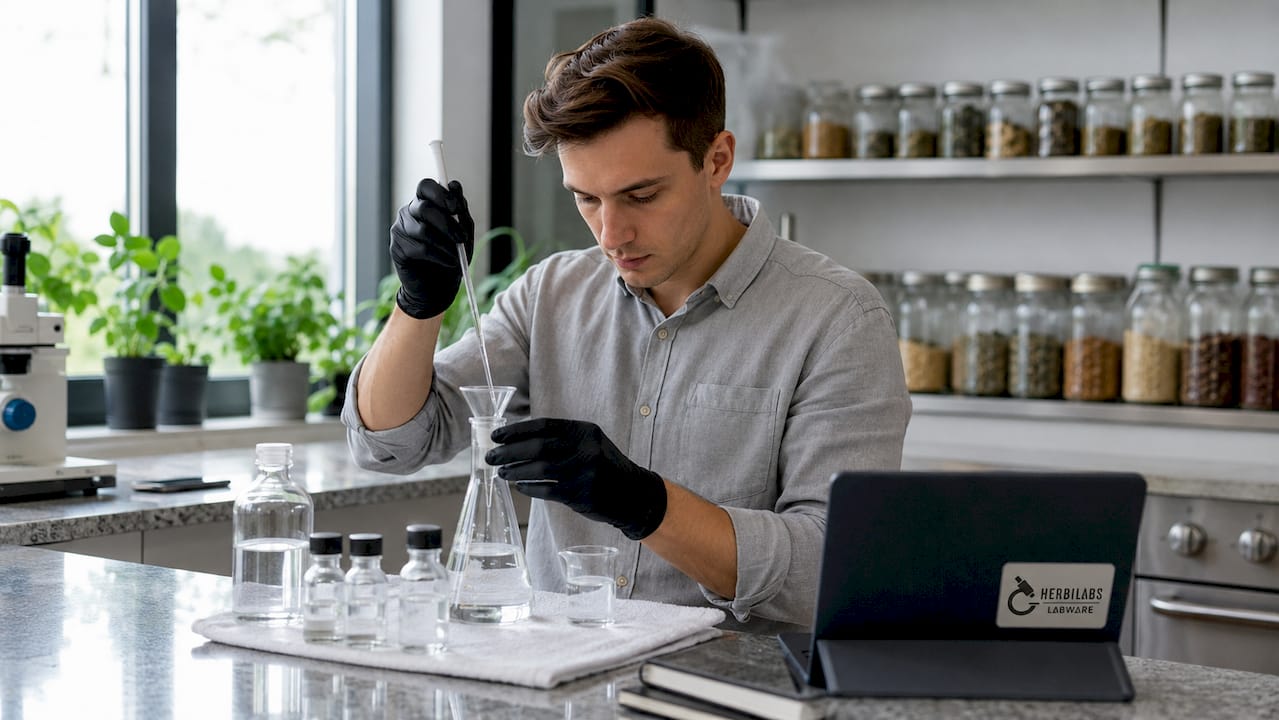
Researchers working with peptides, proteins, or cell cultures require water that meets defined purity thresholds for both microbial and chemical contamination. Bacteriostatic water standards in 2026 reflect this dual requirement, specifying limits for bacterial growth inhibition alongside chemical purity criteria. A water source that passes a basic E. coli screen but carries endotoxins or chemical residues still fails lab-grade microbial safety requirements.
The practical implications for researchers break down across several categories:
| Application area | Microbial safety requirement | Key risk if unmet |
|---|---|---|
| Peptide reconstitution | Sterile or bacteriostatic grade | Degraded peptide, contaminated sample |
| Cell culture media | Endotoxin-free, pathogen-free | Cell death, skewed assay results |
| Injectable research solutions | Sterile, pyrogen-free | Systemic contamination risk |
| Equipment rinsing | Low bioburden, low endotoxin | Carryover contamination between runs |
Understanding the difference between bacteriostatic and sterile water is a practical starting point for any researcher selecting a water source for reconstitution work. Bacteriostatic water contains benzyl alcohol, which inhibits bacterial growth over multiple uses. Sterile water contains no preservative and must be used immediately after opening.
Personal water safety at home follows simpler but related logic. Boiling, certified filtration, and UV treatment each address different pathogen categories. No single method covers all risks, which is why the WHO’s multi-barrier principle applies at the household level as much as at the utility level.
Key Takeaways
Microbially safe water requires validated multi-barrier treatment, continuous system monitoring, and integrated risk assessment across chemical, microbial, and radiological hazards.
| Point | Details |
|---|---|
| Core definition | Microbially safe water is free from pathogens, with health risks managed to acceptable levels through validated treatment. |
| Gold-standard indicator | Absence of E. coli confirms fecal safety, but does not guarantee protection against all viruses and protozoa. |
| WHO framework | Water safety plans covering the full catchment-to-consumer chain outperform endpoint testing as a safety strategy. |
| Lab-grade standards | Research water must meet microbial and chemical purity thresholds; a basic E. coli pass is not sufficient for lab use. |
| Vulnerable populations | Children, elderly individuals, and immunocompromised patients face the highest risk from microbially unsafe water. |
Why water safety is more complex than most researchers assume
The most persistent misconception I encounter is that clear, odorless water is safe water. Water appearance does not guarantee safety. Invisible pathogens are present in water that passes every sensory check. This is not a minor nuance. It is the reason entire regulatory frameworks exist.
What I find genuinely underappreciated is the dynamic nature of water systems. Effective microbial safety requires ongoing surveillance, not a quarterly test and a signed certificate. Water quality changes with season, infrastructure age, upstream events, and treatment plant performance. A system that was safe in march may not be safe in august without active monitoring.
For researchers specifically, the gap between “drinking water safe” and “lab water safe” is wider than most protocols acknowledge. Endotoxins, biofilm fragments, and chemical disinfection byproducts all pass standard microbial screens but destroy sensitive assays. The right question is not “is this water pathogen-free?” It is “is this water appropriate for this specific application?”
My practical advice: treat water selection as a risk management decision, not a procurement checkbox. Match the water grade to the application, verify the supplier’s quality controls, and never assume that a previous batch’s safety certificate covers the current one.
— Ragnar
Herbilabs and lab-grade microbial water for research
Researchers who need water that meets genuine microbial safety standards for reconstitution and peptide work have a specific set of requirements that general drinking water suppliers cannot address.
Herbilabs supplies bacteriostatic water and sterile reconstitution solutions manufactured to strict purity standards, with quality controls designed for demanding research environments. The complete guide to bacteriostatic water covers everything from microbial safety criteria to correct storage and handling for lab use. Researchers with specific questions about product suitability can also consult the bacteriostatic water FAQ for detailed, application-specific answers. Herbilabs serves research institutions, universities, and independent researchers across the UK and Europe with reliable delivery and verified product quality.
FAQ
What is microbially safe water?
Microbially safe water is water free from pathogenic bacteria, viruses, and parasites, with health risks managed to levels that pose no significant threat to human health. The WHO defines safety through validated multi-barrier treatment and continuous risk management, not a single test result.
Is clear, odorless water always safe to drink?
No. Invisible pathogens can be present in water that appears and smells completely normal. True microbial safety requires validated treatment barriers like filtration and UV disinfection, not sensory observation.
What does E. coli indicate in water testing?
E. coli is the gold-standard indicator of recent fecal contamination in drinking water. Its absence confirms fecal safety but does not guarantee protection against all viruses and protozoa, which may resist standard chlorine disinfection.
How do water safety plans work?
Water safety plans are systematic risk assessments covering the entire supply chain from source to tap. The WHO identifies them as the most effective tool for preventing microbial contamination through continuous monitoring rather than endpoint testing alone.
What type of water do researchers need for lab work?
Researchers require water that meets both microbial and chemical purity thresholds specific to their application. Bacteriostatic water is used for multi-dose reconstitution, while sterile water suits single-use applications. Standard drinking water does not meet lab-grade microbial safety requirements.