Private Label, White Label, Wholesale partnerships available - EU, USA and UK - Free shipping from €75

Why Use Sterile Reconstitution Water for Injectables
Discover why use sterile reconstitution water for injectables. Ensure safety and effectiveness in your preparations with pharmaceutical-grade purity.
TL;DR:
- Sterile water for injection is a pharmaceutical-grade, sterile solvent used for reconstitution without contamination or endotoxins. It is essential for single-dose preparations, especially when compounds are sensitive to preservatives or in neonatal applications. Reusing punctured vials or substituting non-pharmaceutical water increases contamination risks and compromises safety and data integrity.
Sterile reconstitution water is defined as water processed to pharmaceutical-grade purity and sterility, making it the required solvent for preparing injectable substances without introducing microbial or chemical contamination. Known formally as Sterile Water for Injection (SWFI), it meets USP monograph standards: non-pyrogenic, preservative-free, and free from endotoxins and particulate matter. For researchers and healthcare professionals preparing injectable substances, the choice of diluent is not a minor detail. The wrong solvent can degrade a compound, skew experimental results, or cause direct patient harm. Understanding why sterile reconstitution water is the correct choice starts with understanding what it actually contains, and what it deliberately does not.
Why use sterile reconstitution water: purity standards that matter
Sterile Water for Injection achieves its pharmaceutical-grade status through a defined manufacturing process. Purification methods including reverse osmosis, distillation, and ultrafiltration remove dissolved contaminants, particulate matter, and endotoxins to meet USP and EP quality compliance. That level of purity is not achievable with distilled water from a general lab supply or any non-pharmaceutical source.
Endotoxins deserve particular attention. These are fragments of bacterial cell walls that survive standard sterilization and trigger severe inflammatory responses when injected. A water source that passes a basic sterility test can still carry endotoxins at clinically dangerous levels. SWFI undergoes specific testing to confirm it is non-pyrogenic, meaning it will not cause fever or systemic inflammation in a recipient.
The sterilization step itself, typically autoclaving combined with sterile filtration, eliminates viable microorganisms. But the manufacturing environment matters just as much as the process. Contamination introduced during filling or packaging defeats the purpose of sterilization entirely. This is why pharmaceutical-grade water is produced in controlled cleanroom environments under validated conditions, not simply boiled or filtered in a general lab.
Pro Tip: Never substitute laboratory-grade distilled water for SWFI in injectable preparations. Distilled water lacks endotoxin testing and sterility assurance, making it unsuitable regardless of its apparent clarity.
- Sterile Water for Injection must be free from endotoxins, particulate matter, and dissolved contaminants
- Purification uses reverse osmosis, distillation, or ultrafiltration to reach USP/EP compliance
- Sterilization combines autoclaving and sterile filtration in validated cleanroom conditions
- Non-pyrogenic certification confirms the water will not trigger inflammatory responses upon injection
- General lab distilled water does not meet these standards and must not be substituted
The importance of sterile water in pharmaceutical preparation comes down to a simple principle: every variable you introduce into an injectable formulation carries risk. SWFI eliminates the diluent as a source of risk entirely.
Why is sterile water necessary instead of non-sterile alternatives?
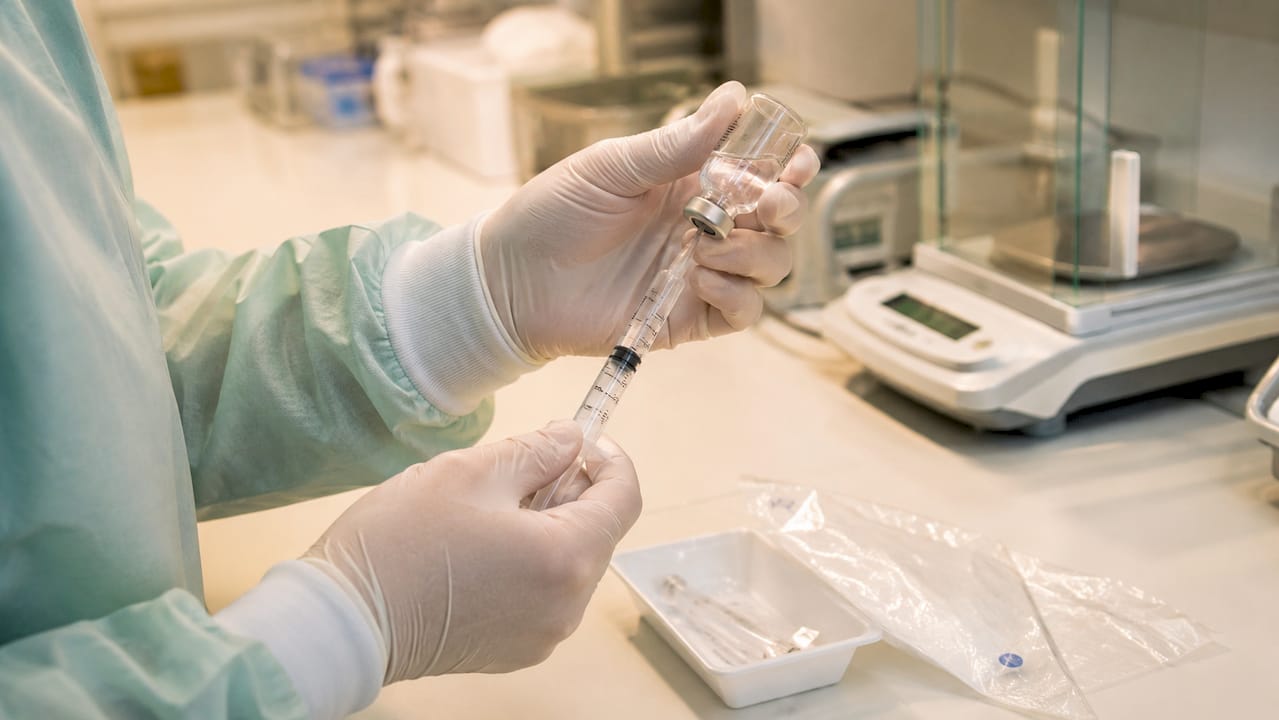
Non-sterile water introduces microbial contamination the moment it contacts a drug compound. Bacteria present in unprocessed or inadequately treated water multiply rapidly in the nutrient-rich environment created by dissolved peptides or proteins. Bacterial contaminants reach clinically significant levels within hours at room temperature in unpreserved water. That timeline is far shorter than most researchers assume.
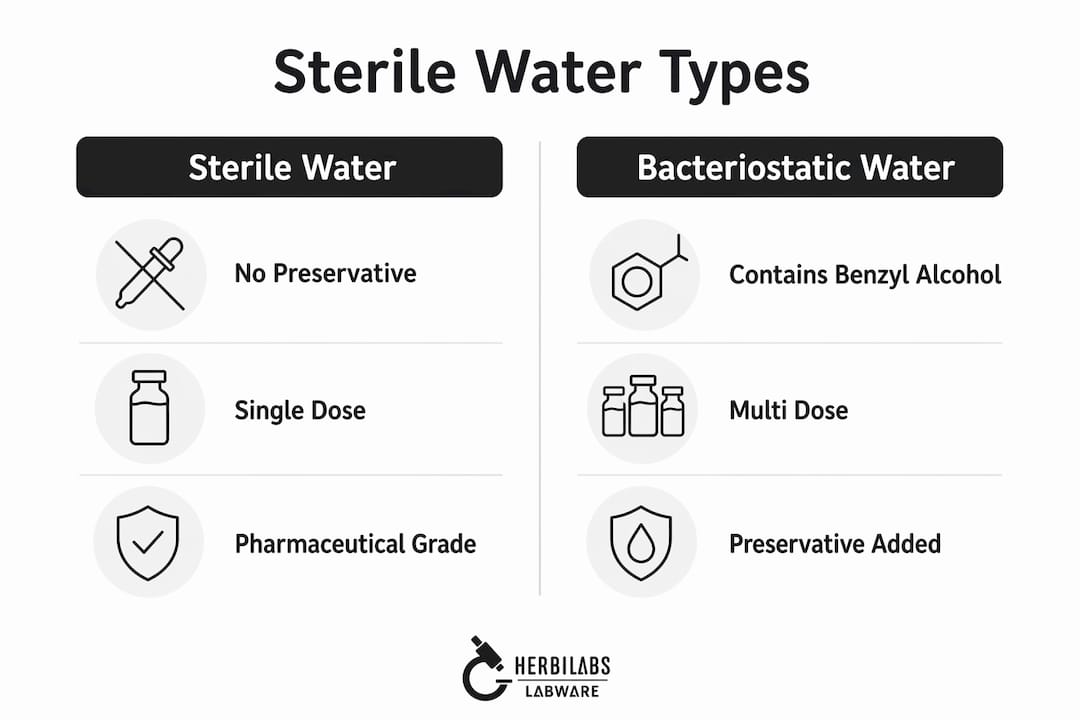
The comparison between sterile water and bacteriostatic water is frequently misunderstood. Both are sterile at the point of manufacture. The critical difference is that bacteriostatic water contains 0.9% benzyl alcohol, a preservative that inhibits bacterial growth in multi-dose vials for up to 28 days refrigerated. Sterile water contains no preservative at all.
That distinction creates two separate use cases. Bacteriostatic water suits multi-dose applications where the vial will be punctured repeatedly over days or weeks. Sterile water is the correct choice when the compound is sensitive to benzyl alcohol, when the recipient is a neonate, or when single-dose use is planned. Benzyl alcohol is contraindicated in neonates and can cause serious toxicity in that population. No preservative benefit justifies that risk.
Pro Tip: When reconstituting a compound for a single administration, always default to SWFI. Bacteriostatic water’s preservative advantage only applies when multi-dose access is genuinely needed.
The safety implications extend beyond neonatal contraindications. Benzyl alcohol can chemically interact with certain peptides and proteins. Lab studies show that benzyl alcohol effects on recombinant human proteins can cause aggregation or oxidation over time. For sensitive research compounds, that interaction introduces an uncontrolled variable that compromises data integrity. Sterile water, with no preservative, eliminates that variable entirely.
| Characteristic | Sterile water for injection | Bacteriostatic water |
|---|---|---|
| Preservative | None | 0.9% benzyl alcohol |
| Approved vial uses | Single dose only | Multi-dose, up to 28 days refrigerated |
| Neonatal use | Acceptable | Contraindicated |
| Peptide/protein compatibility | High | Risk of aggregation or oxidation |
| Post-puncture lifespan | Discard immediately | Up to 28 days refrigerated |
How does sterile water affect the stability of injectable substances?
Sterile Water for Injection is chemically inert by design. It contains no buffers, preservatives, or additives, and its osmolality is near zero. That means the pH and tonicity of the final reconstituted solution are determined entirely by the active drug powder, not by the diluent. For researchers who need to characterize a compound’s behavior accurately, this is the only acceptable starting condition.
Contrast this with bacteriostatic water. The benzyl alcohol preservative does not alter pH significantly, but its chemical reactivity with certain proteins is well documented. Benzyl alcohol can cause unintended physical degradation in peptide and protein drugs, including aggregation and oxidation. These changes reduce potency and can generate immunogenic particles. In a clinical setting, that represents a patient safety risk. In a research setting, it invalidates the experiment.
Particulate formation is a separate concern. Contaminants in the diluent, whether microbial, chemical, or physical, can nucleate particle formation in the reconstituted solution. Use of non-sterile or impure water introduces contaminants that cause degradation, assay interference, or direct patient harm. SWFI’s controlled purity removes this risk at the source.
Specific scenarios where sterile water is the expressly recommended diluent include:
- Single-dose injectable preparations where no preservative is needed and immediate discard after use is planned.
- Neonatal medication preparation where benzyl alcohol is absolutely contraindicated.
- Sensitive peptide or protein reconstitution where benzyl alcohol’s chemical reactivity could alter molecular structure.
- Assay-critical research where any diluent-introduced variable would compromise data validity.
- Compounds with known preservative incompatibilities as identified in the drug’s prescribing information or research protocol.
The integrity of reconstituted solutions depends on the diluent being a controlled, characterized input. SWFI is the only diluent that meets that requirement without adding chemical variables.
Best practices for using sterile reconstitution water safely
The single most important rule for SWFI is the single-dose policy. SWFI has zero post-puncture lifespan as a safe multi-dose product. Once the vial is punctured, the sterile barrier is broken. Refrigeration slows but does not prevent microbial growth in an opened, preservative-free vial. Discard the vial immediately after drawing the required volume.
Refrigeration and aseptic technique alone cannot substitute for a preservative in preventing microbial growth once a sterile water vial is opened. This is a point that experienced lab professionals sometimes underestimate. The 24-hour single-use window sometimes cited in infection control guidelines is a conservative safety standard, not a precise microbial kill curve. The correct interpretation is: discard after first use, without exception.
Aseptic technique is non-negotiable throughout the reconstitution process. Key requirements include:
- Swab the vial septum with 70% isopropyl alcohol and allow it to dry before each needle insertion
- Use a new sterile needle and syringe for every draw
- Work in a laminar flow hood or biosafety cabinet when preparing injectables for clinical use
- Inspect the reconstituted solution visually for particulates or discoloration before use
- Label the reconstituted vial with the preparation time and discard time
Pro Tip: If your protocol requires multiple doses from a single reconstitution session, prepare individual single-dose aliquots from separate SWFI vials rather than re-puncturing one vial. This preserves sterility across all doses.
Storage of unopened SWFI vials follows standard pharmaceutical storage conditions: room temperature, away from direct light, and within the manufacturer’s stated expiry date. Check the safe storage of reconstitution solutions before establishing your lab’s handling protocol. Expired vials must be discarded, as sterility assurance is tied to the integrity of the sealed container over time.
Key Takeaways
Sterile Water for Injection is the only pharmaceutical-grade, preservative-free diluent that eliminates microbial, chemical, and particulate contamination risks in single-dose injectable preparation.
| Point | Details |
|---|---|
| USP-grade purity is mandatory | SWFI meets USP/EP standards through reverse osmosis, distillation, and endotoxin testing. |
| Single-dose use only | Discard SWFI immediately after vial puncture; refrigeration does not prevent microbial growth. |
| Benzyl alcohol creates incompatibilities | Bacteriostatic water’s preservative can cause peptide aggregation and is contraindicated in neonates. |
| Chemical inertness protects compounds | SWFI’s lack of buffers or additives means the drug powder controls the final pH and osmolality. |
| Aseptic technique is non-negotiable | Swab septa, use fresh needles, and work in a controlled environment for every reconstitution. |
The detail most researchers get wrong about sterile water
I have reviewed reconstitution protocols from research teams at multiple institutions, and the same error appears repeatedly: professionals treat a punctured SWFI vial the same way they treat a bacteriostatic water vial. They draw a volume, recap the vial, refrigerate it, and return to it the next day. That practice is not a minor protocol deviation. It is a contamination event waiting to happen.
The logic seems reasonable on the surface. The vial was sterile when opened. It went straight into the refrigerator. Nothing visibly changed. But sterile water has no preservative to slow the microbial growth that begins the moment the sealed environment is broken. A vial that looks clean can carry a contamination load that causes real harm.
The second misunderstanding I see regularly involves the assumption that bacteriostatic water is always the safer or more practical choice because it lasts longer. For multi-dose use with compatible compounds, that is true. But for sensitive peptides, neonatal preparations, or any single-dose application, bacteriostatic water introduces chemical variables that SWFI does not. The bacteriostatic vs. sterile water decision is not about convenience. It is about matching the diluent to the compound and the clinical context.
Reliable sourcing matters as much as correct technique. A vial labeled “sterile water” that was not manufactured under validated pharmaceutical conditions offers none of the safety guarantees that USP-grade SWFI provides. Researchers who source diluents from unverified suppliers are accepting an unknown contamination risk that no amount of careful technique can compensate for.
— Ragnar
Herbilabs sterile and bacteriostatic water for research labs
Researchers who need pharmaceutical-grade reconstitution solutions without supply chain uncertainty rely on Herbilabs for USP-compliant sterile and bacteriostatic water products. Every product is manufactured to strict purity standards in a dedicated facility, with rigorous quality control at each stage.

Herbilabs supplies research institutions, universities, and independent researchers across the UK and Europe with sterile reconstitution solutions built for demanding lab environments. Whether your protocol calls for preservative-free SWFI or multi-dose bacteriostatic water, the Herbilabs catalog covers both. For a full breakdown of which diluent fits your application, the complete bacteriostatic water guide covers composition, use cases, and selection criteria in detail. Quality and reliable delivery are the baseline, not the exception.
FAQ
What is sterile water for injection used for?
Sterile Water for Injection is used to reconstitute or dilute medications and research compounds for injectable administration. It is the required diluent when a preservative-free, pharmaceutical-grade solvent is needed for single-dose use.
Can you reuse a sterile water vial after puncture?
No. SWFI must be discarded immediately after the vial is punctured. It contains no preservative, so microbial contamination begins as soon as the sterile barrier is broken, regardless of refrigeration.
What is the difference between sterile water and bacteriostatic water?
Sterile water contains no preservative and is for single-dose use only. Bacteriostatic water contains 0.9% benzyl alcohol, which inhibits bacterial growth and allows multi-dose use for up to 28 days when refrigerated.
When should you choose sterile water over bacteriostatic water?
Choose SWFI for neonatal preparations, single-dose applications, or when reconstituting compounds that are chemically sensitive to benzyl alcohol. Benzyl alcohol can cause aggregation or oxidation in certain peptides and proteins.
Does sterile water affect the pH of a reconstituted solution?
SWFI contains no buffers or additives, so the pH of the final solution is determined by the active drug compound, not the diluent. This chemical inertness makes SWFI the preferred choice when precise characterization of a compound’s behavior is required.