Private Label, White Label, Wholesale partnerships available - EU, USA and UK - Free shipping from €75

Lab water quality checklist: 18.2 MΩ·cm purity guide
A complete lab water quality checklist for bacteriostatic water applications. Covers ASTM Type I, WFI, EP HPW standards, testing methods, and storage best practices for peptide researchers in Europe.
Water purity is not a background variable in peptide research. It is the variable. A single endotoxin spike or a TOC reading above threshold can invalidate reconstitution data, degrade sensitive peptides, or introduce biological noise that takes weeks to trace back to its source. European researchers face an added layer of complexity: navigating overlapping standards from ASTM, USP, and the European Pharmacopoeia (EP) while sourcing bacteriostatic water that meets all of them. This checklist cuts through that complexity and gives you a clear, parameter-by-parameter framework for verifying water quality before it ever touches your peptide.
Table of Contents
- Understand laboratory water types and standards
- Checklist criteria for high-purity bacteriostatic water
- Testing methodologies and verification steps
- Expert insights and practical recommendations
- Summary comparison: Essential lab water parameters
- Lab solutions for bacteriostatic water compliance
- Frequently asked questions
Key Takeaways
| Point | Details |
|---|---|
| Check resistivity and TOC | Use the highest purity water possible, monitor resistivity (18.2 MΩ·cm) and TOC (≤5 ppb) for reliable peptide results. |
| Continuous monitoring matters | Water purity degrades fast; test parameters at every stage to prevent contamination or compliance failures. |
| Select the right water type | Know the differences between ASTM, WFI, and HPW standards in Europe and match your application accordingly. |
| Proactive best practices | Flush systems, use clean containers, and minimize exposure to contaminants to maintain lab water quality. |
| Actionable lab resources | Consult Herbilabs guides and products for storage, compliance, and water selection support. |
Understand laboratory water types and standards
Not all purified water is equal, and the differences matter enormously when you are reconstituting peptides that will be used in sensitive research protocols. The three main frameworks you will encounter are ASTM International grades, Water for Injection (WFI) as defined by USP and EP, and EP Highly Purified Water (HPW), which is the European standard sitting between Purified Water and WFI.
ASTM Type I specifications set the bar at resistivity of 18.2 MΩ·cm, TOC at or below 5 ppb, and a bacterial count below 10 CFU per 100 mL. These are the tightest general-purpose lab water specs available. For pharmaceutical-grade applications, compendial water standards define WFI with conductivity at or below 1.3 µS/cm, TOC at or below 500 ppb, microbial load at or below 10 CFU per 100 mL, and endotoxin at or below 0.25 EU/mL.
For peptide applications, ASTM Type I is the preferred baseline because its TOC and resistivity limits are far stricter than WFI. You can read more about how these grades apply in practice in our overview of bacteriostatic water standards.
| Parameter | ASTM Type I | WFI (USP/EP) | EP HPW |
|---|---|---|---|
| Resistivity | 18.2 MΩ·cm | Not specified | ≥10 MΩ·cm |
| TOC | ≤5 ppb | ≤500 ppb | ≤500 ppb |
| Bacteria | <10 CFU/100 mL | ≤10 CFU/100 mL | ≤10 CFU/100 mL |
| Endotoxin | Not specified | ≤0.25 EU/mL | ≤0.25 EU/mL |
| Conductivity | Not primary | ≤1.3 µS/cm | ≤1.3 µS/cm |
Key takeaways from this comparison:
- ASTM Type I is the gold standard for resistivity and TOC, making it ideal for peptide reconstitution.
- WFI is the pharmaceutical benchmark for endotoxin and microbial control.
- EP HPW bridges both worlds and is the practical European choice when WFI production is not feasible.
- For bacteriostatic water applications, you ideally want a product that meets WFI endotoxin limits and ASTM Type I purity levels.
Checklist criteria for high-purity bacteriostatic water
With standards in hand, here is your actionable checklist for verifying water quality before use. Each parameter has a defined threshold. If any one of them falls outside range, the batch is compromised.
Your quality verification checklist:
- Resistivity: ≥18.2 MΩ·cm at 25°C (ASTM Type I baseline)
- TOC: ≤5 ppb for research-grade; ≤500 ppb minimum for pharmaceutical-grade
- Microbial count: <10 CFU per 100 mL
- Endotoxin: ≤0.25 EU/mL (WFI/EP HPW standard)
- pH: 4.5 to 7.0 for bacteriostatic water formulations
- Benzyl alcohol: 0.9% (9 mg/mL) as the bacteriostatic preservative
- Particulates: Visually clear; no visible particles under inspection
- Container integrity: Septum undamaged, no pressure loss on vial
The bacteriostatic water composition defined by FDA labeling specifies benzyl alcohol at 0.9%, a pH range of 4.5 to 7.0, and a 28-day use window after first opening. These are not suggestions. They are the parameters that define whether your diluent is still fit for purpose.
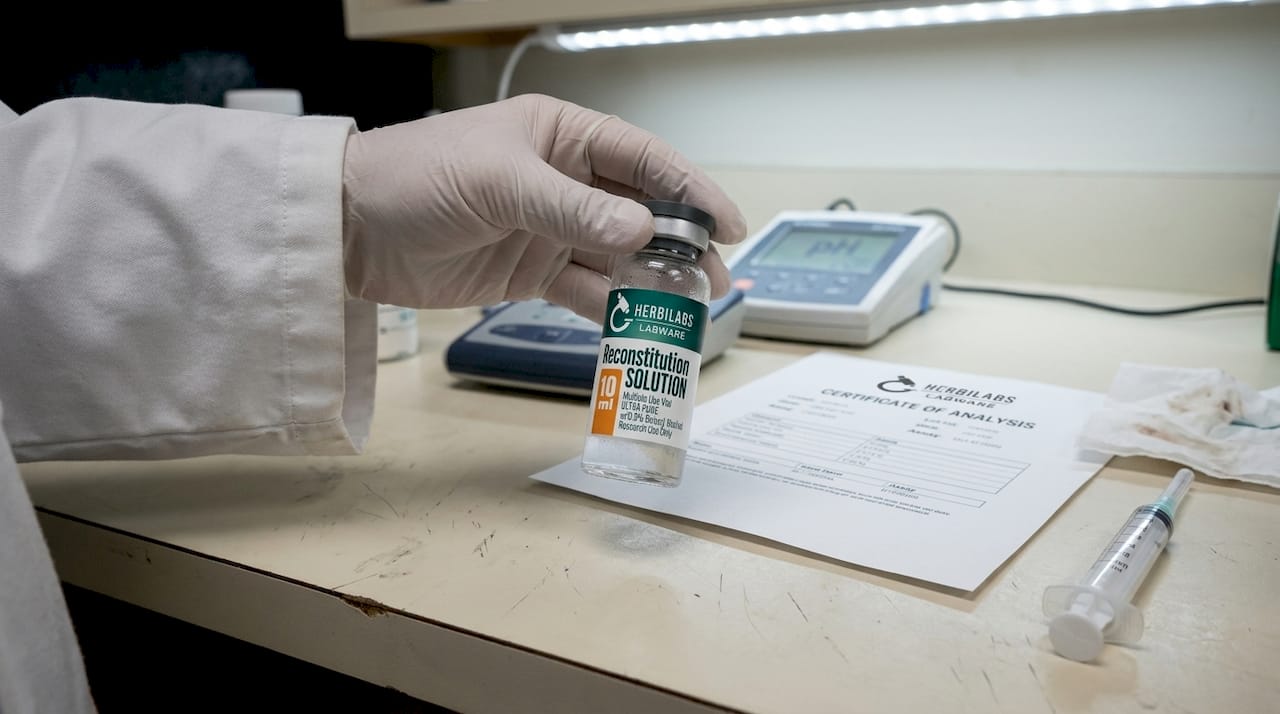
One factor researchers frequently underestimate is how fast purity degrades. Purity degrades rapidly post-purification due to CO2 absorption, microbial ingress, and container leaching. This is why continuous monitoring matters, not just a one-time check at the point of manufacture.
Pro Tip: Never assume an unopened vial is automatically within spec. Check the certificate of analysis (CoA) for every batch and confirm that endotoxin and TOC values are explicitly listed, not just implied by grade labeling.
For a broader breakdown of how bacteriostatic water behaves after opening versus before, the bacteriostatic water FAQs page covers the most common edge cases. And if you are deciding between bacteriostatic and sterile water for a specific protocol, the bacteriostatic vs sterile water comparison is worth reviewing before you commit to a diluent.
Testing methodologies and verification steps
Checklist completed. Here is how to actually test and confirm each parameter in practice. Having the right instruments is not optional. Guessing at water quality based on visual inspection alone is one of the most common and costly mistakes in lab settings.
Step-by-step verification protocol:
- Resistivity/conductivity: Use an inline or benchtop resistivity meter calibrated to ASTM or NIST standards. Measure at the point of use, not at the purification unit output.
- TOC: Run a TOC analyzer using the non-purgeable organic carbon (NPOC) method. Confirm the instrument is calibrated with a sucrose or potassium hydrogen phthalate standard.
- Microbial count: Use membrane filtration followed by plate culture on R2A agar. Incubate at 22°C for 5 to 7 days for accurate low-nutrient organism detection.
- Endotoxin: Use the Limulus Amebocyte Lysate (LAL) test, either kinetic turbidimetric or gel-clot method. This is the only validated method for detecting bacterial endotoxins at the EU/mL level.
- pH: Use a calibrated pH meter with a fresh buffer solution. Dip electrodes should be rinsed with ultrapure water before measurement.
- Particulates: Perform visual inspection under a light source against both white and black backgrounds. For critical applications, use a particle counter.
Testing methodologies including resistivity meters, TOC analyzers, microbial culture, and LAL testing are the validated toolkit for lab water verification. Each instrument targets a specific contamination vector, and no single test covers all parameters.
| Test | Instrument | Target parameter |
|---|---|---|
| Resistivity | Inline meter | Ionic contamination |
| TOC | TOC analyzer | Organic contamination |
| Microbial | Plate culture | Bacterial load |
| Endotoxin | LAL assay | Pyrogen presence |
| pH | Calibrated meter | Acid/base balance |
| Particulates | Visual/particle counter | Physical contamination |
Best practices for system handling include flushing the purification system before collecting samples, never storing ultrapure water for more than 24 hours in open containers, using only dedicated clean vessels, and keeping the system away from chemical storage areas that could introduce volatile contaminants.
Pro Tip: Store bacteriostatic water vials upright in a cool, dry location away from direct light. Detailed guidance on storing bacteriostatic water correctly can extend usable shelf life and protect the benzyl alcohol preservative from degradation. Also review the lab water handling guide for container selection and transfer protocols.
Expert insights and practical recommendations
Testing methodology covered. Now let’s look at what experienced lab professionals do differently to maintain consistent water quality over time, not just at the point of testing.
“Labs that maintain loop velocity at or above 1 m/s and implement proactive sanitization schedules report significantly fewer quality deviations. Over-purification, on the other hand, is wasteful and does not improve outcomes beyond the validated threshold.”
This insight from pharmaceutical water validation research reflects a pattern seen across regulated environments: the biggest gains come from system discipline, not from chasing ever-higher purity specs.
For European peptide researchers, aligning with EP HPW or WFI is the regulatory baseline. But the practical recommendations go further:
- Maintain loop velocity at or above 1 m/s in recirculating systems to prevent biofilm formation.
- Schedule proactive sanitization with hot water or chemical agents on a defined cycle, not reactively after a deviation.
- Avoid over-purification beyond your application’s validated need. ASTM Type I is sufficient for most peptide reconstitution work.
- Monitor continuously, not just at batch release. Purity degrades rapidly after purification, and a single environmental exposure can shift your readings outside spec.
- Document every result. Trend analysis over time is more informative than any single data point.
For a structured approach to ongoing quality assurance, the quality assurance for bacteriostatic water resource outlines the monitoring framework we recommend for research environments.
Summary comparison: Essential lab water parameters
With expert strategies in mind, use this summary comparison as your quick-reference tool for selecting the right water type for your specific protocol.
| Parameter | ASTM Type I | WFI | EP HPW |
|---|---|---|---|
| Resistivity | 18.2 MΩ·cm | Not primary | ≥10 MΩ·cm |
| TOC | ≤5 ppb | ≤500 ppb | ≤500 ppb |
| Bacteria | <10 CFU/100 mL | ≤10 CFU/100 mL | ≤10 CFU/100 mL |
| Endotoxin | Not specified | ≤0.25 EU/mL | ≤0.25 EU/mL |
| Primary use | Research/analytical | Injectable pharma | European pharma |
According to water purification resource data, ASTM Type I is stricter on resistivity and TOC than Purified Water, while bacteriostatic water enables multi-dose use but introduces preservative variability compared to sterile WFI. That tradeoff is intentional and useful, but it must be managed.
When to select each water type:
- ASTM Type I: Analytical work, peptide reconstitution where ionic and organic contamination must be minimized.
- WFI: Injectable pharmaceutical applications requiring strict endotoxin control.
- EP HPW: European research environments where WFI production is not available but endotoxin control is still required.
- Bacteriostatic water: Multi-dose peptide reconstitution where a 28-day use window is needed and benzyl alcohol compatibility has been confirmed.
For a side-by-side breakdown of how bacteriostatic water compares to other diluent options, the bacteriostatic vs other diluents page gives you the full picture on preservative content, pH, and application fit.
Lab solutions for bacteriostatic water compliance
When you have validated your water quality and selected the right grade for your protocol, the next step is sourcing a product that consistently meets those parameters without requiring you to verify every batch from scratch.
Herbilabs manufactures bacteriostatic water to strict purity standards, with explicit CoA documentation covering endotoxin, TOC, pH, and benzyl alcohol content. Every vial is produced in a dedicated facility with rigorous quality control, so you are not guessing at compliance. You are confirming it. Our resources also support your broader lab water workflow: from guidance on storing bacteriostatic water safely to answering protocol-specific questions through our bacteriostatic water FAQs. If you are new to the product or evaluating it for a new application, the bacteriostatic water guide is the right starting point.
Frequently asked questions
What is the minimum lab water quality required for peptide research?
ASTM Type I or EP Highly Purified Water are the recommended baselines, with resistivity at 18.2 MΩ·cm and bacterial count below 10 CFU per 100 mL. These thresholds protect peptide integrity during reconstitution.
How often should you monitor lab water quality?
Continuous monitoring is the standard because purity degrades rapidly after purification due to CO2 absorption and microbial ingress. A single point-in-time check at manufacture is not sufficient for ongoing research use.
Can bacteriostatic water be used after 28 days?
No. Opened bacteriostatic water must be discarded after 28 days of opening due to the risk of microbial contamination exceeding the preservative capacity of benzyl alcohol.
What are the most important parameters to measure for lab water quality?
Resistivity, TOC, microbial count, endotoxin, pH, and preservative content are all critical. LAL testing for endotoxin and TOC analysis are the two most frequently overlooked in non-pharmaceutical lab settings.
Is distillation necessary for lab water used in Europe?
Distillation is the gold standard under EP guidelines, but RO/EDI is accepted for EP HPW production if the process is rigorously validated and monitored for endotoxin and microbial compliance.