Private Label, White Label, Wholesale partnerships available - EU, USA and UK - Free shipping from €75

Peptide Research Standards: A 2026 Guide for Researchers
Discover what are peptide research standards in 2026. Learn how to ensure purity and quality for reproducible scientific results.
TL;DR:
- Peptide research standards specify validated criteria for purity, identity, endotoxin levels, and sterility to ensure scientific accuracy. Core analytical methods include HPLC, Mass Spectrometry, and the LAL assay, with third-party verification becoming essential by 2026. Strict documentation, proper storage, and appropriate purity thresholds are critical for reproducible, publishable peptide science.
Peptide research standards are defined as the validated criteria governing purity, identity, endotoxin levels, and sterility that a peptide must meet before generating trustworthy scientific data. These standards rely on core analytical methods including High-Performance Liquid Chromatography (HPLC), Mass Spectrometry, and the Limulus Amebocyte Lysate (LAL) assay. In 2026, third-party batch verification and updated European Medicines Agency (EMA) reporting requirements have raised the bar for what counts as research-grade quality. Understanding what are peptide research standards is no longer optional for researchers who want reproducible results and publishable findings.
What are peptide research standards, and why do they matter?
Peptide research standards are the formalized testing and documentation requirements that confirm a synthetic peptide is fit for its intended scientific purpose. They cover four core dimensions: chemical purity, molecular identity, endotoxin contamination, and sterility. Each dimension maps directly to a specific analytical test, and each test produces data that either clears or disqualifies a batch for use.
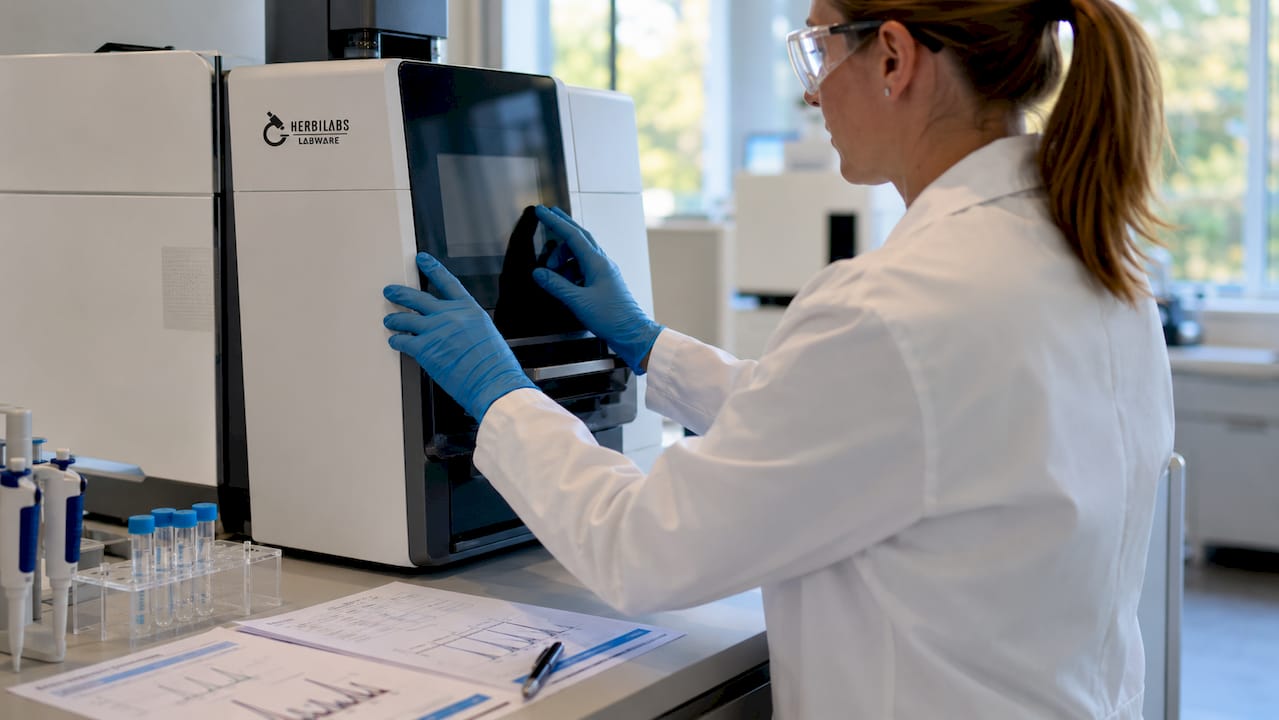
The stakes are high. A peptide that passes a visual inspection but fails HPLC analysis may contain related substances that skew receptor binding data or invalidate dose-response curves. The EMA’s 2026 guideline now mandates reporting of related substances above 0.1% in synthetic peptides, effective June 1, 2026. That threshold applies primarily to drug development, but it signals the direction the broader research community is moving.
For academic researchers, the practical implication is clear. Peptide standard guidelines that were acceptable three years ago may no longer satisfy peer review or institutional ethics boards. Third-party verification is becoming the default expectation, not an optional upgrade.
What are the key testing methods to verify peptide quality and purity?
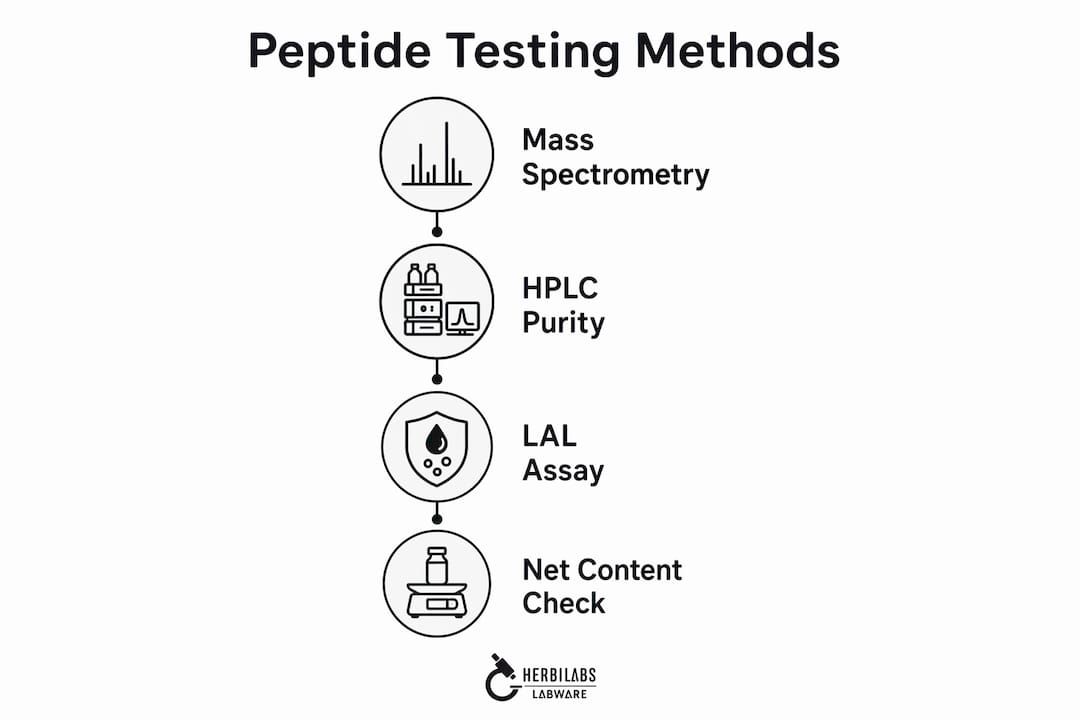
Four analytical methods form the backbone of any credible peptide quality control protocol. Each answers a different question about the peptide, and none can substitute for another.
Mass Spectrometry for identity confirmation
Mass Spectrometry confirms peptide identity by matching the theoretical molecular weight against the experimentally measured value. Identity verification by MS is critical for receptor binding studies, where an incorrect sequence or modification produces inactive or misleading results. The tolerance between theoretical and experimental mass should be within a few daltons. Any significant deviation signals a synthesis error, modification artifact, or wrong compound entirely.
HPLC for purity quantification
HPLC separates peptide components by their interaction with a stationary phase and quantifies each peak as a percentage of total chromatographic area. Mass Spectrometry, HPLC, and LAL assay are the three core tests for research-grade peptide quality control. A chromatogram showing a single dominant peak above 98% area is the standard expectation for publishable in vitro work. Multiple smaller peaks indicate related substances, truncated sequences, or oxidation products that may interfere with your experiment.
LAL assay for endotoxin detection
The LAL assay detects bacterial endotoxins by exploiting the clotting reaction of horseshoe crab blood cells. The standard endotoxin threshold for research-grade peptides is ideally below 1 EU/mg. Endotoxin contamination at higher levels triggers inflammatory responses in cell culture and animal models, confounding any result that depends on a clean biological baseline. The LAL assay does not confirm sterility. Sterility testing requires separate validation, particularly for peptides intended for in vivo use.
Pro Tip: When reviewing a chromatogram, check the baseline noise level and the retention time of the main peak, not just the area percentage. A noisy baseline or a shifted retention time can indicate column contamination or a degraded sample even when the area percentage looks acceptable.
| Test | What it measures | Key limitation |
|---|---|---|
| Mass Spectrometry | Molecular weight and sequence identity | Does not quantify purity percentage |
| HPLC | Chromatographic purity by area percentage | Does not reflect actual peptide mass |
| LAL assay | Bacterial endotoxin concentration | Does not detect non-endotoxin contaminants or confirm sterility |
| Sterility testing | Absence of viable microorganisms | Time-consuming; requires separate protocol from LAL |
What are the current peptide purity standards for different research applications?
Purity requirements scale directly with the biological complexity and publication expectations of your research. Research standards for peptides set the minimum at 95% chromatographic purity for feasibility studies, 98% or above for publishable data, and 99% or above for institutional research with ethics oversight.
These thresholds exist because impurities at different concentrations produce different levels of biological noise. A 95% pure peptide used in a preliminary binding screen may produce acceptable signal-to-noise ratios. That same peptide used in an in vivo efficacy study introduces enough impurity mass to generate off-target effects that compromise the entire dataset.
The purity percentage misconception
The most common misunderstanding in peptide analysis protocols is treating chromatographic purity as equivalent to peptide mass. A peptide reported at 98% HPLC purity may contain only 70–80% actual peptide mass when counter-ions, moisture, and residual solvents are accounted for. This distinction matters enormously for dosing accuracy in quantitative assays. Always request net peptide content alongside HPLC purity when ordering from any supplier.
| Research application | Minimum HPLC purity | Net peptide content check needed |
|---|---|---|
| Feasibility and screening | 95% | Recommended |
| In vitro mechanistic studies | 98% | Yes |
| In vivo animal studies | 98%+ | Yes, mandatory |
| Institutional or ethics-reviewed research | 99%+ | Yes, mandatory |
The difference between 98% and 99% purity sounds trivial. At a 1 mg dose, that 1% gap represents 10 micrograms of potentially bioactive impurities. In a sensitive cytokine assay or a rodent pharmacology model, 10 micrograms of unknown substance is not trivial at all.
How do you verify peptide research standards through documentation and certification?
A certificate of analysis (COA) is the primary document that translates analytical test results into a format researchers can evaluate before purchasing or using a peptide. A credible COA includes the peptide sequence, molecular weight, HPLC chromatogram, MS spectrum, endotoxin value, net peptide content, batch number, and the issuing laboratory’s name and accreditation status.
Third-party, batch-specific COAs from accredited labs are now the standard expectation for high-impact research. In-house COAs issued by the same facility that synthesized the peptide carry an inherent conflict of interest. Independent verification removes that conflict and provides data that peer reviewers and institutional review boards can trust.
ISO 17025 accreditation is the recognized benchmark for laboratory testing competence. It confirms that a lab’s measurement systems, calibration procedures, and reporting practices meet internationally validated criteria. That said, some specialized peptide testing labs produce high-quality data without ISO 17025 certification. Cross-referencing the COA batch number against the vendor’s records and requesting raw data files when possible adds a layer of verification that accreditation alone cannot provide.
Pro Tip: Before purchasing, ask the vendor three questions: Is the COA batch-specific or generic? Was it issued by an independent third-party lab? Can you provide the raw MS and HPLC data files? A vendor who hesitates on any of these three questions is a vendor worth reconsidering.
Key red flags to watch for in any COA:
- A single purity figure with no accompanying chromatogram
- No batch number or a batch number that does not match the vial label
- Endotoxin listed as “not tested” for a peptide intended for in vivo use
- COA issued by the same company that synthesized the peptide
- No net peptide content figure alongside the HPLC purity percentage
For additional guidance on evaluating supplier documentation, the peptide sequence verification guide from Vertex Peptides Lab provides a practical framework for cross-checking MS data against sequence predictions.
What are the best practices for maintaining peptide integrity during storage and handling?
Peptide stability is a function of temperature, humidity, light exposure, and the number of freeze-thaw cycles a sample undergoes. Stability and storage documentation is one of the most frequently neglected factors in peptide research reproducibility. A peptide that arrives at 99% purity can degrade to well below 95% within weeks if stored incorrectly.
Lyophilized peptides are the most stable form for long-term storage. Moisture is the primary enemy. A lyophilized peptide exposed to ambient humidity during weighing or reconstitution begins absorbing water immediately, which accelerates hydrolysis and oxidation. The role of storage conditions in maintaining reagent integrity applies directly to peptide stocks.
Best practices for peptide storage and handling:
- Store lyophilized peptides at minus 20 degrees Celsius or below, sealed under inert gas or vacuum
- Equilibrate sealed vials to room temperature before opening to prevent condensation on the peptide powder
- Reconstitute in the smallest volume practical to minimize freeze-thaw cycles on the working stock
- Aliquot working solutions into single-use volumes before freezing
- Use bacteriostatic water or an appropriate sterile diluent for reconstitution to extend solution stability
- Request stability data and recommended storage conditions from your supplier as part of the COA package
Research Use Only (RUO) peptides may carry less rigorous stability documentation than GMP-grade material. The responsibility for verifying suitability and confirming storage conditions falls on the researcher. Do not assume that RUO labeling implies any particular shelf life or storage requirement beyond what the supplier explicitly states.
Key Takeaways
Peptide research quality standards require verified purity, confirmed identity, controlled endotoxin levels, and batch-specific documentation to produce reproducible and publishable scientific results.
| Point | Details |
|---|---|
| Purity tiers by application | Use 95% for feasibility, 98%+ for publishable data, and 99%+ for institutional research. |
| Net peptide content vs. HPLC purity | A 98% HPLC result may reflect only 70–80% actual peptide mass; always request net peptide content. |
| Third-party COA requirement | Batch-specific COAs from independent labs are the 2026 standard; in-house COAs are insufficient for high-impact research. |
| LAL assay does not equal sterility | Endotoxin testing and sterility testing are separate protocols; both are required for in vivo work. |
| Storage determines stability | Lyophilized peptides stored at minus 20 degrees Celsius with moisture control retain purity far longer than improperly handled stocks. |
Why I think researchers underestimate the documentation problem
Most reproducibility failures in peptide research do not trace back to bad synthesis. They trace back to bad paperwork. I have reviewed COAs from suppliers that list a single HPLC purity number with no chromatogram, no batch number, and no endotoxin data. Researchers accepted those documents because the purity number looked right. That is a process failure, not a chemistry failure.
The shift toward mandatory third-party verification in 2026 is the most meaningful structural change I have seen in this field in years. It forces the accountability question upstream, to the supplier, rather than leaving it to the researcher to catch problems after the fact.
The RUO versus GMP distinction also deserves more attention than it typically gets. RUO peptides can be excellent research tools, but the label does not guarantee batch-to-batch consistency. If your experimental design depends on comparing results across multiple peptide lots, you need to verify each lot independently. Assuming consistency because the supplier is reputable is a shortcut that produces irreproducible data.
Net peptide content is the number I look at first on any COA. If it is missing, I ask for it. If the supplier cannot provide it, that tells me something important about their analytical rigor. Chromatographic purity is a useful metric, but it is not the whole story, and treating it as such is one of the most common errors I see in published methods sections.
— Ragnar
How Herbilabs supports your peptide research workflow
Peptide research quality standards demand more than a pure compound. They require every component of your workflow to meet the same level of rigor, including your reconstitution solutions.
Herbilabs supplies bacteriostatic water and sterile reconstitution solutions manufactured to strict purity standards in a dedicated facility, specifically for the peptide research community across the UK and Europe. Every product is designed to support the kind of reproducible, contamination-free work that peer review and institutional oversight now require. If you are reconstituting peptides for in vitro or in vivo studies, the quality of your diluent matters as much as the quality of your peptide. Explore the bacteriostatic water guide to understand why solution choice affects your results, or browse the full Herbilabs shop for research-grade reagents and labware.
FAQ
What is the minimum purity for research-grade peptides?
The minimum accepted purity is 95% by HPLC for feasibility studies, rising to 98% or above for publishable in vitro data and 99% or above for institutional or ethics-reviewed research.
What is the difference between HPLC purity and net peptide content?
HPLC purity measures the percentage of chromatographic area attributed to the main peak, while net peptide content reflects actual peptide mass after accounting for counter-ions, moisture, and residual solvents. A peptide at 98% HPLC purity may contain only 70–80% true peptide mass.
Does a LAL assay confirm that a peptide is sterile?
No. The LAL assay detects bacterial endotoxins only. Sterility confirmation requires a separate microbiological test, and both are required for peptides used in in vivo experiments.
What should a valid certificate of analysis include?
A valid COA includes the peptide sequence, molecular weight, HPLC chromatogram, MS spectrum, endotoxin value, net peptide content, batch number, and the name and accreditation status of the issuing laboratory.
What is ISO 17025 accreditation and why does it matter for peptide testing?
ISO 17025 is the international standard for laboratory testing competence, covering calibration, measurement systems, and reporting practices. Labs holding this accreditation provide a higher level of documented assurance, though some specialized peptide labs without ISO 17025 still produce reliable data when their raw results can be independently cross-referenced.