Private Label, White Label, Wholesale partnerships available - EU, USA and UK - Free shipping from €75

USP Bacteriostatic Water: What Researchers Need to Know
Learn what is USP bacteriostatic water and how it ensures safe multi-dose use for researchers. Achieve contamination-free protocols today!
TL;DR:
- USP bacteriostatic water is sterile water with 0.9% benzyl alcohol, which inhibits bacterial growth and enables multi-dose use. It is safe for repeated withdrawals over 28 days when stored properly and handled aseptically, but it does not sterilize or kill bacteria already present. Proper technique, storage, and understanding its limitations are essential for safe and effective use in peptide and drug reconstitution.
USP bacteriostatic water is defined as a sterile, nonpyrogenic water formulation containing 0.9% benzyl alcohol as a preservative that inhibits bacterial growth between uses. Regulated under United States Pharmacopeia (USP) standards, it differs fundamentally from standard sterile water by allowing multi-dose vial use for up to 28 days after the first puncture. For researchers working with peptide reconstitution, injectable compounds, or protein formulations, understanding what is USP bacteriostatic water is not optional. It determines which diluent you select, how you store it, and whether your protocol stays contamination-free across repeated withdrawals.
What chemical components make up USP bacteriostatic water?
USP bacteriostatic water has two components: water for injection (WFI) as the base solvent, and benzyl alcohol at a concentration of 0.9% as the antimicrobial preservative. The WFI base meets USP purity standards, meaning it is free of pyrogens, particulates, and dissolved contaminants. Benzyl alcohol at 0.9% USP concentration is carefully selected to maximize bacterial growth inhibition without impairing peptide stability during reconstitution.
The term “bacteriostatic” is precise and should not be confused with “bactericidal.” Bacteriostatic means the preservative inhibits bacterial reproduction. It does not kill existing bacteria. This distinction directly affects how you handle the vial, because any bacteria introduced through poor technique will not be eliminated by the preservative.
The physicochemical profile of USP bacteriostatic water typically includes:
- pH: Approximately 4.5–7.0, depending on the manufacturer and lot
- Sterility: Meets USP sterility testing requirements at the point of manufacture
- Pyrogen-free: Passes the USP Bacterial Endotoxins Test
- Osmolarity: Slightly hypotonic; compatible with most parenteral formulations when diluted appropriately
Pro Tip: Always check the pH specification on the Certificate of Analysis before reconstituting pH-sensitive peptides. A mismatch between the diluent pH and your compound’s stability range can degrade the peptide before the first injection.
How does bacteriostatic water differ from sterile water?
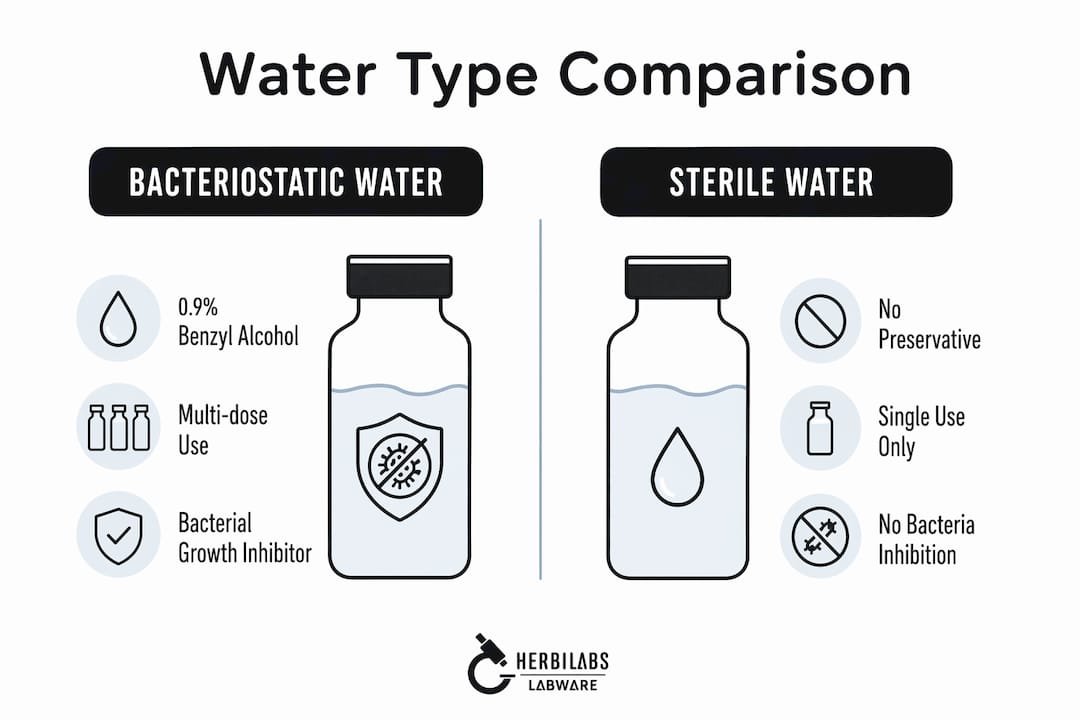
The core difference between bacteriostatic water and sterile water is the presence of a preservative. Sterile water for injection contains no preservative and must be used immediately after the vial is punctured. Any delay or second puncture introduces contamination risk with no chemical defense.
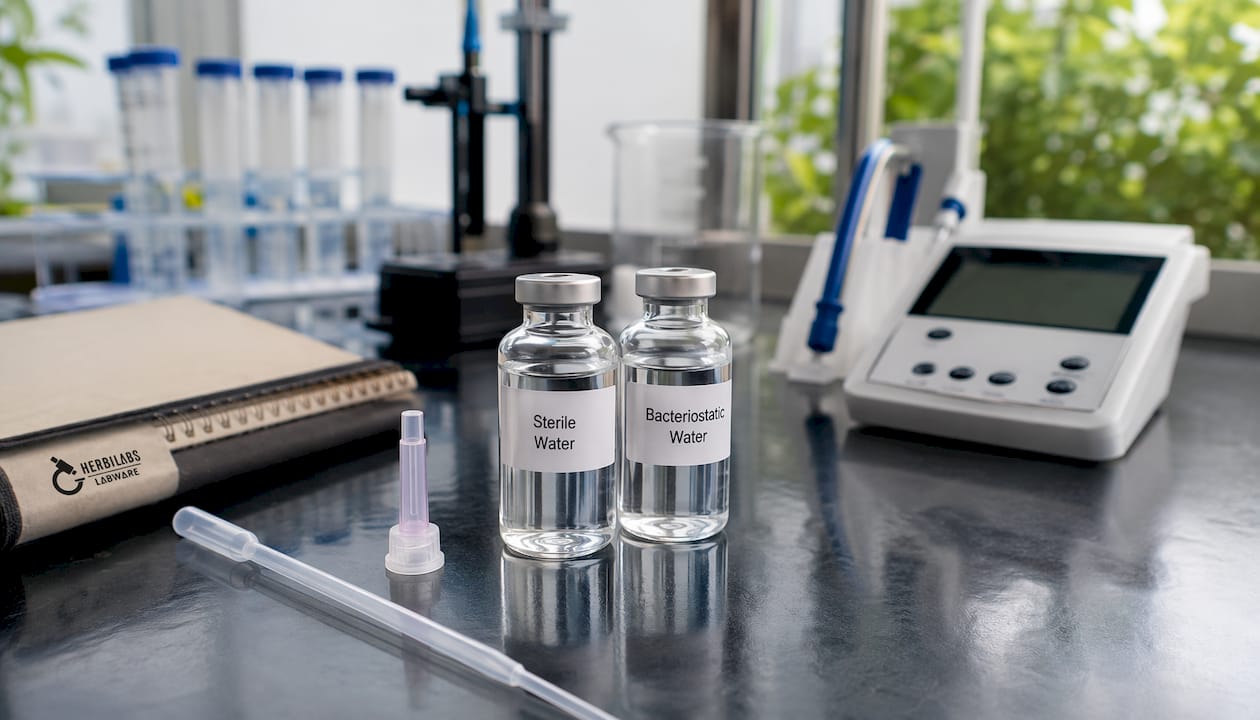
Bacteriostatic water, by contrast, allows repeated withdrawals from the same vial because benzyl alcohol inhibits bacterial growth between uses. That multi-dose capability is the defining practical advantage for researchers running daily peptide protocols.
| Feature | Bacteriostatic water | Sterile water |
|---|---|---|
| Preservative | 0.9% benzyl alcohol | None |
| Vial use | Multi-dose (up to 28 days) | Single-use only |
| Post-puncture safety | Bacterial growth inhibited | No protection after opening |
| Primary application | Peptide and drug reconstitution | Single-dose injections, IV admixtures |
| Neonatal use | Contraindicated | Acceptable when indicated |
The multi-dose advantage matters most in peptide research, where a single lyophilized vial may be reconstituted and drawn from daily over several weeks. Using sterile water in that context creates a contamination risk on every withdrawal after the first.
Pro Tip: If your protocol calls for a single-use injection with no repeat withdrawals, sterile water may be the correct choice. Bacteriostatic water is the right tool for multi-dose scenarios, not every injection.
What are the safe storage and handling practices for USP bacteriostatic water?
Proper storage is not a formality. Storage conditions directly influence benzyl alcohol’s antimicrobial effectiveness, and deviation from recommended temperatures can compromise vial safety within days.
Follow these steps to maintain vial integrity from receipt through final use:
- Store unopened vials at room temperature (15–30°C). Keep them away from direct light and heat sources. Most manufacturers specify controlled room temperature for sealed vials.
- Refrigerate opened vials at 2–8°C. Once punctured, the vial must be moved to the refrigerator. The 28-day clock starts at first puncture, not at the date of manufacture.
- Label every opened vial with the puncture date. Write the date directly on the vial or attach a dated label. Relying on memory across a multi-week protocol is a contamination risk waiting to happen.
- Inspect the solution before each withdrawal. Discard the vial if you observe cloudiness, particulate matter, or any color change. Clear and colorless is the only acceptable appearance.
- Use a new sterile needle for every withdrawal. Reusing needles compromises sterility and introduces microbes that benzyl alcohol cannot eliminate once they are inside the vial.
- Swab the rubber stopper with 70% isopropyl alcohol before each puncture. Allow it to dry fully before inserting the needle. Wet alcohol on the stopper can carry surface contaminants into the vial.
- Discard the vial at 28 days regardless of remaining volume. The preservative’s effectiveness is time-limited after puncture. Volume remaining in the vial does not extend the safe-use window.
Proper handling technique matters more than most researchers expect. The preservative slows bacterial growth but cannot reverse contamination already introduced through a compromised needle or an unswabbed stopper.
What are the primary medical and research uses of USP bacteriostatic water?
Bacteriostatic water is the standard solvent for reconstituting lyophilized peptides, proteins, and hormones in research settings. Its multi-dose design and antimicrobial protection make it the preferred diluent for repeat-use protocols in clinical and research labs.
Primary applications include:
- Peptide reconstitution: Lyophilized peptides such as growth hormone fragments, GnRH analogs, and research-grade peptides are routinely reconstituted with bacteriostatic water. The preservative protects the solution across multiple daily withdrawals.
- Intramuscular and subcutaneous injections: Bacteriostatic water serves as the diluent for drugs administered via IM or SC routes when a multi-dose format is required. It is compatible with a wide range of injectable compounds.
- Intravenous admixtures: In clinical settings, bacteriostatic water is used to dilute drugs for IV administration, though compatibility with the specific drug must always be confirmed before use.
- Protein and hormone formulations: Research protocols involving insulin analogs, peptide hormones, and recombinant proteins frequently specify bacteriostatic water as the diluent of choice.
Compatibility is not universal. Researchers must verify manufacturer guidelines before using bacteriostatic water with any compound, because benzyl alcohol can interact negatively with certain molecules. Some peptides are sensitive to benzyl alcohol and require a preservative-free diluent instead.
Bacteriostatic water is contraindicated for neonates. Benzyl alcohol toxicity in neonates is a documented clinical risk, and any protocol involving newborns or premature infants must use a preservative-free alternative. This is a hard contraindication, not a precaution to weigh against convenience.
For researchers choosing between diluents, the decision framework is straightforward. If the protocol requires multiple withdrawals from the same vial over days or weeks, bacteriostatic water is the correct choice. If the compound is benzyl alcohol-sensitive, or if the patient population includes neonates, a preservative-free sterile diluent is required. Herbilabs provides guidance on diluent selection for peptide research protocols to help researchers make that call with confidence.
What risks and limitations should researchers know about?
Bacteriostatic water is safe for its intended applications when used correctly. The risks arise from misunderstanding what the preservative does and does not do.
Key limitations and risks include:
- Benzyl alcohol does not sterilize. The preservative inhibits bacterial reproduction. It cannot eliminate bacteria already present in the vial from a contaminated needle or improper technique.
- Neonatal toxicity is a hard contraindication. Benzyl alcohol exposure in newborns and premature infants carries serious documented risks. No protocol justifies its use in this population.
- Peptide incompatibility is real. Benzyl alcohol may degrade or interact with certain peptide structures. Always consult the peptide manufacturer’s reconstitution guidance before defaulting to bacteriostatic water.
- Multi-dose vials accumulate contamination risk. Each puncture is a potential entry point for microbes. The 28-day limit exists because repeated puncturing increases contamination risk beyond what the preservative can reliably manage.
- Improper storage degrades the preservative. Storing an opened vial at room temperature instead of 2–8°C accelerates benzyl alcohol breakdown. A compromised preservative offers less protection than the label implies.
Researchers who treat bacteriostatic water as a fully protective barrier make handling errors they would not make with sterile water. The preservative buys time and reduces risk. It does not replace aseptic technique.
Key Takeaways
USP bacteriostatic water is sterile water containing 0.9% benzyl alcohol that inhibits bacterial growth, enabling safe multi-dose vial use for up to 28 days when stored at 2–8°C and handled with strict aseptic technique.
| Point | Details |
|---|---|
| USP definition | Sterile water with 0.9% benzyl alcohol; inhibits bacterial growth but does not sterilize. |
| Multi-dose window | Opened vials remain usable for up to 28 days when refrigerated at 2–8°C. |
| Bacteriostatic vs. sterile water | Sterile water is single-use only; bacteriostatic water supports repeated withdrawals safely. |
| Neonatal contraindication | Benzyl alcohol is toxic to neonates; always use a preservative-free diluent for this population. |
| Aseptic technique is non-negotiable | A new sterile needle and swabbed stopper are required for every withdrawal, regardless of the preservative. |
The misconception that costs researchers the most
The single most damaging misunderstanding I see in peptide research is treating bacteriostatic water as a substitute for aseptic technique. Researchers read “bacteriostatic” and conclude the preservative handles contamination control. It does not. Benzyl alcohol slows bacterial reproduction in the vial. It does not neutralize the bacteria you introduce through a reused needle or an unswabbed stopper.
The second misconception is assuming bacteriostatic water is universally compatible with peptides. Benzyl alcohol is a small aromatic molecule. Some peptide structures interact with it in ways that reduce potency or alter stability. I have seen researchers attribute poor results to the peptide itself when the real variable was the diluent. Always read the reconstitution guidance for your specific compound before you fill the syringe.
The third issue is the 28-day rule. Researchers often treat it as approximate. It is not. The preservative’s antimicrobial effectiveness declines over time after puncture, and storage temperature accelerates that decline. A vial stored at room temperature after opening may lose effective protection well before day 28. Label the vial, refrigerate it immediately, and discard it on schedule.
Bacteriostatic water is an excellent tool. The researchers who get the most from it are the ones who understand exactly what it does and does not do.
— Ragnar
Herbilabs’ USP-grade bacteriostatic water for research
Herbilabs supplies USP-compliant bacteriostatic water manufactured to strict purity standards for researchers and independent practitioners across the UK and Europe. Every vial meets rigorous quality control requirements, with full traceability from production to delivery.
Researchers who want to go deeper on safe handling, storage protocols, and compatibility questions will find detailed answers in the Herbilabs bacteriostatic water FAQ. For researchers comparing diluent options or reviewing storage requirements before ordering, the safe storage guide covers the full protocol. Herbilabs also offers wholesale pricing for institutions and resellers, along with expert support for protocol-specific questions. Browse the full range at the Herbilabs shop.
FAQ
What is USP bacteriostatic water used for?
USP bacteriostatic water is used to reconstitute lyophilized peptides, proteins, and hormones for intramuscular, subcutaneous, and intravenous administration. Its 0.9% benzyl alcohol preservative makes it the standard diluent for multi-dose research protocols.
How long can you use bacteriostatic water after opening?
An opened vial of bacteriostatic water remains safe to use for up to 28 days when refrigerated at 2–8°C. Discard the vial at 28 days regardless of remaining volume.
Is bacteriostatic water safe for all populations?
Bacteriostatic water is contraindicated in neonates due to benzyl alcohol toxicity. For all other populations, it is considered safe when used correctly and with verified drug compatibility.
What is the difference between bacteriostatic and sterile water?
Sterile water contains no preservative and must be discarded after a single use. Bacteriostatic water contains 0.9% benzyl alcohol, which inhibits bacterial growth and allows multi-dose vial use over 28 days.
Does bacteriostatic water kill bacteria?
Bacteriostatic water does not kill bacteria. The benzyl alcohol preservative inhibits bacterial reproduction but cannot eliminate microbes already introduced into the vial through contaminated needles or improper handling technique.
Recommended
- Bacteriostatic Water FAQs: Things professional Researchers Like To Ask in 2025 – Herbilabs Labware
- Bacteriostatic Water Standards in 2026: What Researchers Need to Know
- Is Bacteriostatic Water Safe? #1 hack Labs Need to Know – Herbilabs Labware
- What is Bacteriostatic Water? Best 2025 Guide for Labs in Europe – Herbilabs Labware