Private Label, White Label, Wholesale partnerships available - EU, USA and UK - Free shipping from €75

Why Sterility Is Essential for Biomedical Research
Discover why sterility is essential for biomedical research, ensuring accurate results and integrity in your experiments. Learn more now!
TL;DR:
- Sterility is the complete elimination of all viable microorganisms, including spores, in products and environments.
- Maintaining sterility relies on validated processes, strict environmental controls, and trained personnel working consistently.
Sterility is defined as the complete absence of all viable microorganisms, including bacterial endospores, fungi, and viruses, making it the most demanding microbiological standard applied in biomedical research and pharmaceutical manufacturing. Understanding why sterility is essential goes beyond regulatory compliance. A single contamination event in a sterile product batch triggers mandatory regulatory review and 100% batch rejection, with no exceptions. For researchers working with cell cultures, biologics, or injectable reconstitution solutions, sterility is not a procedural checkbox. It is the foundation on which every valid experimental result depends.
Why sterility is essential in biomedical laboratory practice
Sterility protects the integrity of biological samples, cell cultures, and research reagents from microbial interference that would otherwise corrupt experimental outcomes. Contaminating organisms alter pH, consume nutrients, produce metabolites, and trigger immune responses in cell-based assays. The result is data that cannot be reproduced, published, or translated into clinical application.
The reasons for sterility extend directly into patient safety. Pharmaceutical products and medical devices that fail sterility requirements reach patients in a compromised state. The importance of sterility in this context is absolute: no level of contamination is acceptable in an injectable or implantable product.
Key reasons sterility is non-negotiable in biomedical labs:
- Experimental validity: Microbial contamination in cell culture media or biologics produces artifacts that mimic biological signals, leading to false positives or false negatives.
- Batch integrity: Any contamination event requires complete batch rejection and regulatory reporting, regardless of contamination level.
- Infection control: Sterility and infection control are directly linked. Non-sterile materials used in clinical translation increase the risk of healthcare-associated infections.
- Regulatory compliance: Facilities that fail to follow AAMI or CDC guidelines face greater contamination risks and potential loss of operating authorization.
- Downstream reproducibility: Results generated from non-sterile conditions cannot be validated or replicated by other laboratories.
Pro Tip: Document every sterility-related step in your lab notebook with timestamps and lot numbers. When a contamination event occurs, traceability is the only tool that lets you identify the source quickly.
The benefits of maintaining sterility compound over time. Labs with rigorous sterility protocols produce data with higher reproducibility rates, face fewer regulatory audits, and build the kind of institutional credibility that supports grant funding and publication in high-impact journals.
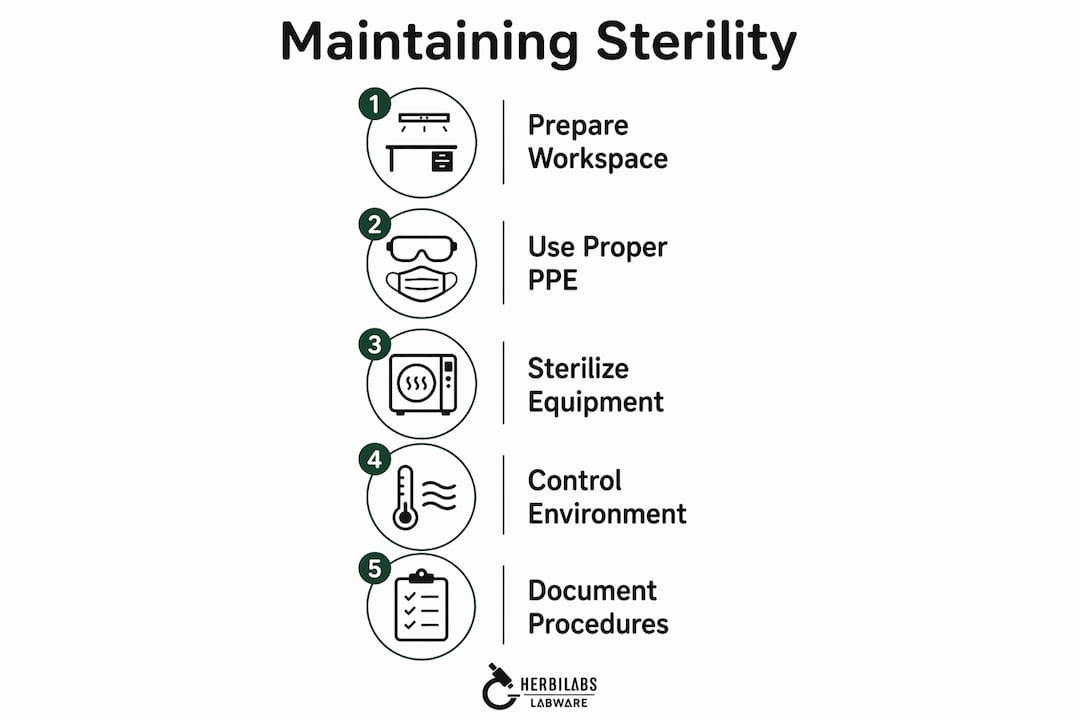
How does sterility differ from disinfection and aseptic technique?
These three concepts are related but not interchangeable. Confusing them is one of the most common sources of contamination events in research settings.
Sterilization completely eliminates all microbial life, including heat-resistant bacterial endospores. Disinfection reduces the microbial load to a safe level but does not achieve complete elimination. Aseptic technique is a set of procedural practices designed to prevent contamination from entering a sterile field, but it does not itself sterilize anything.
| Concept | Microbial elimination | Spore elimination | Regulatory standard | Typical application |
|---|---|---|---|---|
| Sterilization | Complete | Yes | USP <71>, ISO 11135 | Injectable products, surgical instruments |
| Disinfection | Partial | No | CDC, EPA guidelines | Environmental surfaces, non-critical equipment |
| Aseptic technique | None (preventive) | N/A | cGMP, USP <797> | Compounding, cell culture, sample handling |
The distinction matters most at the interface between lab bench work and clinical translation. A researcher using aseptic technique while handling a non-sterile diluent has not produced a sterile product. The technique prevents additional contamination but cannot retroactively sterilize a solution. Sterility in healthcare settings requires that the product itself be sterile before any technique is applied.
When each method is appropriate: use sterilization for any product that will contact sterile tissue, the bloodstream, or a cell culture system. Use disinfection for work surfaces, biosafety cabinets, and non-critical equipment. Apply aseptic technique as a continuous procedural layer on top of sterilization, never as a substitute for it.
What regulatory and quality frameworks govern sterility requirements?
The primary regulatory frameworks for sterility in pharmaceutical and biomedical research are USP <71> (Sterility Tests), FDA 21 CFR Part 211, and ISO 11135 for sterilization of health care products. Each framework addresses a different layer of the sterility assurance system.
USP <71> defines the standard sterility test methodology, including membrane filtration and direct inoculation methods. The test is qualitative, not quantitative. Sterility testing alone cannot guarantee sterility. It functions as a confirmatory check within a broader validated manufacturing process, not as the primary sterility assurance mechanism.
The four pillars of a compliant sterility assurance system:
- Validated sterilization process: The sterilization method (autoclave, gamma irradiation, filtration) must be validated to achieve a sterility assurance level of 10⁻⁶ or better, meaning fewer than one in one million units has a probability of being non-sterile.
- Method suitability validation: False negatives can occur if the sterility test method is not validated for the specific product matrix. Inhibitory substances in the product can suppress microbial growth and mask contamination.
- Environmental and personnel monitoring: Cleanroom classification, viable and non-viable particle counts, and personnel gowning qualification are all required components of a sterility assurance program under FDA and EU GMP guidelines.
- Aseptic process simulation (media fills): Regulatory agencies require periodic media fill studies to validate that aseptic manufacturing processes do not introduce contamination under worst-case conditions.
Pro Tip: Never treat a passing USP <71> sterility test as proof that a batch is sterile. It is evidence that the tested sample showed no growth under defined conditions. The real sterility assurance comes from your validated process.
Standardization of sterilization protocols is the single most effective way to minimize infection transmission risk and maintain regulatory compliance across facilities. Facilities that rely on informal or undocumented procedures consistently show higher rates of contamination events and regulatory findings.
What are the best practices for maintaining sterility in the lab?
Maintaining sterility in a working laboratory requires more than correct technique. It requires a systems-level approach that accounts for environmental variability, human error, and equipment qualification.
Environmental controls and barrier technologies
Isolators and restricted access barrier systems (RABS) provide the highest level of environmental protection for aseptic processing. Biological safety cabinets (Class II, Type A2 or B2) are the standard for cell culture work. The critical principle is that the sterile field must be physically separated from uncontrolled environments at all times.
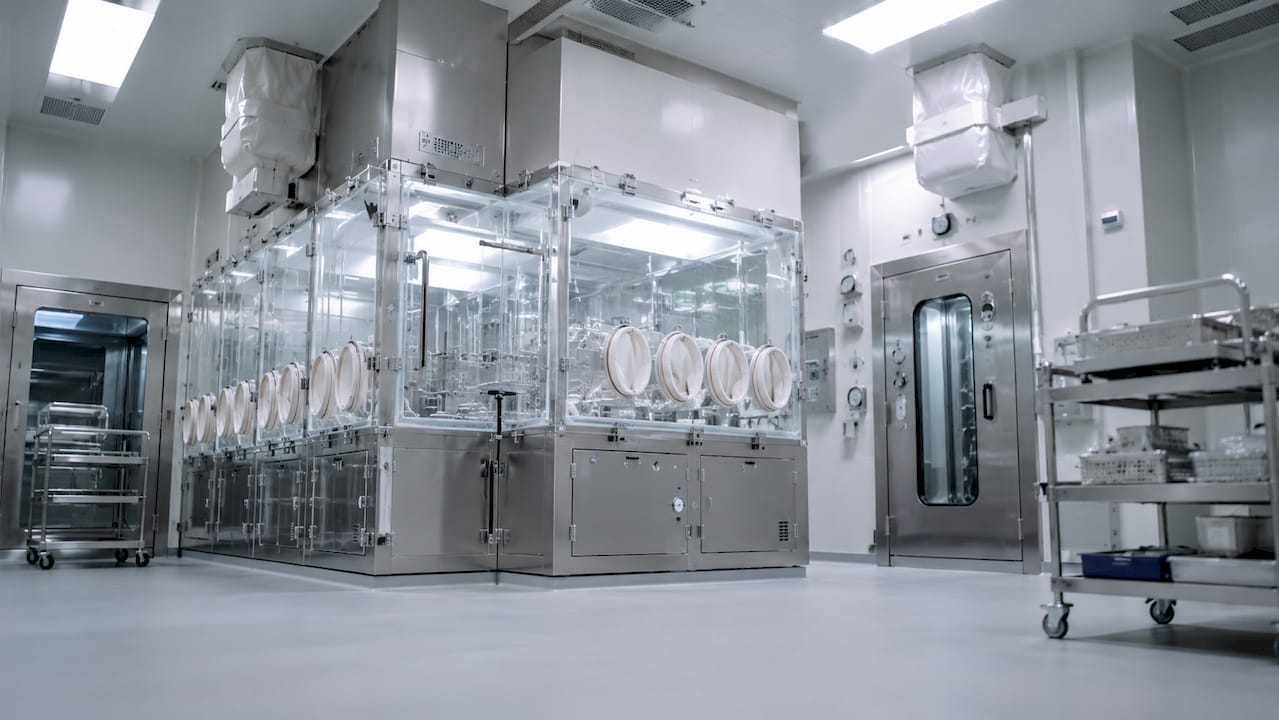
Cleanroom classification under ISO 14644 defines the maximum allowable particle counts per cubic meter. ISO Class 5 (equivalent to FDA Grade A) is required for aseptic filling and any open manipulation of sterile products. Routine environmental monitoring with settle plates, contact plates, and active air sampling provides the data needed to detect environmental drift before it causes a contamination event.
Digital traceability and instrument lifecycle management
RFID and digital logging systems now allow sterilization centers to track every instrument through its full lifecycle, from decontamination through sterilization to point of use. Manual tracking systems are error-prone and reduce accountability when contamination events occur. Digital traceability pinpoints contamination sources with a precision that manual records cannot match.
Key practices for sterile solution handling and field maintenance:
- Use pre-sterilized, single-use consumables wherever possible to eliminate reprocessing variables.
- Follow a validated sterile solution handling protocol that specifies transfer methods, container integrity checks, and maximum hold times after opening.
- Never return unused sterile solution to its original container. Backflow contamination is a documented failure mode.
- Verify filter integrity before and after every sterile filtration step using a bubble point or diffusion test.
- Log all sterilization cycles with cycle parameters, load configuration, and biological indicator results.
Human factors and training
Human error is the leading cause of aseptic processing failures in pharmaceutical manufacturing. Gowning qualification, aseptic technique training, and regular competency assessments are not optional. A single breach in aseptic technique can compromise an entire batch even when all equipment and environmental parameters are within specification. Building a culture where personnel report near-misses without fear of blame is the most effective long-term contamination prevention strategy available.
Key takeaways
Sterility requires validated processes, environmental controls, and trained personnel working together continuously. A passing sterility test confirms the absence of detected growth; it does not confirm that a product is sterile.
| Point | Details |
|---|---|
| Sterility defined | Complete elimination of all viable microorganisms, including spores, is the only acceptable standard for injectable and cell culture products. |
| Testing limitations | USP <71> sterility testing is a confirmatory check, not proof of sterility. Validated processes provide the real assurance. |
| Regulatory frameworks | USP <71>, FDA 21 CFR Part 211, and ISO 11135 govern sterility requirements. Non-compliance triggers batch rejection and regulatory review. |
| Human error risk | A single aseptic technique breach can invalidate a batch. Continuous training and competency assessment are required, not optional. |
| Digital traceability | RFID and digital logging systems reduce contamination risk and improve accountability over manual tracking methods. |
Sterility is a process, not a moment
I have spent years reviewing contamination investigations across pharmaceutical and research settings, and the pattern is consistent. The labs that struggle with sterility failures are almost never failing because of bad equipment or inadequate sterilization methods. They fail because someone treated sterility as a state you achieve once and then maintain passively.
Sterility is a continuous process. Every transfer, every opening, every personnel entry into a controlled environment is a potential breach point. The understanding sterility requirements piece that most researchers miss is this: your sterility test result tells you what happened to a small sample under controlled incubation conditions. It tells you almost nothing about the sterility of the remaining batch.
The most common misconception I encounter is the belief that a validated sterilization method plus a passing sterility test equals a sterile product. That logic ignores everything that happens between sterilization and end use. Container integrity, storage conditions, handling technique, and environmental exposure all contribute to the final sterility status of a product.
The future of sterility assurance is digital. RFID-based instrument tracking, real-time environmental monitoring dashboards, and electronic batch records are not just efficiency tools. They are the infrastructure that makes contamination investigations fast, accurate, and correctable. Labs that invest in this infrastructure now will have a significant advantage as regulatory expectations continue to tighten across the EU and UK.
— Ragnar
How Herbilabs supports your sterility requirements
Researchers who depend on sterile reconstitution solutions cannot afford to compromise on the quality of their starting materials. Herbilabs manufactures bacteriostatic water and sterile diluents to strict purity standards in a dedicated facility, supplying research institutions, universities, and independent researchers across the UK and Europe.

Every product in the Herbilabs catalog is manufactured under rigorous quality control with full traceability from production through delivery. If you are working with peptides or biologics and need reliable sterile solutions, the bacteriostatic water FAQ covers the most common questions researchers ask about sterility, storage, and application. For a direct comparison of solution types, the bacteriostatic vs. sterile water guide gives you the specifics you need to choose correctly for your protocol.
FAQ
What is sterility in a biomedical context?
Sterility is the complete absence of all viable microorganisms, including bacterial endospores, in a product or environment. It is the highest microbiological standard required for injectable pharmaceuticals, cell culture media, and implantable medical devices.
Why does sterility testing not guarantee a sterile product?
USP <71> sterility testing is a qualitative, confirmatory check performed on a small sample. False negatives can occur when the test method is not validated for the specific product matrix, and the test cannot assess the entire batch. Sterility assurance depends on validated manufacturing processes, not test results alone.
What is the difference between sterility and aseptic technique?
Sterility is the end state: the complete absence of viable microorganisms. Aseptic technique is the set of procedural practices used to prevent contamination from entering a sterile field. Aseptic technique does not sterilize; it protects an already sterile product or environment from contamination during handling.
Which regulatory standards apply to sterility testing?
USP <71> governs sterility testing for pharmaceutical products in the United States. FDA 21 CFR Part 211 covers current good manufacturing practice requirements, and ISO 11135 addresses sterilization validation for health care products. EU GMP Annex 1 applies to sterile medicinal product manufacturing in Europe.
How does human error affect sterility in lab settings?
Human error is the primary cause of aseptic processing failures. A single aseptic technique breach can compromise an entire batch even when equipment and environmental parameters are within specification. Regular training, gowning qualification, and competency assessments are the most effective controls.