Private Label, White Label, Wholesale partnerships available - EU, USA and UK - Free shipping from €75

Why Sterile Technique Matters in Lab Research
Discover why sterile technique matters in lab research. Learn how it safeguards your data and ensures reliable, contaminant-free results.
TL;DR:
- Sterile technique is a disciplined system that eliminates microbial contamination, ensuring experimental validity and patient safety.
- Regulatory standards like USP <71> enforce zero tolerance for contamination, emphasizing immediate breach response and proper training.
Sterile technique is not simply about cleanliness. It is a disciplined, validated system for eliminating microbial contamination from materials, surfaces, and processes that would otherwise compromise your experimental data, your reagents, and in applied settings, patient safety. Understanding why sterile technique matters is the starting point for every researcher who works with biological specimens, reconstituted peptides, cell cultures, or sterile solutions. The difference between a contaminated result and a reproducible one often comes down to procedural precision that takes seconds to break and weeks to recover from.
Table of Contents
- Key Takeaways
- Why sterile technique matters for research integrity
- Contamination risks and sterility breaks
- Regulatory standards and sterility testing
- Practical implementation in lab workflows
- My perspective on sterile technique and where labs fall short
- Research-grade sterile solutions from Herbilabs
- FAQ
Key Takeaways
| Point | Details |
|---|---|
| Sterile technique is not optional | Contamination breaks happen within seconds and can invalidate entire batches or experimental runs. |
| Regulatory standards are strict | USP <71> enforces zero tolerance for contamination, meaning a single event triggers batch rejection. |
| Human error is the primary risk | Glove breaches, inattentiveness, and improper field management account for most sterility failures. |
| Governance amplifies procedure | Training, certification, and cross-functional oversight transform technique from individual habit into institutional reliability. |
| Sourcing sterile materials matters | The quality of your starting reagents, water, and diluents directly affects how well sterile technique can perform. |
Why sterile technique matters for research integrity
The significance of aseptic methods goes well beyond avoiding a failed culture plate. Sterile technique is the procedural foundation on which experimental validity rests. When you work with cell lines, peptides, or injectable reconstitution solutions, any introduced microorganism can alter biochemical activity, skew assay readouts, or trigger inflammatory responses in in vivo models that have nothing to do with your test compound.
There is a conceptual distinction worth drawing clearly. Clean technique reduces the number of microorganisms present. Sterile technique eliminates them. The sterile field concept defines a zone of zero microbial tolerance, and procedural discipline means every action within or near that zone is governed by protocol, not judgment calls made in the moment.
Regulatory bodies codify this zero-tolerance standard formally. Under USP General Chapter <71>, sterility is not a sliding scale. A single contamination event in testing leads to batch rejection and triggers a regulatory review of the entire process. That is not bureaucratic excess. It reflects an understanding that microbial contamination is binary in its consequences: either the product is sterile or it is not.
The benefits of sterile procedures extend across every phase of research. Reproducibility depends on consistency, and consistency requires that your working environment, your reagents, and your technique remain controlled from run to run. Contaminated results do not just waste time. They generate false data that can propagate through a study, or worse, through published literature.
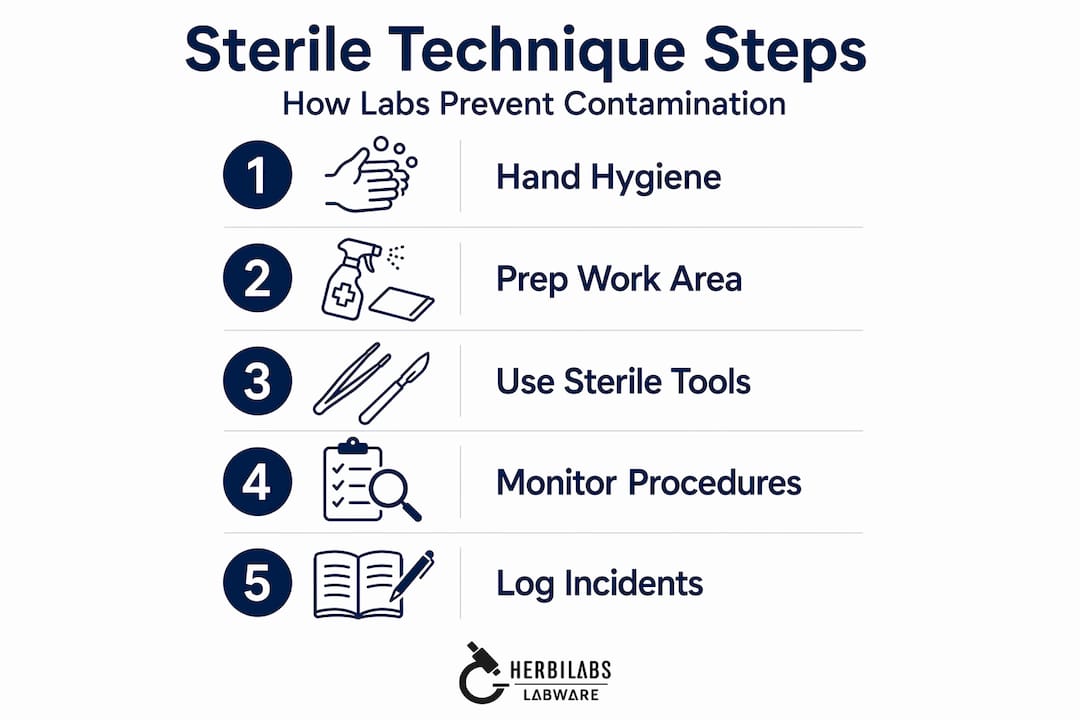
Pro Tip: Treat every sterile field as active rather than passive. A field that is not actively monitored and maintained is one that is already compromised in practice.
Contamination risks and sterility breaks
Contamination sources in laboratory settings fall into three categories: personnel, environment, and equipment. Personnel represent the highest risk by a significant margin. Skin shedding, breath aerosols, glove breaches from contact with non-sterile surfaces, and simple inattentiveness are responsible for the majority of sterility failures in controlled settings.
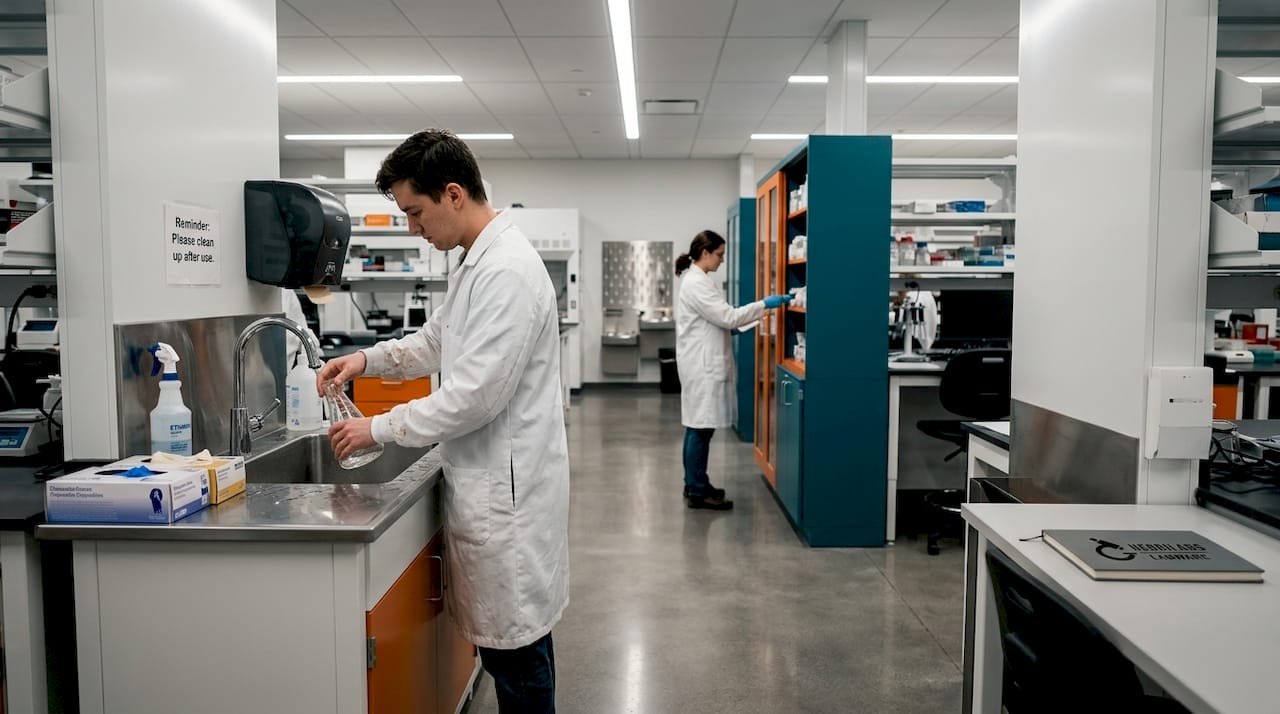
The speed at which a sterility break occurs is genuinely underappreciated. Contamination can occur in seconds if a sterile field is left unattended or if a gloved hand passes over an open sterile container. Recovery from a breach is not a matter of proceeding carefully. Protocol requires immediate field re-establishment, discarding all potentially compromised materials, and logging the event before continuing.
The consequences in institutional settings are well documented. Sterilization failures in hospital environments have directly increased patient infection risk, with procedural lapses causing surgical delays and exposing patients to life-threatening outcomes. The lab research environment carries different stakes, but the contamination mechanisms are identical.
Here is a structured breakdown of the most common contamination events and their recovery actions:
- Glove contact with a non-sterile surface. The glove is considered contaminated. Reglove before continuing. Do not rationalize the contact.
- Unattended sterile field. Any field left without direct visual supervision must be re-established. The duration of inattention is irrelevant.
- Reaching across an open sterile container. The container and any materials below the crossing arm path are compromised. Replace them.
- Condensation or moisture on a sterile package. Moisture is a contamination vector. The package is no longer sterile.
- Talking, coughing, or sneezing over a sterile field. Aerosol droplets carry microorganisms. Maintain spatial distance and use appropriate face coverings.
Pro Tip: Build sterility break logging into your standard operating procedure from day one. A log of near-misses and actual breaks gives you the data to identify which steps in your workflow carry the highest risk, which is the only way to address them systematically.
Regulatory standards and sterility testing
The regulatory framework surrounding sterile technique is not optional guidance. It is the minimum standard for any research output intended for use in human or animal studies, or for any product entering commercial distribution.
USP <71> is the governing standard for sterility testing in the United States and serves as a reference framework internationally. The following comparison illustrates how regulatory requirements differ across sterility assurance approaches:
| Approach | Method | Strength | Limitation |
|---|---|---|---|
| Direct inoculation (USP <71>) | Sample transferred directly into growth media | Simple, cost-effective | Antimicrobials can inhibit growth, producing false negatives |
| Membrane filtration (USP <71>) | Sample filtered; membrane incubated | Handles large volumes and antimicrobials better | Requires validated filter setup; not suitable for all matrices |
| B&F validation testing | Bacteriostasis and fungistasis challenge | Confirms test sensitivity in the presence of antimicrobials | Adds validation burden; required for antimicrobial-containing matrices |
| Environmental monitoring | Settle plates, surface swabs, air sampling | Proactive and continuous | Does not directly test product sterility |
Bacteriostasis and fungistasis validation is a step many labs underestimate. If your matrix contains any antimicrobial compound, including bacteriostatic water used as a diluent, the standard sterility test may fail to detect contamination because the antimicrobial inhibits the indicator organism. B&F testing confirms that your method is actually capable of detecting contamination in that specific matrix. Without it, a passing sterility test tells you nothing reliable.
Validated sterility tests also require extended incubation of at least 14 days, with organism-specific controls to confirm detection sensitivity. Modern contamination control strategy frameworks go further, shifting from reactive testing to proactive risk controls that integrate facility design, personnel behavior, environmental monitoring, and digital data systems into a single governed process.
Digital and risk-based environmental controls represent the direction the field is moving. Real-time particle counting, continuous environmental monitoring, and automated alert systems reduce the window between contamination event and response, which is where most losses occur under traditional testing models.
Practical implementation in lab workflows
Knowing the importance of sterile technique and executing it consistently across a team are two different challenges. The gap between them is where contamination actually occurs in real laboratory environments.
Sterile technique in healthcare and research settings shares the same structural requirements: trained personnel, documented procedures, environmental controls, and regular auditing. Certification and data literacy are foundational. A researcher who understands the microbiology behind why a particular step matters will execute it more reliably than one following a checklist without context. Training that explains the reasoning, not just the action, produces better outcomes.
Practical implementation rests on several pillars:
- Standard operating procedures (SOPs) with zero ambiguity. Every step in a sterile workflow must be written precisely enough that two different technicians perform it identically. Ambiguity in SOPs is a contamination risk.
- Sterile solution handling protocols. How you open, transfer, and store sterile reagents and diluents determines whether they remain sterile once in use. A best-practices workflow for sterile solution handling is not optional documentation. It is a live contamination control tool.
- Environmental controls as prerequisites, not afterthoughts. Laminar flow cabinets, HEPA filtration, and cleanroom classifications must be verified and logged before work begins, not assumed to be functioning.
- Regular auditing with real consequences. Audits that produce no corrective actions are not finding anything because everything is correct. They are finding nothing because the audit is not rigorous enough.
Effective sterility assurance depends on cross-functional governance and auditable processes, not just individual compliance. When sterile technique is treated as a personal responsibility rather than an institutional system, the outcome is inconsistency. When it is governed as infrastructure, it becomes reliable.
Pro Tip: When onboarding new lab members, have them observe and narrate a sterile procedure before performing it. The act of explaining each step aloud reveals gaps in understanding that a written test would never surface.
The impact of sterilization on research outcomes compounds over time. A lab with strong sterile technique generates reproducible data faster, spends less time troubleshooting contaminated runs, and produces outputs with greater regulatory credibility. The why is sterilization important question has a simple answer in the short term and a more significant one across the arc of a research program.
My perspective on sterile technique and where labs fall short
I’ve spent years working with and around sterile processing systems, and the pattern I observe most consistently is this: labs invest in equipment and underinvest in governance. A laminar flow cabinet will not compensate for a culture of approximate compliance.
What I’ve found is that sterility breaks are rarely random events. They cluster around specific workflow transitions, specific personnel, and specific times of day, typically when pressure is high and supervision is low. The labs that catch this pattern are the ones who treat sterility monitoring data as something worth reading rather than something worth filing.
The understaffing and undervaluation of sterile processing roles is a genuine systemic problem that extends beyond hospitals into research settings. The people responsible for maintaining sterile environments are often the last to receive training budget and the first to have their headcount reduced. The consequences of that trade-off do not show up immediately. They show up in contamination events that are attributed to protocol failure rather than resource failure.
My take is that sterile technique effectiveness is 40% procedure and 60% organizational culture. You can write the best SOP in the field and it will still fail in an environment where people feel too rushed or too unobserved to follow it precisely. Investing in certification, advocacy, and recognition for sterile processing professionals is not a soft benefit. It is a contamination control strategy with measurable returns.
— Ragnar
Research-grade sterile solutions from Herbilabs
If your sterile technique is sound, the quality of your starting materials still determines what is achievable. A rigorously maintained sterile field loses its value the moment you introduce a reconstitution solution that does not meet the same purity standard.

Herbilabs manufactures bacteriostatic water, sterile diluents, and reconstitution solutions to research-grade specifications, produced in a dedicated facility with rigorous quality control at every stage. For researchers working with peptides, biologics, or any compound requiring sterile reconstitution, the bacteriostatic water selection guide is a practical starting point for understanding which product fits your protocol. Herbilabs supplies institutions, universities, and independent researchers across the UK and Europe, with wholesale pricing available for resellers and professional buyers. Your technique deserves materials that match its precision.
FAQ
What is sterile technique in a laboratory context?
Sterile technique refers to a set of validated procedures designed to prevent microbial contamination of materials, surfaces, and processes during laboratory work. Unlike clean technique, which reduces microbial load, sterile technique aims for complete elimination within a defined sterile field.
How does sterile technique prevent infection and contamination?
Sterile technique prevents contamination by controlling every potential source of microorganism introduction, including personnel, environment, and equipment. Breaches are addressed immediately through field re-establishment rather than continued cautious work, which prevents transmission of contaminants to downstream samples or subjects.
What happens when sterile technique fails under USP <71>?
Under USP <71>, a single contamination event during sterility testing results in full batch rejection and triggers regulatory scrutiny of the entire manufacturing or testing process. There is no acceptable threshold for contamination in sterility-tested products.
Why is B&F validation required for sterility testing?
Bacteriostasis and fungistasis validation confirms that the sterility test method can actually detect contamination in matrices that contain antimicrobial agents. Without this validation, an antimicrobial compound in your sample could suppress indicator organism growth, producing a false-negative sterility result.
What is a contamination control strategy and why does it matter?
A contamination control strategy is a risk-based, integrated quality system that combines facility design, personnel behavior, environmental monitoring, and process controls to prevent contamination proactively. It represents a shift from testing products for sterility after the fact to preventing contamination events from occurring at all.