Private Label, White Label, Wholesale partnerships available - EU, USA and UK - Free shipping from €75

How to Select Sterile Labware: A Lab Pro’s Guide
Learn how to select sterile labware effectively to ensure contamination-free results. This guide covers materials, methods, and common mistakes!
TL;DR:
- Choosing the correct sterile labware involves matching sterilization methods and materials to prevent contamination and experiment failure. Proper selection, handling, and storage are essential for maintaining sterility, especially in molecular biology and cell culture applications. Awareness of common mistakes and supplier communication helps ensure reliable results and lab safety.
Sterile labware selection is defined as the process of matching labware materials, sterilization methods, and application-specific requirements to guarantee contamination-free laboratory results. Knowing how to select sterile labware correctly is not optional for researchers working with cell cultures, molecular biology assays, or reconstitution solutions. The wrong choice causes deformation, failed sterilization, or biochemical interference that invalidates entire experiments. This guide covers sterilization methods, material compatibility, aseptic handling, and the most common selection mistakes, giving you a practical framework you can apply immediately.
How to select sterile labware: sterilization methods first
Sterilization method is the first decision you make, and every other choice flows from it. Sterilization is a deliberate engineering choice balancing microbial lethality with material compatibility. No single method works for every labware type or application.
Steam sterilization (autoclaving)
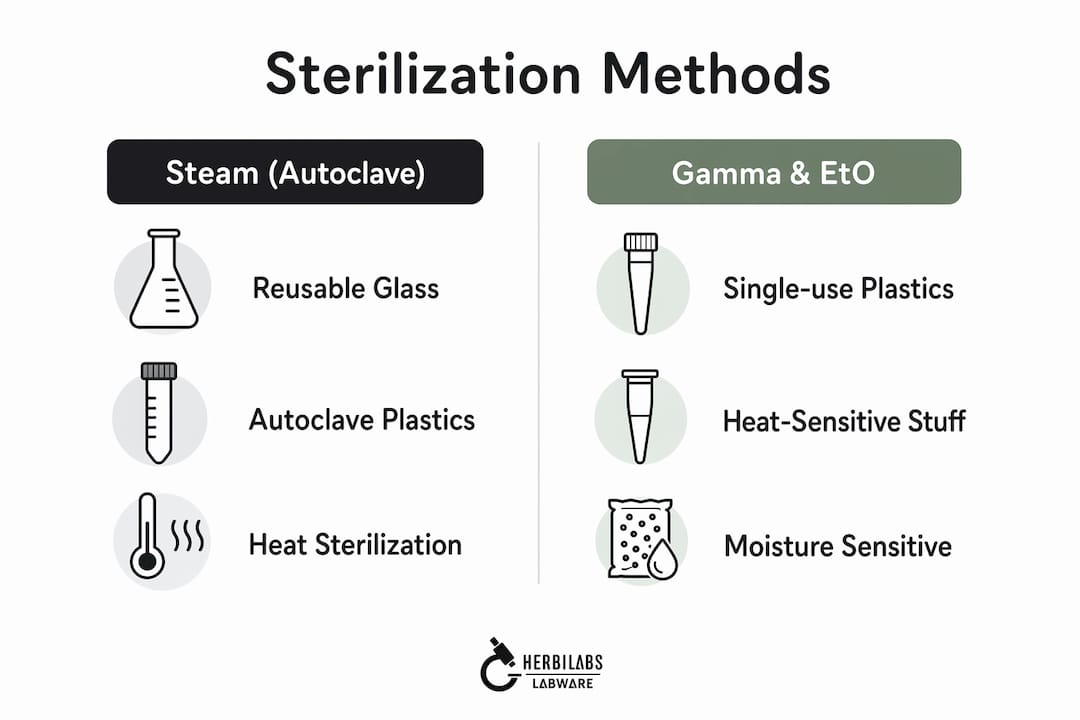
Autoclaving is the most widely used method for reusable glass and autoclave-rated plastics. DIN EN 285 specifies 121°C for a minimum of 20 minutes under saturated steam at 15 psi for effective sterilization. That standard exists because lower temperatures or shorter cycles leave viable spores behind.
Not all autoclaves are equal. A pre-vacuum autoclave is required for complex, hollow, or wrapped loads such as pipette tip racks, where air pockets block steam penetration. Gravity displacement units work for simple, open loads but fail on anything with trapped air. Choosing the wrong autoclave type for your load is one of the most common and costly mistakes in lab sterilization.
Gamma irradiation, ethylene oxide, and dry heat
Gamma irradiation suits high-volume single-use plastics like pipette tips and petri dishes that cannot tolerate heat. It penetrates packaging, making it ideal for pre-sterilized disposables. Excessive radiation dose can affect assay sensitivity, so always confirm the dose specification with your supplier.
Ethylene oxide (EtO) sterilization handles heat-sensitive and moisture-sensitive items that gamma irradiation cannot reach effectively. Dry heat sterilization works for glassware and metal instruments but requires temperatures above 160°C for extended periods, making it unsuitable for any plastic. Sterile filtration is the method of choice for heat-labile liquids and gases, requiring pre-use and post-use integrity testing to validate the filter membrane.
| Sterilization Method | Best For | Key Limitation |
|---|---|---|
| Steam (Autoclave) | Reusable glass, autoclave-rated plastics | Degrades non-rated plastics; needs correct autoclave type |
| Gamma Irradiation | Single-use disposable plastics | High dose may affect sensitive assays |
| Ethylene Oxide | Heat and moisture-sensitive items | Long aeration time; residue concerns |
| Dry Heat | Glassware, metal instruments | Not suitable for any plastic labware |
| Sterile Filtration | Heat-labile liquids and gases | Requires validated filter integrity testing |
Pro Tip: Always confirm the sterilization method used by your supplier before purchasing pre-sterilized labware. Gamma-irradiated and EtO-sterilized items carry different residue profiles that can interfere with specific assays.
How do material properties affect sterile labware selection?
Material choice determines whether your labware survives sterilization and whether it introduces contaminants into your assay. The four materials you encounter most often are polypropylene (PP), polycarbonate (PC), borosilicate glass, and stainless steel.
Autoclavable vs. non-autoclavable plastics
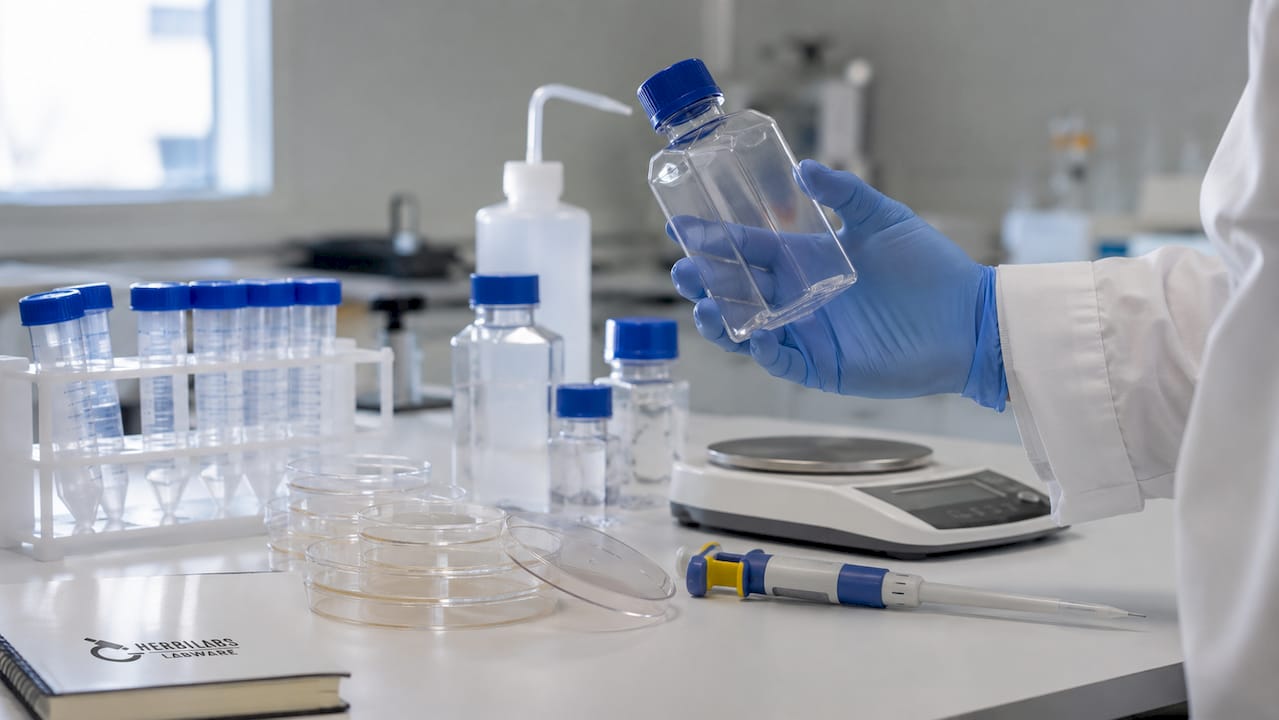
Polypropylene is the gold standard for autoclavable plastics. It tolerates repeated 121°C cycles without significant deformation and resists most common laboratory chemicals. Using polycarbonate or non-autoclavable plastics in autoclaves leads to weakening or distortion, which compromises both the labware and the sterility of its contents. Always look for the autoclave-safe symbol on packaging before running any plastic through a steam cycle.
Polycarbonate is optically clear and mechanically strong, making it useful for centrifuge tubes and carboys, but it is not reliably autoclavable at standard parameters. High-density polyethylene (HDPE) and polystyrene are generally not autoclavable and should only be used with gamma-irradiated or EtO-sterilized products.
Specialized labware and application-specific requirements
Tissue culture-treated plastics carry a surface modification that promotes cell attachment. These items are always gamma-irradiated and individually wrapped. They cannot be re-sterilized without destroying the surface treatment.
For molecular biology work, labware labeled DNase/RNase-free and pyrogen-free is non-negotiable. These designations confirm the absence of biochemical contaminants that would degrade nucleic acids or trigger immune responses in cell-based assays. Standard sterile labware does not carry these guarantees. When you are running PCR, RNA extraction, or peptide reconstitution, the difference between sterile and DNase/RNase-free is the difference between a valid result and a failed experiment.
Packaging format also matters. Bulk-packed sterile items reduce per-unit cost but require aseptic dispensing in a controlled environment. Individually wrapped items cost more but maintain sterility at the point of use without additional environmental controls. For reliable peptide research, individually wrapped labware is almost always the right call.
- Polypropylene (PP): Autoclavable, chemical-resistant, best for tubes, bottles, and tips
- Polycarbonate (PC): Not reliably autoclavable; use gamma-irradiated versions for sterile applications
- Borosilicate glass: Autoclavable and dry-heat compatible; inert and non-reactive
- Stainless steel: Autoclavable and dry-heat compatible; used for instruments and reusable tools
- Tissue culture-treated PS: Gamma-irradiated only; single-use, surface-modified for cell work
What are best practices for assembling and handling sterile labware?
Sterility ends the moment you open packaging incorrectly. Aseptic technique during assembly and handling is as critical as the sterilization method itself.
- Inspect packaging before opening. Damaged packaging or expired sterility dates negate sterility claims entirely. Check every unit before use, not just the outer carton.
- Open inside a biosafety cabinet or laminar flow hood. Environmental controls during handling prevent airborne contamination from reaching sterile surfaces. Opening sterile labware on an open bench, even briefly, introduces risk.
- Wear appropriate gloves and change them between tasks. Nitrile gloves are standard. Touching the interior of a sterile tube or the tip of a pipette with an ungloved or contaminated hand destroys sterility immediately.
- Do not pre-open sterile items. Open labware only when you are ready to use it. Sterility is time-dependent once packaging is breached.
- Orient plastic labware correctly during autoclaving. Plastic labware must be stood upright and not stacked during steam sterilization to prevent deformation and allow uniform steam contact.
- Pre-clean labware before autoclaving. Residual contamination bakes on during autoclaving, shielding microorganisms and reducing sterilization effectiveness. Rinse all labware thoroughly before loading.
Storage conditions matter beyond the sterilization event itself. Store sterile labware in sealed bags or closed cabinets away from UV light and humidity. Most manufacturers assign a sterility expiration date based on packaging integrity, not a fixed calendar period. A sealed, undamaged package maintains sterility far longer than one stored loosely in a drawer. For a full protocol on maintaining sterility through your workflow, the sterile lab equipment workflow guide from Herbilabs covers the procedural steps in detail.
Pro Tip: Label autoclaved items with the sterilization date and cycle parameters using autoclave tape. Tape that changes color confirms heat exposure but does not confirm sterility. Use biological indicators (spore strips) periodically to validate your autoclave cycle.
What are common mistakes when selecting sterile labware?
Most contamination events in the lab trace back to a small set of predictable errors. Recognizing them before they happen is faster than troubleshooting after a failed experiment.
- Mismatching sterilization method and material. Running polycarbonate through a standard autoclave cycle deforms the labware and may not achieve sterility if the material warps before full steam penetration. Always verify the material’s rated sterilization method before purchasing.
- Using a gravity autoclave for hollow or wrapped loads. Air trapped in hollow labware like pipette tips prevents steam from contacting microorganisms. Only a pre-vacuum cycle removes that trapped air reliably.
- Ignoring packaging damage. A pinhole in a sterile bag is invisible at a glance but sufficient to allow microbial ingress over time. Inspect every package under good lighting before use.
- Selecting standard sterile labware for molecular biology. Sterile does not mean DNase/RNase-free or pyrogen-free. Using the wrong grade in RNA work or peptide reconstitution introduces biochemical interference that no downstream protocol can correct.
- Skipping pre-cleaning before autoclaving. Residual detergents or biological material on labware surfaces can damage plastics and protect microorganisms during the sterilization cycle. Pre-cleaning is not optional.
“Sterilization method and material compatibility are not independent variables. Every labware selection decision must treat them as a matched pair, not separate checklist items.”
For a detailed look at sanitization protocols that complement sterile labware selection, the labware sanitization guide covers pre-cleaning and decontamination steps for lab technicians.
Key takeaways
Selecting sterile labware correctly requires matching sterilization method, material compatibility, and application-specific requirements as a single integrated decision, not three separate steps.
| Point | Details |
|---|---|
| Match method to material | Confirm autoclave, gamma, or EtO compatibility before purchasing any labware. |
| Pre-vacuum for hollow loads | Use a pre-vacuum autoclave for pipette tips, wrapped items, or any hollow labware. |
| DNase/RNase-free for molecular work | Standard sterile labware is insufficient for RNA, PCR, or peptide reconstitution applications. |
| Inspect packaging every time | Damaged or expired packaging negates sterility regardless of the original sterilization method. |
| Pre-clean before autoclaving | Residual contamination on labware surfaces reduces sterilization efficacy and can damage plastics. |
Where conventional wisdom on sterile labware gets it wrong
I have spent years watching researchers treat sterile labware selection as a procurement task rather than a scientific decision. The assumption is that any item labeled “sterile” is interchangeable with any other. That assumption costs experiments.
The most underappreciated variable is autoclave type. Labs routinely purchase gravity displacement autoclaves because they are cheaper, then wonder why their pipette tip sterilization cycles fail validation. Purchasing the correct autoclave depends on load complexity. A gravity unit cannot remove air from hollow loads. That is physics, not a settings problem.
The second thing I have seen consistently overlooked is the distinction between sterile and application-grade. A tube that is sterile by gamma irradiation is not automatically DNase-free. Suppliers who manufacture to both standards will say so explicitly. If the certificate of analysis does not list both, assume it covers only one.
My practical advice: build a short compatibility matrix for your lab’s most common workflows before placing any labware order. List the sterilization method required, the material rated for that method, and the application-specific grade needed. Three columns, five minutes. It prevents the kind of mismatch that sends you back to square one after a failed assay. Supplier communication matters here too. A good supplier will tell you the sterilization method, dose, and any residue considerations upfront. If they cannot answer those questions, find one who can.
— Ragnar
Herbilabs sterile labware: research-grade products for demanding labs
Herbilabs supplies research-grade sterile labware and reconstitution solutions manufactured to strict purity standards, with rigorous quality control at every production stage. Every product ships with verified sterility, and the range includes options suited to molecular biology, peptide reconstitution, and general research applications.

If you work with bacteriostatic water or sterile diluents, the bacteriostatic water FAQs page covers compatibility questions that directly affect labware selection. For researchers who need a complete picture of sterile versus bacteriostatic water options, Herbilabs also publishes a detailed bacteriostatic vs. sterile water comparison guide. Browse the full catalog at the Herbilabs shop or contact the team directly for wholesale pricing and tailored product recommendations.
FAQ
What is the correct autoclave temperature for plastic labware?
Standard steam sterilization requires 121°C for a minimum of 20 minutes at 15 psi, per DIN EN 285. Only plastics rated autoclavable, primarily polypropylene, should be run at these parameters.
How do i know if labware is dnase/rnase-free?
The certificate of analysis or product label must explicitly state DNase/RNase-free status. Standard sterile labware does not carry this designation, and the two are not interchangeable for molecular biology applications.
When should i use a pre-vacuum autoclave instead of gravity?
Use a pre-vacuum autoclave for any hollow, wrapped, or complex load such as pipette tip racks. Gravity displacement units cannot remove trapped air from these items, which prevents effective steam sterilization.
Does damaged packaging affect sterility?
Yes. A compromised package, even a small puncture or seal failure, negates the sterility claim regardless of the original sterilization method. Inspect every unit before use.
What is the difference between sterile and pyrogen-free labware?
Sterile labware is free of viable microorganisms. Pyrogen-free labware additionally lacks endotoxins and other biochemical contaminants that can trigger immune responses in cell-based or injectable applications. Both designations must appear on the product documentation to be valid.