Private Label, White Label, Wholesale partnerships available - EU, USA and UK - Free shipping from €75

pH in Laboratory Solutions: Why It Matters for Labs
Discover the importance of pH in laboratory solutions. Learn how pH affects experimental accuracy and why it’s crucial for lab success.
TL;DR:
- Accurate pH control is essential for maintaining reagent stability, enzyme activity, and reliable biological results in labs.
- Proper buffer selection, calibration, and documentation ensure reproducibility and compliance with regulatory standards.
pH is defined as the measure of hydrogen ion activity in a solution, and its importance of pH in laboratory solutions cannot be overstated. A shift of even one pH unit represents a tenfold change in hydrogen ion concentration. That magnitude of change can degrade reagents, denature proteins, and invalidate entire datasets. Regulatory bodies including the United States Pharmacopeia (USP), British Pharmacopoeia (BP), and Indian Pharmacopoeia (IP) all mandate strict pH measurement protocols for compendial use. For researchers and laboratory professionals, pH is not a background variable. It is a primary experimental control.
Why pH levels in lab solutions determine experimental accuracy
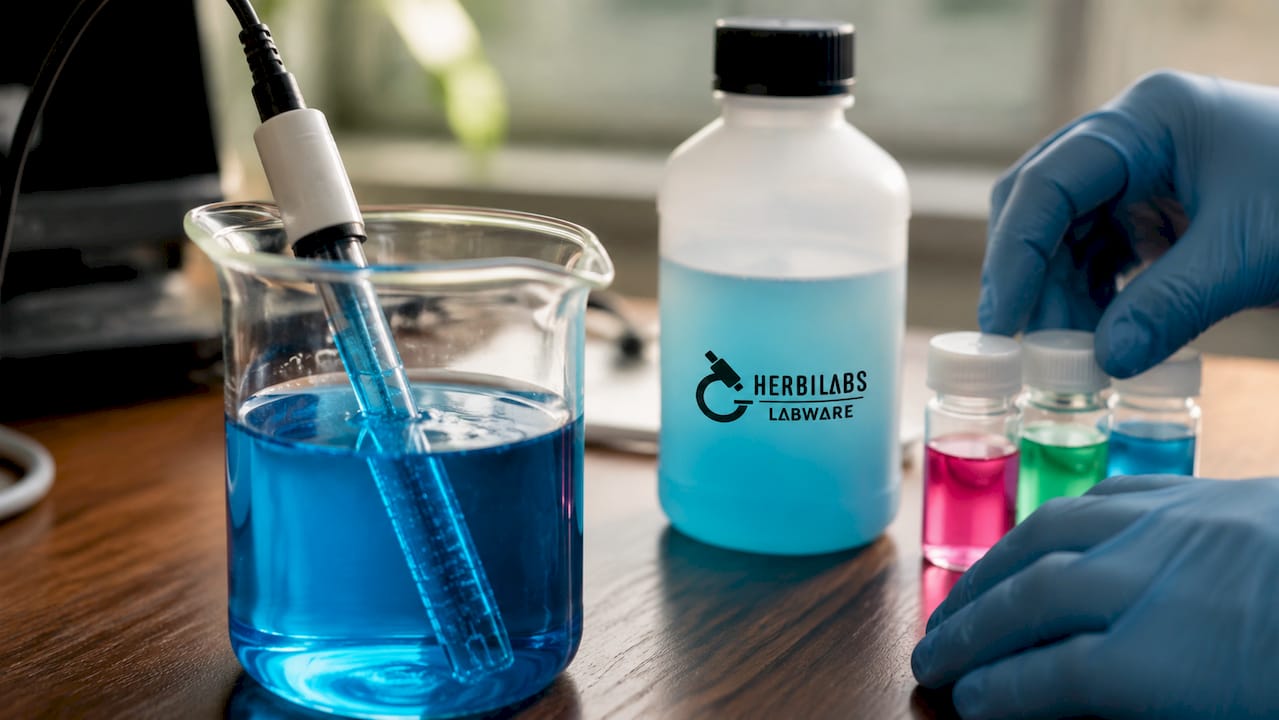
pH governs nearly every chemical and biological process that takes place in a laboratory setting. pH affects proteins, enzymes, and cell cultures at the molecular level, where even minor deviations can cause denaturation or inhibited growth. That sensitivity means a cell culture medium prepared at pH 7.6 instead of 7.4 can suppress proliferation without any other variable changing. The error is invisible until the data fails to reproduce.
Reagent stability is equally vulnerable. Acidic or basic deviations from a reagent’s specified pH range accelerate hydrolysis, oxidation, and precipitation. An antibody stored in a buffer that has drifted 0.3 units from its target pH can lose binding affinity within days. Researchers who attribute assay failure to reagent lot variation often overlook pH drift as the actual cause.
The effects of pH on experiments extend to reaction kinetics as well. Enzyme-catalyzed reactions follow bell-shaped activity curves centered on an optimal pH. Stray outside that window and reaction rates drop sharply, producing results that appear biologically meaningful but are actually artifacts of poor solution preparation.
Unsafe reactions are another real risk. Mixing reagents at incorrect pH values can trigger exothermic events, gas evolution, or precipitation that contaminates samples. Understanding reagent quality control practices reduces these risks before they reach the bench.
Pro Tip: Always verify the pH of reconstituted reagents immediately after preparation, not just at the time of buffer stock creation. pH can shift during dilution, especially when moving between high and low ionic strength solutions.
- Protein denaturation begins at pH values outside the 6.0–8.0 range for most mammalian assays.
- Enzyme activity loss can exceed 50% with a deviation of just 0.5 pH units from the optimum.
- Cell culture media require pH 7.2–7.4 for standard mammalian cell lines; values outside this range alter gene expression patterns.
- Pharmaceutical formulations must meet compendial pH specifications to pass quality release testing.
What buffer systems and pH meters do labs rely on?
Buffer systems are the primary tools for maintaining stable pH in laboratory solutions. Common lab buffers cover a wide working range: acetate (pH 3.6–5.6), phosphate (pH 6.0–8.0), tris (pH 7.0–9.0), citrate (pH 3.0–6.2), borate (pH 8.0–10.0), and carbonate (pH 9.2–11.0). Each system works because its components resist pH change near the pKa of the weak acid involved. Selecting the wrong buffer for a given pH target reduces buffering capacity and makes the solution vulnerable to drift.
Buffer selection should always match the pKa of the buffering agent to the target pH within one unit. Phosphate buffer is the standard choice for physiological pH work because its pKa of 7.2 sits directly within the range most biological assays require. Tris is widely used in molecular biology but carries a significant temperature dependence, dropping roughly 0.03 pH units per degree Celsius increase. That shift matters in any assay run at 37°C rather than room temperature.
| Buffer system | Effective pH range | Common applications |
|---|---|---|
| Acetate | 3.6–5.6 | Enzyme assays, food science |
| Citrate | 3.0–6.2 | Protein crystallization, HPLC |
| Phosphate | 6.0–8.0 | Cell culture, biochemical assays |
| Tris | 7.0–9.0 | Molecular biology, electrophoresis |
| Borate | 8.0–10.0 | Nucleic acid work, capillary electrophoresis |
| Carbonate | 9.2–11.0 | Alkaline enzyme assays |
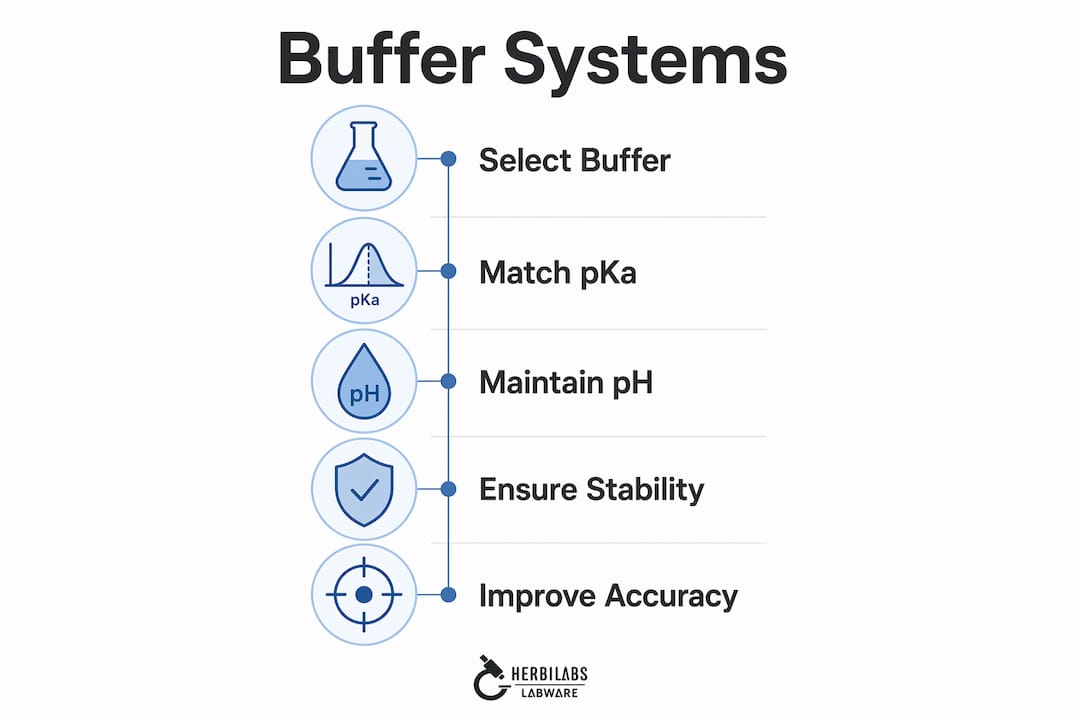
For measurement, research-grade pH meters can display resolution down to 0.001 pH units. That resolution is only meaningful when electrode calibration and environmental conditions are properly controlled. A high-resolution meter reading through a poorly calibrated electrode produces precise numbers that are simply wrong.
Temperature compensation is not optional. Temperature dependence of pH requires temperature-compensated buffer solutions during meter calibration to avoid significant measurement errors. Automatic temperature compensation (ATC) corrects for the Nernst equation’s temperature sensitivity in real time, and every modern research-grade meter should have it enabled by default.
Pro Tip: Store reference buffer solutions in small aliquots and discard after opening. Repeated exposure to air introduces CO2, which lowers pH and corrupts your calibration baseline.
For researchers who want a deeper look at buffer roles in research, the chemistry behind buffer selection directly affects how reliably a solution holds its target pH under experimental stress.
How to calibrate pH meters and maintain compliance
Calibration is where measurement accuracy is either secured or lost. USP, BP, and IP standards require pH meters used for compendial purposes to reproduce pH values within 0.02 units and to be calibrated with standardized buffer solutions at 25 ± 2°C. That tolerance is tight. It means a single degree of temperature deviation during calibration can push readings outside acceptable limits.
A compliant calibration workflow follows a clear sequence:
- Prepare fresh calibration buffers. Use certified reference buffers with documented traceability. Discard any buffer that has exceeded its shelf life or shows signs of contamination.
- Equilibrate to temperature. Allow both the electrode and the calibration buffers to reach 25°C before starting. Temperature mismatch between electrode and buffer is one of the most common sources of calibration error.
- Perform a two-point or three-point calibration. Bracket the expected sample pH range with two calibration points. Add a third point when samples span more than three pH units.
- Verify slope. A healthy electrode produces a slope between 95% and 105% of the theoretical Nernst value (59.16 mV per pH unit at 25°C). A slope below 90% signals electrode degradation.
- Document every calibration. Record buffer lot numbers, expiration dates, temperature, slope, and offset. ISO 17025 and ISO 9001 require metrological traceability, meaning your pH values must be anchored to international reference standards through an unbroken chain of documented calibrations.
- Recalibrate at defined intervals. High-throughput labs calibrate before each measurement session. Regulatory environments often require calibration at the start and end of each analytical run.
Electrode maintenance is equally critical. Electrode storage solutions prevent dehydration and ionic drift; storing an electrode in deionized water degrades its function over time by leaching ions from the reference junction. Use the manufacturer-specified storage solution and replace it regularly.
Treating pH meters as plug-and-play devices is a documented misconception. Applying electrochemical theory and standard operating procedures is necessary to minimize drift and maintain data validity. Labs that skip this step produce data that looks clean but fails inter-laboratory reproducibility checks.
Where does precise pH control matter most in practice?
Precise pH control is most critical in cell culture, pharmaceutical formulation, and any assay where biological activity is the readout. Cell culture media at pH 7.4 support normal mammalian physiology. A drift to 7.1 or 7.7 activates stress responses that alter protein expression, making results from those cultures unreliable for downstream analysis.
Pharmaceutical formulation work carries regulatory consequences beyond data quality. A parenteral solution outside its specified pH range fails release testing and cannot be used. The cost of a single failed batch, in both materials and time, far exceeds the investment in proper pH management infrastructure.
Reproducibility across experiments depends on lab quality control practices that treat pH as a logged, traceable variable. Researchers who document buffer preparation dates, lot numbers, and pH readings at time of use can identify drift patterns before they corrupt a full experimental series.
Buffers exposed to air absorb CO2, which lowers pH and compromises reproducibility. Professional labs maintain strict logs and discard buffers after shelf-life expiration. That practice is not excessive caution. It is the minimum standard for data that will survive peer review or regulatory audit.
- Label every buffer with preparation date, lot number, target pH, and expiration.
- Log actual measured pH at time of use, not just at preparation.
- Integrate pH verification into standard operating procedures for every assay type.
- Review pH logs quarterly to detect systematic drift in electrode performance or buffer quality.
- Consider inline pH monitoring for continuous bioprocessing or fermentation workflows, where manual spot checks miss transient excursions.
Key Takeaways
Accurate pH control is the single most consequential variable in laboratory solution preparation, and neglecting it invalidates data that no statistical method can recover.
| Point | Details |
|---|---|
| pH defines solution behavior | Hydrogen ion activity controls reagent stability, enzyme kinetics, and cell viability in every assay. |
| Buffer selection is critical | Match buffer pKa to target pH within one unit; phosphate covers physiological range, tris suits molecular biology. |
| Calibration must meet standards | USP, BP, and IP require pH meter accuracy within 0.02 units using certified buffers at 25 ± 2°C. |
| Traceability protects compliance | ISO 17025 and ISO 9001 require documented calibration chains anchored to international reference standards. |
| Buffer integrity degrades over time | CO2 absorption and expired buffers shift pH readings; log, label, and discard on schedule. |
pH precision is a lab culture problem, not just a technique problem
I have reviewed data from labs that run sophisticated assays on instruments worth hundreds of thousands of dollars, then prepare their buffers from unlabeled stock solutions sitting on a shelf for three weeks. The disconnect is striking. Researchers invest enormous effort in experimental design and statistical power, then introduce a variable they never measure: pH drift in working solutions.
The uncomfortable truth is that most pH errors in labs are not instrument failures. They are procedural failures. Electrodes stored in deionized water, calibration buffers used past expiration, temperature equilibration skipped because the run is urgent. Each shortcut feels minor in isolation. Collectively, they produce the kind of irreproducible data that erodes confidence in an entire research program.
What I have found actually works is treating pH management as a quality system, not a measurement task. That means written SOPs, calibration logs reviewed by a second person, and buffer preparation treated with the same rigor as reagent preparation. Labs that adopt this mindset stop chasing mysterious assay failures and start generating data they can defend.
The shift does not require new equipment. It requires the decision that pH accuracy is non-negotiable, not a detail to address when results look odd.
— Ragnar
Herbilabs and the quality your lab solutions deserve
Reliable pH management starts with solutions prepared to documented purity standards. Herbilabs supplies research-grade bacteriostatic water, sterile diluents, and reconstitution solutions manufactured under strict quality control for research institutions, universities, and independent researchers across the UK and Europe.

Every Herbilabs product ships with documented manufacturing standards designed to support the kind of reproducible, traceable work that peer review and regulatory audit demand. For researchers working with peptides or sensitive biological reagents, the reconstitution solution guide covers how solution purity and pH interact in practice. Browse the full range of research-grade products at the Herbilabs shop and source solutions that hold up to the standards your work requires.
FAQ
What is the importance of pH in laboratory solutions?
pH determines the chemical behavior of every solution in a lab, controlling reagent stability, enzyme activity, and biological assay outcomes. A deviation of even 0.5 pH units can denature proteins or invalidate experimental results.
How often should lab pH meters be calibrated?
USP, BP, and IP standards require calibration with certified buffer solutions at 25 ± 2°C before compendial use, with most regulatory environments requiring calibration at the start and end of each analytical run.
Which buffer system is best for physiological pH work?
Phosphate buffer (pH 6.0–8.0) is the standard choice for physiological pH work because its pKa of 7.2 aligns directly with the range required by most mammalian cell and biochemical assays.
Why do buffer solutions change pH over time?
Buffers exposed to air absorb atmospheric CO2, which lowers pH and compromises measurement accuracy. Proper labeling, sealed storage, and disposal after shelf-life expiration prevent this drift.
What does metrological traceability mean for pH measurement?
Metrological traceability means your pH measurements are anchored to international reference standards through a documented calibration chain, as required by ISO 17025 and ISO 9001, reducing the risk of rejected batches and ensuring global data consistency.