Private Label, White Label, Wholesale partnerships available - EU, USA and UK - Free shipping from €75

Water Quality in Peptide Research: A Lab Guide
Discover the role of water quality in peptide research. This lab guide highlights essential water types, contaminants, and verification steps for reliable...
TL;DR:
- Water quality is crucial in peptide research, affecting solubility, stability, and assay accuracy. Using the appropriate water type and verifying its quality prevent contamination issues that can cause irreproducible data. Proper documentation and storage practices ensure reliable, reproducible experimental results.
Water quality is the single most consequential variable in peptide reconstitution, directly governing solubility, stability, and assay reproducibility. The role of water quality in peptide research extends far beyond simple hydration of a lyophilized compound. Ionic contaminants shift pH and disrupt binding affinity. Endotoxins trigger false biological signals in cell-based assays. Organic residues interfere with HPLC and UV absorbance readings. Researchers who treat solvent selection as an afterthought routinely produce irreproducible data. This guide covers the water types used in peptide labs, the contaminants that matter most, and the verification steps that protect experimental integrity.
What types of water are used in peptide research?
Reconstitution water is not a single product. Researchers choose among several grades, and each carries distinct properties that affect peptide behavior.
Sterile water for injection is preservative-free and manufactured under aseptic conditions. It delivers high purity with no antimicrobial additives, making it the correct choice for peptides that are chemically sensitive to preservatives. The critical limitation is single-use only. Once the vial seal is broken, microbial contamination risk rises sharply, and the remaining volume must be discarded.
Bacteriostatic water contains 0.9% benzyl alcohol as a preservative. That additive suppresses microbial growth and enables multi-use vials with stability up to 28 days when refrigerated. That 28-day window is a practical advantage for labs running repeated experiments from a single batch. Understanding the current bacteriostatic water standards helps researchers apply this correctly in 2026 lab contexts.
However, benzyl alcohol is not chemically inert. Certain peptides, including GLP-1 analogs, show documented incompatibility with benzyl alcohol, leading to degradation or unexpected assay signals. Hormone analog peptides are the most commonly affected class.
USP-grade purified water meets United States Pharmacopeia specifications for chemical purity but is not sterile by default. It suits preparatory steps in synthesis workflows but requires additional processing before use in biological assays.
- Sterile water: preservative-free, single-use, best for sensitive peptides
- Bacteriostatic water: 0.9% benzyl alcohol, multi-use up to 28 days refrigerated
- USP-grade purified water: chemically defined, not sterile, suited for synthesis prep
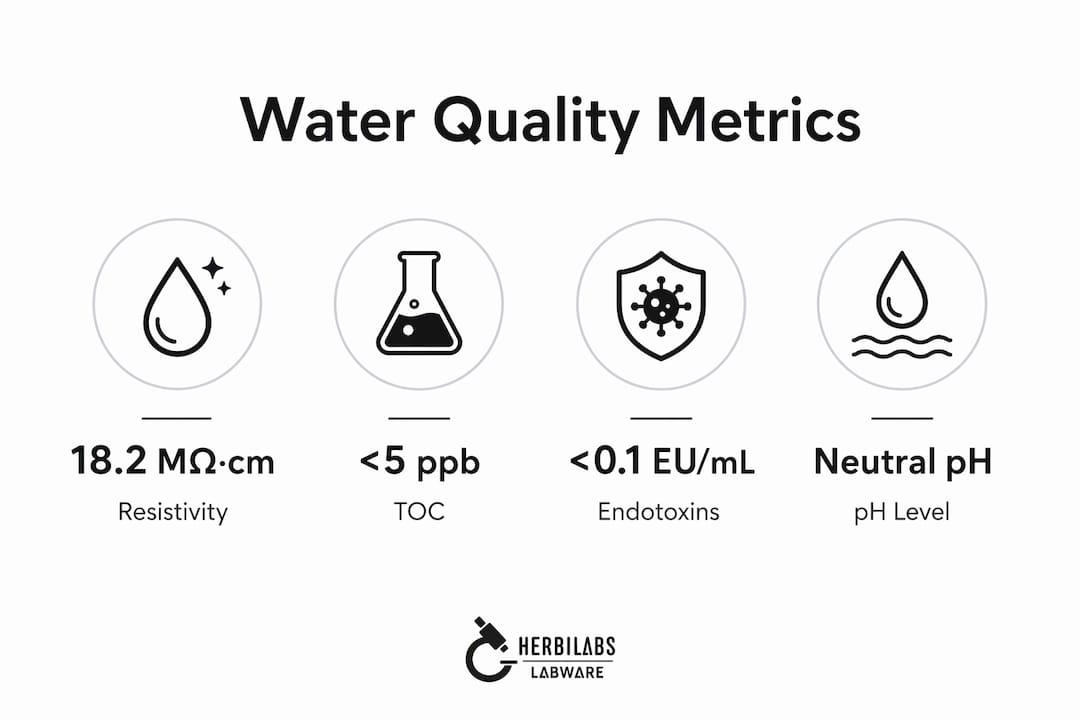
- Ultrapure water (Type 1): resistivity of 18.2 MΩ·cm at 25°C, used in analytical workflows
Reconstitution water is not interchangeable. Selecting the wrong type based on convenience rather than peptide chemistry is a reproducibility failure waiting to happen.
Pro Tip: Always check the peptide’s published stability data before choosing between sterile and bacteriostatic water. If the manufacturer lists benzyl alcohol as incompatible, sterile water is the only safe option regardless of convenience.
How does water quality affect peptide stability and research outcomes?
Contaminated water does not announce itself. Clear, colorless water can carry endotoxins, dissolved metals, and organic residues that silently corrupt experimental data.
Ionic contaminants
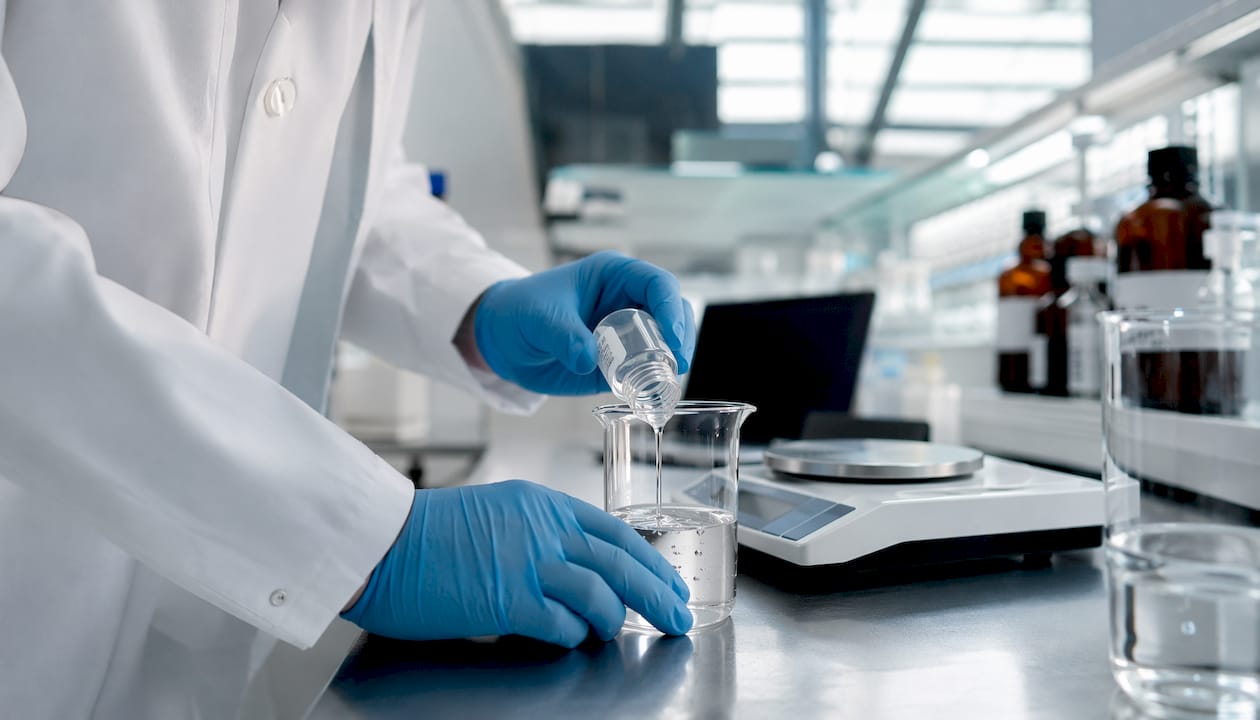
Dissolved salts and metal ions alter the ionic strength of a reconstituted peptide solution. That shift changes pH, affects conductivity, and can reduce binding affinity in receptor assays. A peptide that performs correctly in ultrapure water may show blunted activity in water carrying elevated dissolved solids. The effect is not always dramatic enough to trigger obvious failure. Instead, it produces subtle, inconsistent results that are difficult to trace back to the solvent.
Endotoxins
Endotoxin contamination causes false biological responses in cell-based assays, altering results significantly and undermining reliability. Endotoxins are heat-stable lipopolysaccharides shed from gram-negative bacterial cell walls. They survive standard sterilization and remain active at concentrations measured in endotoxin units per milliliter. A cell assay exposed to endotoxin-contaminated solvent will show inflammatory or cytotoxic responses that have nothing to do with the peptide under study.
Water that looks clean is not necessarily research-grade. Endotoxins and organic contaminants are invisible to the naked eye yet cause serious assay interference. Visual inspection alone is never sufficient to confirm solvent quality in peptide research.
Organic contaminants and TOC
High Total Organic Carbon levels indicate organic impurities that interfere with HPLC purification and UV absorbance, and can promote unwanted reactivity in peptide chemical modifications. TOC levels below 500 ppb are generally acceptable for most research applications. Ultrapure water achieves below 50 ppb. Water sourced from unverified suppliers or stored improperly can exceed acceptable TOC thresholds without any visible sign of contamination.
Organic contaminants also complicate mass spectrometry. Background signals from solvent impurities overlap with peptide fragmentation patterns, reducing confidence in identification and quantification. This is a particular problem in low-abundance peptide detection, where signal-to-noise ratios are already tight.
A well-designed formulation checklist for scientists includes solvent quality verification as a mandatory step before any biological or analytical assay begins.
What are the critical quality parameters for peptide research water?
A seven-point verification process is the standard for validating reconstitution water before use in peptide research. Each checkpoint addresses a distinct failure mode.
- Certificate of Analysis (COA) review. Confirm endotoxin levels, pH, and sterility test results from the supplier’s lot-specific COA. A COA without lot-specific data is not sufficient.
- Resistivity and conductivity measurement. Ultrapure water registers 18.2 MΩ·cm at 25°C. Any deviation indicates dissolved ionic contamination. Elevated conductivity suggests dissolved salts or metals that interfere with peptide binding and solubility.
- Visual inspection under controlled lighting. Check for particulates, cloudiness, or discoloration. Visual inspection catches gross contamination but does not detect endotoxins or dissolved organics.
- Seal integrity check. A compromised septum or broken seal invalidates the sterility of the entire vial. Reject any vial with visible damage to the stopper or cap.
- Total Organic Carbon testing. TOC below 500 ppb is acceptable for most assays. Ultrapure water achieves below 50 ppb. Request TOC data from the supplier or measure in-house for critical applications.
- Microbiological testing. Apply to new supplier relationships or large batch orders. Standard plate counts and sterility testing confirm the absence of viable organisms.
- Storage condition compliance and lot traceability. Verify that the water was stored at the correct temperature and that lot numbers are recorded in your batch documentation.
| Parameter | Acceptable Standard | Failure Consequence |
|---|---|---|
| Resistivity | 18.2 MΩ·cm at 25°C | Ionic interference with binding assays |
| Total Organic Carbon | Below 500 ppb (ultrapure: below 50 ppb) | HPLC and UV signal corruption |
| Endotoxin level | Supplier COA verified, lot-specific | False inflammatory response in cell assays |
| pH | Within specification per COA | Peptide degradation or solubility failure |
| Seal integrity | Intact septum, no visible damage | Microbial contamination of entire vial |
Pro Tip: Request lot-specific COAs, not generic product certificates. A COA issued for a product family rather than a specific production batch tells you nothing about the vial in your hand.
What best practices protect water quality in peptide workflows?
Verification at the point of receipt is necessary but not sufficient. Water quality degrades through improper handling and storage, and the damage is invisible until results go wrong.
- Store bacteriostatic water refrigerated at 2–8°C. Multi-use bacteriostatic water maintains stability for 28 days refrigerated. Compromised seals or ambient storage shorten that window significantly.
- Use septum-sealed vials for aseptic multi-use access. A resealable septum allows repeated needle entry without exposing the contents to open air. This is the standard format for bacteriostatic water in research settings.
- Document the solvent type in every batch record. Exact solvent type must be recorded to troubleshoot degradation or assay anomalies. If a peptide shows unexpected behavior, the first question is always what solvent was used.
- Never use tap water or unverified purified water. Tap water contains chlorine, dissolved minerals, and microbial load that disqualify it for any peptide application. Even laboratory-grade deionized water from aging systems can carry organic contamination.
- Label reconstituted peptide tubes with solvent type, concentration, and date. This is not optional documentation. It is the minimum needed to reproduce or troubleshoot any experiment.
- Train all lab personnel on water quality verification. A single team member bypassing the COA review or using an expired vial can corrupt an entire experimental series.
Proper storage of reconstitution solutions is a discipline that protects months of upstream work. Treat it as a core lab competency, not a procedural formality.
Pro Tip: When ordering from a new supplier, run a full seven-point verification on the first batch before committing to a larger order. A supplier who cannot provide lot-specific COA data is not suitable for peptide research applications.
Reducing formulation risk starts with solvent selection. The strategies for reliable formulation used in pharmaceutical development apply directly to peptide research workflows, particularly around solvent documentation and contamination control.
Key Takeaways
Water purity is the foundation of reliable peptide research. Selecting the wrong grade or skipping verification steps corrupts data at every level, from binding assays to chromatographic analysis.
| Point | Details |
|---|---|
| Water type determines stability | Bacteriostatic water allows 28-day multi-use; sterile water is single-use only. |
| Benzyl alcohol has limits | Hormone analog peptides can degrade in bacteriostatic water; always check compatibility. |
| Invisible contaminants cause real failures | Endotoxins and high TOC corrupt assays without any visible sign in the water. |
| Seven-point verification is the standard | COA review, resistivity, TOC, seal integrity, and microbial testing all matter. |
| Documentation is non-negotiable | Recording solvent type and lot number in every batch record enables troubleshooting and reproducibility. |
Water quality is the variable most researchers underestimate
After working closely with peptide research workflows, the pattern I see most often is not dramatic contamination events. It is the slow accumulation of unexplained variability that researchers attribute to peptide quality, assay conditions, or cell line behavior, when the actual source is the solvent.
The most common mistake is treating water as a passive carrier. Researchers spend weeks optimizing peptide concentration, incubation time, and assay format, then reconstitute in whatever water is available in the fridge. That approach inverts the priority order. Solvent selection and verification should happen before anything else.
The benzyl alcohol compatibility issue is particularly underappreciated. I have seen researchers switch from sterile to bacteriostatic water purely for convenience, then spend weeks troubleshooting degradation in GLP-1 analog experiments. The fix was obvious in retrospect. The loss was real.
The other habit worth building is treating the COA as a living document, not a box to check. A lot-specific COA filed with your batch record means that six months later, when a collaborator asks why one experimental series produced different results, you have an answer. That traceability is what separates reproducible science from a collection of interesting but unverifiable observations.
Routine verification is not bureaucracy. It is the minimum infrastructure for data you can defend.
— Ragnar
Herbilabs products for research-grade peptide water
Researchers who need verified, lab-grade reconstitution water for peptide work can source both bacteriostatic and sterile formats from Herbilabs. Every product ships with lot-specific certificates of analysis covering endotoxin levels, pH, sterility, and TOC, so the seven-point verification process starts with documentation already in hand.
Herbilabs manufactures bacteriostatic water and sterile diluents in a dedicated facility to strict purity standards, with packaging designed for aseptic multi-use access. Septum-sealed vials support repeated needle entry without compromising sterility. For researchers with common questions about solvent selection and handling, the bacteriostatic water FAQ covers the most frequent decision points in plain language. The full product range is available through the Herbilabs shop.
FAQ
What is the role of water quality in peptide research?
Water quality directly controls peptide solubility, stability, and assay accuracy. Ionic contaminants, endotoxins, and organic residues in the solvent alter experimental results independently of the peptide itself.
When should I use bacteriostatic water vs. sterile water for peptides?
Use bacteriostatic water when you need multi-use access to a single vial over up to 28 days refrigerated. Use sterile water for peptides that are incompatible with benzyl alcohol, such as certain hormone analogs.
Can endotoxins in water affect cell-based peptide assays?
Yes. Endotoxin contamination causes false biological responses in cell assays, including inflammatory signals that have no connection to the peptide being studied. Endotoxins are invisible and heat-stable, so visual inspection does not detect them.
What resistivity level indicates ultrapure water?
Ultrapure water registers 18.2 MΩ·cm at 25°C. Any reading below that threshold indicates ionic contamination that can interfere with peptide binding and solubility in research applications.
Why does solvent type need to be documented in batch records?
Benzyl alcohol in bacteriostatic water reacts with some peptides and can cause degradation or unexpected assay signals. Recording the exact solvent type in every batch record makes it possible to identify the source of anomalies and reproduce successful experiments.