Private Label, White Label, Wholesale partnerships available - EU, USA and UK - Free shipping from €75

Lab-Grade Water Examples for Reliable Peptide Research
Discover essential examples of lab-grade water for reliable peptide research. Avoid contamination and ensure accuracy in your experiments!
TL;DR:
- Trace impurities in reconstitution water can invalidate peptide research by degrading biomolecules and skewing data. Selecting the appropriate lab-grade water, such as Type I ultrapure water or Water for Injection, ensures contaminant-free preparation for sensitive analyses and accurate results. Proper verification, sourcing from trusted suppliers, and matching water grades to specific steps are essential for reliable peptide studies.
Trace impurities in your reconstitution water can invalidate months of carefully planned peptide research. A single contaminated vial introduces ions, endotoxins, or microbial byproducts that degrade sensitive biomolecules within hours, skew bioassay readings, and corrupt HPLC data beyond recovery. Lab-grade water is classified under ISO 3696 and ASTM D1193, spanning multiple grades from basic purified water to ultrapure Type I, each suited to specific tasks. This guide walks you through every grade, gives you real-world examples you will actually encounter, and helps you match the right water to the right step every time.
Table of Contents
- How lab-grade water is classified
- Examples of high-purity water for peptides and analytics
- Other grades of lab water: Where do Type II and Type III fit?
- Lab water: Application and supplier comparison for Europe
- A practical researcher’s perspective: What really matters when choosing lab-grade water
- Find high-quality water and supply solutions for your research
- Frequently asked questions
Key Takeaways
| Point | Details |
|---|---|
| Match water grade to task | Use ultrapure or WFI water for peptides and analytics, saving lower grades for washing or media. |
| Know trusted suppliers | European labs can source certified lab water from ELGA, Merck, or Herbilabs for reliability. |
| Avoid contaminants | Never use tap or simple distilled water for peptide research due to instability risks. |
| Cost-saving is about balance | Reserve high costs for critical steps, using less pure water only when safe and appropriate. |
How lab-grade water is classified
Understanding the classification system is not just an academic exercise. It is the foundation for every sourcing and handling decision you make in the lab. Two major international frameworks govern how water purity is described, and a third pharma-specific standard becomes critical as soon as your work touches injectable preparations.
ISO 3696: Three grades at a glance
ISO 3696 divides laboratory water into Grades 1, 2, and 3. Grade 1 is ultrapure, suitable for the most demanding analytical work including atomic absorption spectroscopy and peptide stability studies. Grade 2 covers general reagent preparation and microbiological work. Grade 3 is fit for glassware rinsing and autoclave feedwater only.
ASTM D1193: Four types with specific resistivity targets
The ASTM D1193 framework runs parallel to ISO with Types I through IV. Type I water reaches 18.2 MΩ·cm resistivity at 25°C with total organic carbon (TOC) below 10 ppb, making it the gold standard for sensitive analytics. Type II sits above 1 MΩ·cm and handles most general lab reagent work. Type III covers RO-grade water for support tasks, and Type IV is barely purified, intended only for preliminary washing.
| Standard | Grade/Type | Resistivity | TOC | Primary use |
|---|---|---|---|---|
| ISO 3696 | Grade 1 | 18.2 MΩ·cm | <10 ppb | HPLC, peptide work, analytics |
| ISO 3696 | Grade 2 | >1 MΩ·cm | <50 ppb | Media, general reagents |
| ISO 3696 | Grade 3 | >0.05 MΩ·cm | Not specified | Rinsing, autoclave |
| ASTM | Type I | 18.2 MΩ·cm | <10 ppb | Peptide, LC-MS, ICP-MS |
| ASTM | Type II | >1 MΩ·cm | <50 ppb | Buffer prep, culture media |
| ASTM | Type III | >0.05 MΩ·cm | <200 ppb | Feedwater, glassware |
Pharma standards: Where WFI enters the picture
For researchers using injectable formats, the pharmacopeial grades add another layer. Purified Water (PW) requires conductivity ≤1.3 μS/cm and TOC ≤500 ppb, while Water for Injection (WFI) adds endotoxin limits of ≤0.25 EU/mL and bacteria ≤0.1 CFU/mL. That endotoxin specification matters enormously when you are reconstituting peptides for subcutaneous or intravenous research protocols.
Choosing the right grade for bacteriostatic vs sterile water applications starts with knowing which classification system your protocol references. Cross-reference your lab’s standard operating procedure against this table before placing any supply order. Use the lab water purity checklist to verify each parameter is met before reconstitution begins.
Examples of high-purity water for peptides and analytics
With the main classes understood, let’s look at the specific water types you will actually encounter when sourcing for peptide research in 2026, including their technical limits, ideal applications, and where to find them across Europe.
Type I ultrapure water
This is the baseline requirement for any serious peptide work. Type I water achieves resistivity of 18.2 MΩ·cm at 25°C, TOC below 10 ppb, and bacteria below 1 CFU/mL, making it suitable for HPLC mobile phase preparation, ICP-MS sample dilution, and direct peptide reconstitution where no preservative is needed. At this purity level, you have essentially removed dissolved ions, organics, and microbial contaminants that would otherwise interfere with peptide conformation or mass spectrometry readings.
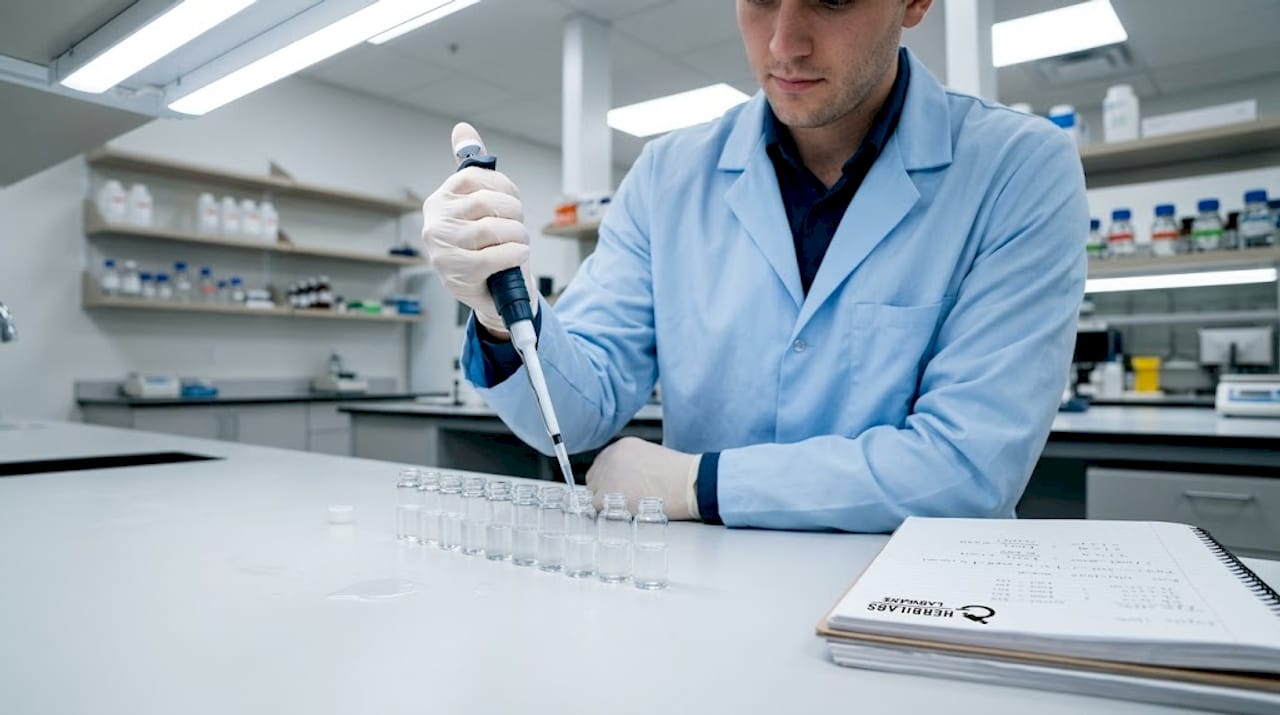
The practical limitation is shelf life. Type I water loses its purity rapidly once exposed to air or container surfaces, absorbing CO2 and trace organics within minutes. Point-of-use systems are strongly preferred over bottled Type I water for this reason.
Water for Injection (WFI)
WFI is produced under pharmacopeial control, either by distillation or membrane filtration depending on the regulatory jurisdiction. It satisfies the endotoxin requirement that Type I water alone does not address. For any peptide research that involves administration or that models in vivo behavior, WFI is the appropriate reconstitution solvent. The microbial and endotoxin limits are strict enough that WFI reconstituted peptides can remain stable for short periods without a preservative, though single-use is the standard.
Bacteriostatic water
When your protocol calls for multi-dose access to a single vial, bacteriostatic water (BAC water) is the correct tool. Bacteriostatic water consists of sterile water plus 0.9% benzyl alcohol, remains stable for 28 days refrigerated, and is the preferred reconstitution solvent for peptides versus single-use sterile water or saline/PBS. That 28-day window is significant for researchers running extended studies with repeated sampling from the same preparation. Sterile water for injection, by contrast, is single-use only and must be discarded within 24 hours of opening.
Key distinction: BAC water extends usable vial life through benzyl alcohol’s bacteriostatic action, not through sterilization of a contaminated solution. The underlying water must still meet ultrapure or WFI standards before the benzyl alcohol is added.
Pro Tip: Never use simple distilled or tap water for peptide reconstitution. Distilled water still contains dissolved gases, trace organics, and sometimes microbial contamination that standard distillation does not remove. Tap water in most European countries contains chloramines, fluoride, and dissolved calcium that will degrade peptide bonds and interfere with any downstream analytics.
| Water type | Resistivity | Endotoxin limit | Benzyl alcohol | Best use |
|---|---|---|---|---|
| Type I Ultrapure | 18.2 MΩ·cm | Not specified | No | HPLC, analytics, single-use peptide |
| WFI | >1 MΩ·cm | ≤0.25 EU/mL | No | Injectable research, peptide reconstitution |
| BAC Water | WFI-grade base | ≤0.25 EU/mL | 0.9% | Multi-dose peptide vials, extended studies |
| Sterile Water for Injection | >1 MΩ·cm | ≤0.25 EU/mL | No | Single-use reconstitution |
For guidance on preparing safe peptide solutions in your lab, the reconstitution protocol matters just as much as the water grade. Review safe peptide water options before finalizing your sourcing list, and confirm that sterile water for peptides from any supplier carries a valid certificate of analysis before use.
European researchers have several credible suppliers available, including ELGA Labwater (UK, Type I through III systems), Merck/Sigma-Aldrich (EU-wide, compliant systems), Waternation Ltd (UK, lab-grade supply), and Adrona (Latvia, RO and ultrapure systems). Each offers different entry points depending on whether you need a point-of-use purification system or ready-to-use certified water for direct reconstitution.
Other grades of lab water: Where do Type II and Type III fit?
Not every step in peptide research demands the same level of purity. Smart water management means reserving your most expensive, highest-grade water for critical steps and using lower grades strategically everywhere else.
Where Type II water earns its place
Type II water delivers resistivity above 1 MΩ·cm and TOC below 50 ppb, making it appropriate for general reagent preparation, culture media production, and buffer stock solutions that will undergo further filtration. If you are making a buffer that will pass through a 0.22 μm filter before any critical use, Type II water is adequate and considerably cheaper to produce per liter than Type I.
Where Type III water makes sense
Type III RO water achieves resistivity between 0.05 and 4 MΩ·cm and serves well as glassware rinse water, autoclave feedwater, and initial equipment cleaning. Using Type I water to rinse beakers or fill autoclaves is a common and costly mistake in under-resourced labs. Type III handles these tasks without compromise.
| Water grade | Resistivity | TOC | Appropriate tasks |
|---|---|---|---|
| Type I / Grade 1 | 18.2 MΩ·cm | <10 ppb | Peptide reconstitution, HPLC, LC-MS |
| Type II / Grade 2 | >1 MΩ·cm | <50 ppb | Buffer prep, media, general reagents |
| Type III / Grade 3 | >0.05 MΩ·cm | <200 ppb | Glassware, autoclaves, equipment rinse |
A step-wise water strategy for peptide labs
- Reserve Type I or WFI-grade BAC water exclusively for final peptide reconstitution and analytic steps.
- Use Type II water for all buffer and media preparation where downstream filtration follows.
- Use Type III water for all glassware rinsing, autoclave filling, and initial equipment prep.
- Document each water source in your lab notebook with the certificate of analysis batch number.
- Never mix water grades in unlabeled containers. Label every water storage vessel with grade, date, and source.
Always monitor the lab water resistivity checklist for each grade used in your workflow. Resistivity readings above spec are an early warning sign that your purification system needs maintenance before your next critical prep.
Pro Tip: Running a point-of-use Type I system with a Type III RO pre-feed can reduce consumable cartridge costs by over 60% compared to running Type I from raw tap. The RO stage removes the bulk of ions and organics, leaving the polishing cartridges to do minimal work.
Lab water: Application and supplier comparison for Europe
To make sourcing decisions faster, here is a consolidated view of water grades, their applications, and the main suppliers serving independent researchers across the UK and Europe.
| Water grade | Key application | Recommended suppliers (EU/UK) |
|---|---|---|
| Type I Ultrapure | Peptide reconstitution, HPLC, ICP-MS | ELGA Labwater, Merck/Sigma-Aldrich |
| WFI / BAC Water | Injectable research, multi-dose peptide vials | Herbilabs, pharmaceutical distributors |
| Type II | Buffer prep, culture media | Merck, Waternation Ltd |
| Type III RO | Glassware, autoclaves | Adrona, Veolia Water Technologies |
For independent European researchers, the reliable BAC water suppliers in Europe list is a practical starting point when institutional procurement channels are not available. Knowing where to buy bacteriostatic water in compliant, tested form is particularly relevant for independent researchers who cannot rely on university purchasing agreements.
ELGA Labwater systems remain a strong benchmark for European labs needing reliable in-house Type I production, and Merck/Sigma-Aldrich offers certified reference water for labs requiring documented traceability across all grades.
One critical consideration: for peptide stability specifically, Type I or WFI-grade water is non-negotiable. Even a small endotoxin load from substandard water can trigger cellular responses in in vitro assays, rendering concentration-response data unreliable. There is no cost-saving justification for using lower-grade water at this stage of the workflow.
A practical researcher’s perspective: What really matters when choosing lab-grade water
Here is the part most water quality articles skip: the specifications are not the whole story.
We see two failure modes repeatedly among independent European peptide researchers. The first is under-specification: assuming that any “purified” or “filtered” water is good enough, then spending weeks troubleshooting peptide aggregation or assay interference before tracing the problem back to the water. The second, less obvious failure is over-specification at the wrong steps, where labs burn through expensive Type I water rinsing glassware while cutting corners on the reconstitution step itself.
Matching water grade to actual need is genuinely the smarter approach. Over-purifying every step adds cost without adding safety. But where over-specification is truly wasteful, under-specification at the critical reconstitution stage is genuinely dangerous to your research outcomes.
BAC water deserves particular attention here. Researchers transitioning from US-based literature sometimes expect easier access to sterile water for injection as a single-use solution. In European practice, BAC water is often the more practical and cost-effective format for independent researchers handling small-volume peptide preparations repeatedly. The 28-day stability window, combined with the bacteriostatic action of benzyl alcohol, gives you a meaningful operational advantage over single-use vials, provided the base water meets WFI standards.
Our position: if you are uncertain whether your water source meets spec, treat that uncertainty as a contamination risk. The cost of verifying your water quality is always lower than the cost of repeating a failed study. For any work involving sensitive biomolecules, err on the side of caution and consult peptide water safety tips before your next preparation cycle.
Find high-quality water and supply solutions for your research
Translating water quality knowledge into reliable research outcomes depends on having a consistent, verified supply source. Herbilabs offers bacteriostatic water, sterile reconstitution solutions, and research-grade water products manufactured to strict purity standards, with full technical documentation included.
Whether you are just getting started or sourcing at scale, the Herbilabs Shop carries ready-to-use BAC water and sterile solutions built for peptide research compliance. For complete technical guidance, visit the what is bacteriostatic water reference page, or browse the BAC water FAQs for answers to common reconstitution questions. Every product ships with a certificate of analysis so you can document water quality in your research records without additional verification steps.
Frequently asked questions
What grade of water should I use for peptide reconstitution?
Always use Type I ultrapure water (18.2 MΩ·cm, TOC <10 ppb), WFI, or bacteriostatic water for multi-dose use. Tap water and standard distilled water both carry contaminants that will compromise peptide integrity and research results.
Where can I buy lab-grade water suitable for peptides in Europe?
Leading suppliers include ELGA Labwater for in-house Type I systems, Merck/Sigma-Aldrich for certified reference water across the EU, and Herbilabs for ready-to-use certified BAC water and sterile reconstitution solutions shipped across Europe and the UK.
Why is Type I water considered necessary for analytic and peptide work?
Type I water at 18.2 MΩ·cm removes dissolved ions, organics, bacteria, and particulates at a level that prevents interference in HPLC, ICP-MS, and LC-MS analysis, and prevents the ion-driven degradation or aggregation that destabilizes sensitive peptides during and after reconstitution.
Can I use distilled or tap water for peptide research?
No. Both carry impurities including dissolved minerals, chloramines, organic contaminants, and microbial material that will degrade peptide bonds, skew bioassay data, and make your results impossible to reproduce reliably across experimental runs.