Private Label, White Label, Wholesale partnerships available - EU, USA and UK - Free shipping from €75

Peptide water for injection: safe solutions for reliable research
Discover why using peptide water for injection is crucial for reliable research outcomes. Learn to choose and handle it safely for optimal results.
TL;DR:
- Peptide water for injection must meet strict purity standards to prevent contamination and ensure stability.
- BAC water is recommended for multi-dose use due to its antimicrobial preservative, unlike sterile water.
- Proper handling, storage, and documentation are essential to maintain peptide integrity and reproducibility.
Sterile water seems like the obvious choice for reconstituting peptides. It is clean, it is clear, and it is widely available in most lab settings. But defaulting to sterile water without accounting for contamination timelines, peptide stability requirements, and solvent compatibility is one of the most quietly damaging habits in peptide research. A single compromised vial can skew results, destroy a valuable peptide batch, or introduce variables that undermine months of experimental work. This article addresses those risks head-on, walking you through the core properties of peptide water for injection, how to select the right solution, and how to implement a handling protocol that protects both your samples and your data.
Table of Contents
- What is peptide water for injection?
- BAC water versus sterile water: key differences for peptide research
- Standard methodology for reconstituting peptides
- Best practices for storage, usage, and contamination prevention
- Critical insights: What most guides miss about peptide water for injection
- Recommended solutions and labware for safe peptide research
- Frequently asked questions
Key Takeaways
| Point | Details |
|---|---|
| BAC vs. Sterile Water | BAC water allows safe multi-use for 28 days, but sterile water must be used within 24 hours for peptides. |
| Proper Reconstitution | Always reconstitute peptides in sterile conditions and gently dissolve to avoid damaging peptide structure. |
| Contamination Control | Use BAC water and aliquot when possible to minimize contamination risk and extend reagent utility. |
| Choose High-Grade Water | Prioritize USP or EP grade to ensure purity and reliability in peptide research. |
What is peptide water for injection?
Peptide water for injection is not simply purified water. It is a precisely manufactured reconstitution solution designed to dissolve lyophilized peptide powders in a way that maintains peptide integrity, prevents microbial growth, and ensures experimental reproducibility. The water grade, the absence of pyrogens, and the presence or absence of preservatives all influence how a peptide behaves once reconstituted, how long it remains stable, and whether your data reflects actual peptide activity or noise introduced by your solvent.
There are three primary solution types used in peptide research labs:
Bacteriostatic water (BAC water): Sterile water preserved with 0.9% benzyl alcohol, designed for multi-dose use. The benzyl alcohol suppresses bacterial growth between uses, making it the practical choice for extended lab applications.
Sterile water for injection: Pure water with no preservatives. This is appropriate for single-use reconstitution but becomes a contamination risk if used across multiple sessions.
Other solvents: Acetic acid (0.1%), DMSO, and phosphate-buffered saline (PBS) are occasionally required for specific peptides that are poorly soluble in water alone. These are selected based on peptide charge, hydrophobicity, and intended use.
Water grade is where many labs cut corners without realizing the downstream impact. USP/EP grade is the minimum acceptable standard for peptide research because it guarantees endotoxin limits, pyrogen-free status, and defined conductivity specs. Using a lower grade introduces contaminants that interact with peptide chains, alter folding, or trigger inflammatory responses in cell-based assays.
The core properties every lab-grade peptide water must meet include:
- Pyrogen-free and endotoxin tested to USP/EP specification
- No detectable heavy metals, chloramines, or organic contaminants
- Compatible with the target peptide’s charge and solubility profile
- Sterile-filtered (typically 0.22 µm) to eliminate microbial load
- Packaged in sealed, clinical-grade vials to prevent ambient contamination
When it comes to sterile water for peptides, the choice is not just about purity at the time of purchase. It is about maintaining that purity throughout handling, storage, and repeated access in lab conditions.
| Solution type | Preservative | Sterility duration | Best for |
|---|---|---|---|
| BAC water | 0.9% benzyl alcohol | Up to 28 days (2-8°C) | Multi-dose, extended use |
| Sterile water | None | 24 hours after opening | Single-dose reconstitution |
| Acetic acid (0.1%) | None | Single use | Hydrophobic peptides |
| PBS | Buffer salts | Single use | Cell-compatible assays |
The standard rule is to always match solvent to peptide properties before defaulting to convenience. Solubility, pH sensitivity, and downstream assay requirements should drive solvent selection, not what happens to be available on the bench.
BAC water versus sterile water: key differences for peptide research
Choosing between BAC water and sterile water is not simply a matter of preference. Each solution carries a specific risk and utility profile that directly determines research validity. Understanding these differences means fewer failed experiments and more defensible data.
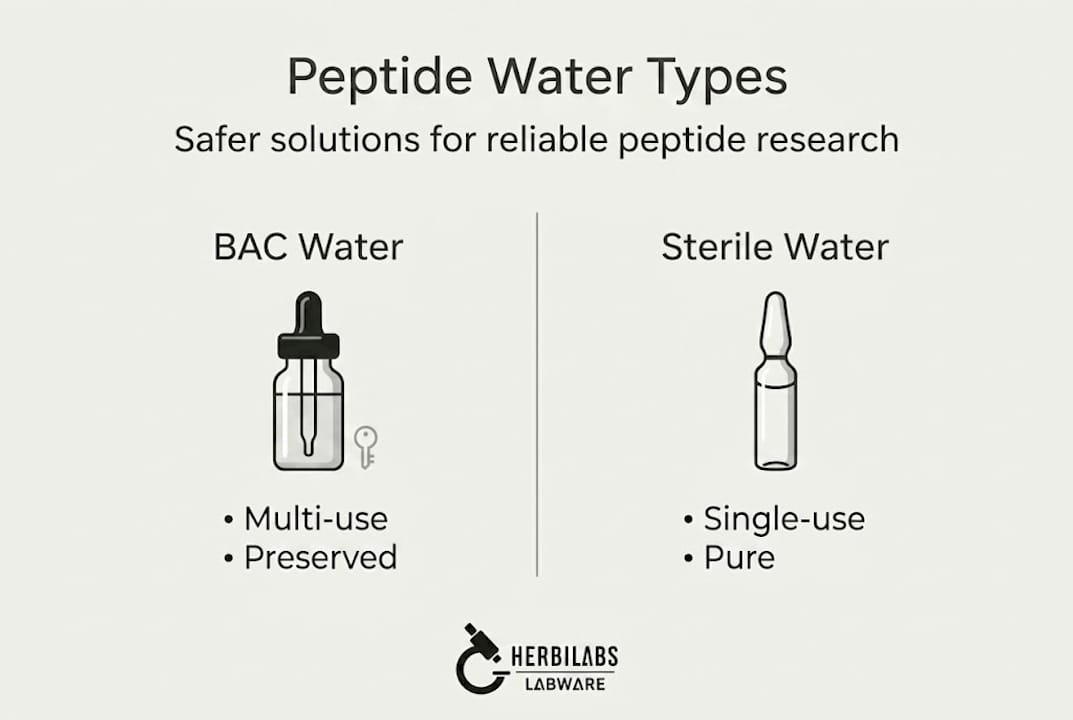
The defining feature of BAC water is its benzyl alcohol content. At 0.9%, benzyl alcohol creates a bacteriostatic environment inside the vial, meaning that even if the rubber septum is accessed multiple times, bacterial growth is actively suppressed. This makes bacteriostatic vs sterile water a clear practical choice for labs running sequential experiments from the same peptide vial over days or weeks.
Sterile water, by contrast, contains no preservative. Once the vial is opened or the septum is accessed, the contamination clock starts immediately. BAC water enables multi-dose use up to 28 days refrigerated at 2-8°C due to benzyl alcohol inhibiting bacterial growth, while sterile water is limited to 24 hours of safe use after the first access. This is not a guideline. It is a hard microbiological boundary.
“The assumption that sterile water remains safe across multiple lab sessions is one of the most common and consequential errors in peptide research. Contamination does not announce itself. By the time you detect it, the damage is done.”
Here is a practical comparison to clarify when each solution is the right choice:
| Feature | BAC water | Sterile water |
|---|---|---|
| Preservative | 0.9% benzyl alcohol | None |
| Multi-dose use | Yes, up to 28 days | No, single use only |
| Contamination suppression | Active inhibition | None post-opening |
| Risk after first access | Low, if refrigerated | High after 24 hours |
| Compatibility | Most peptides | Peptides sensitive to benzyl alcohol |
| Storage window (opened) | Up to 28 days at 2-8°C | Discard after 24 hours |
When to use BAC water:
- Multi-dose research protocols spanning several days or weeks
- Labs where vial access frequency is unpredictable
- Any scenario where contamination risk outweighs preservative sensitivity
When to use sterile water:
- Single-use reconstitution of peptides sensitive to benzyl alcohol
- Cell assays where benzyl alcohol may confound results
- Situations where the entire reconstituted volume is used immediately
The empirical data is clear. BAC reduces vial contamination by more than 90% in multi-access scenarios versus sterile water opened under comparable conditions. For the vast majority of peptide research workflows, BAC water is the operationally safer and scientifically more defensible choice. The cases where sterile water is genuinely preferable are narrow and specific, and they require committing to strict single-use discipline.
Standard methodology for reconstituting peptides
Selecting the right water is necessary but not sufficient. How you perform the reconstitution determines whether the peptide reaches its intended concentration, retains its structural integrity, and remains uncontaminated for the duration of the experiment. Sloppy technique with premium water still produces compromised samples.
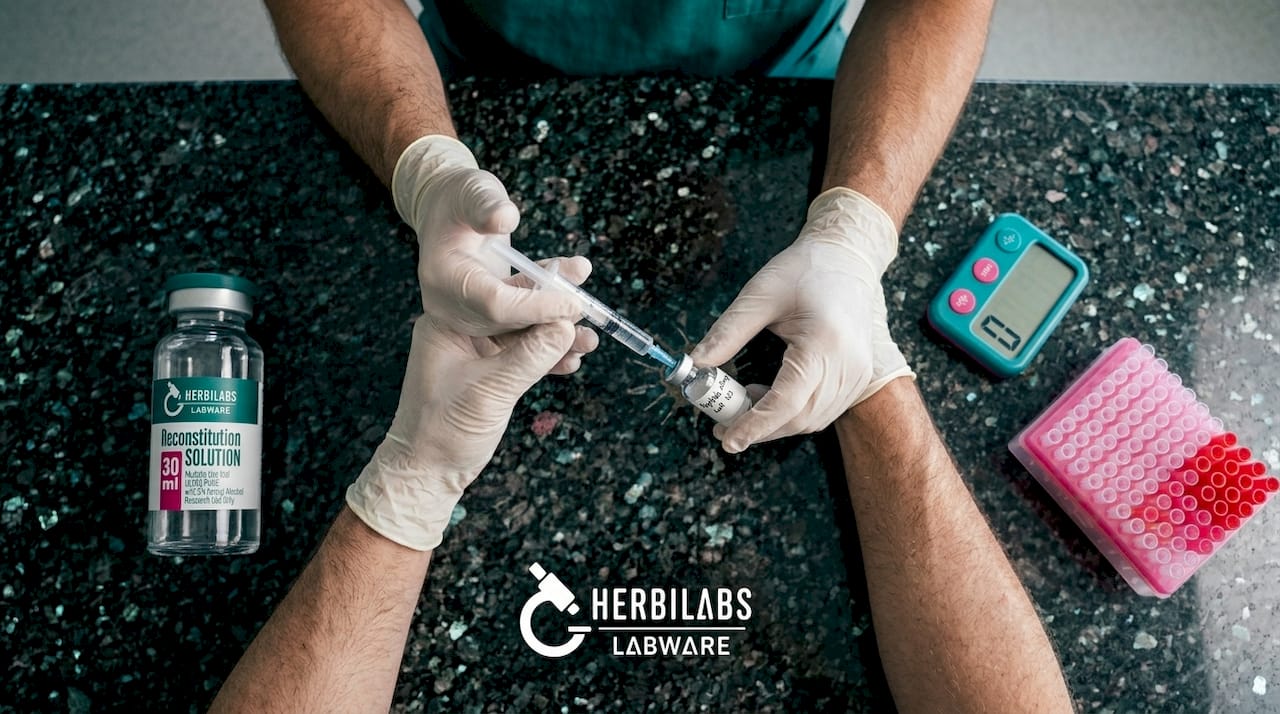
The standard reconstitution protocol requires a clean workspace with alcohol-swabbed vials, a measured volume of BAC water drawn into a sterile syringe, and a slow injection down the vial wall to prevent foaming or mechanical peptide damage. The final step is gentle swirling, never shaking, until the solution is fully clear.
Here is the full numbered protocol for reproducibility:
- Prepare the workspace. Wipe the bench with 70% isopropyl alcohol and allow it to dry. Work under a laminar flow hood where available.
- Swab all vial septa. Use individual alcohol swabs on the peptide vial and water vial. Allow to air dry for at least 15 seconds.
- Calculate your diluent volume. Use a peptide reconstitution calculator to determine the precise volume needed for your target concentration. Do not estimate.
- Draw the BAC water. Use a new, sterile syringe to withdraw the correct volume of BAC water from the vial.
- Inject against the vial wall. Direct the stream toward the inner glass, not onto the lyophilized peptide directly. This reduces turbulence and preserves peptide structure.
- Swirl gently. Rotate the vial slowly between your fingers. Never vortex or shake. Mechanical stress denatures peptide chains and can cause irreversible aggregation.
- Inspect for clarity. A properly reconstituted solution is clear, colorless or faintly colored depending on the peptide, and free of particulate matter.
- Label immediately. Record the date, time, concentration, and batch number on the vial before setting it down.
Pro Tip: If you are working with a large peptide batch that will require multiple aliquots, divide the reconstituted solution into clearly labeled microcentrifuge tubes immediately after reconstitution. Freeze individual aliquots at minus 20°C or minus 80°C. This eliminates the need to repeatedly access a single vial and virtually eliminates freeze-thaw degradation risk.
Maintaining strict sterile peptide lab techniques throughout the process is not optional when your data depends on knowing exactly what your peptide is doing. Equally, avoiding lab contamination during reconstitution requires consistent application of aseptic principles, not just on the first vial of the day but on every single one.
A critical detail many protocols omit: if the lyophilized peptide does not dissolve within 30 minutes of gentle swirling, do not force it. Some hydrophobic peptides require the addition of a small volume of acetic acid or DMSO before the aqueous phase is added. Forcing dissolution without the correct co-solvent can create aggregates that are essentially invisible to the naked eye but will distort your assay results significantly.
Best practices for storage, usage, and contamination prevention
Reconstitution is only the first point of vulnerability. What happens between reconstitution and actual use determines whether your peptide remains what you think it is. Post-prep discipline is where labs either protect their investment or quietly lose it.
Storage rules are straightforward but frequently compromised under lab pressure. BAC water reconstituted peptides remain stable refrigerated at 2-8°C for up to 28 days. Sterile water preparations must be discarded after 24 hours without exception. These are not conservative estimates. Contamination in sterile water vials rises exponentially post-24 hours, while BAC reduces risk by more than 90% in multi-access scenarios. The math makes the decision straightforward.
Aliquoting deserves more attention than most lab protocols give it. Each freeze-thaw cycle introduces thermal stress that can denature secondary structure, aggregate hydrophobic regions, or alter peptide activity in ways that do not immediately show up in a visual inspection. Preparing single-use aliquots at the point of reconstitution eliminates this variable entirely.
Do’s and don’ts for post-reconstitution handling:
- Do refrigerate BAC water solutions immediately after preparation at 2-8°C
- Do label every vial and aliquot with date, batch, concentration, and handler initials
- Do inspect every vial visually before use for particulate matter, cloudiness, or color change
- Do use a fresh, sterile syringe for each access to a multi-dose vial
- Do follow lab sterilization best practices consistently across every experiment, not selectively
- Don’t store reconstituted peptides at room temperature, even briefly
- Don’t use a vial that has exceeded its storage window, even if it looks clear
- Don’t re-freeze a thawed aliquot under any circumstances
- Don’t use a syringe more than once when accessing any sterile solution
- Don’t assume a clear solution is a safe solution without checking date and handling records
Pro Tip: Implement a simple batch log card for every peptide vial in your lab. Include the date opened, the solution used for reconstitution, the number of accesses, and the discard date. This takes under 60 seconds per vial and immediately flags expired or over-accessed solutions before they reach an experiment. Your contamination control strategies are only as good as the records that support them.
Real contamination events in research labs rarely look catastrophic. They look like noisy data, irreproducible results, or unexpectedly low peptide activity. By the time the cause is identified, multiple experiments have been compromised. The discipline of treating post-reconstitution handling as seriously as the reconstitution itself is what separates consistently reproducible labs from those that repeatedly troubleshoot inexplicable result variance.
When in doubt, discard. The cost of discarding a marginally suspect vial is trivial compared to the cost of running corrupted experiments.
Critical insights: What most guides miss about peptide water for injection
Most protocols focus on technique and largely stop there. The harder question is whether the water source itself is being treated with the same rigor as every other variable in the experiment. In our experience supplying peptide research labs across Europe, convenience quietly undermines water selection far more often than ignorance does.
Labs switch from BAC to sterile water because BAC is out of stock, or because a team member assumes the difference is marginal, or simply because it requires one less procurement decision. These are not scientific decisions. They are logistical shortcuts that introduce real variability into research outputs without ever appearing in the methods section.
The uncomfortable truth is that solvent grade and handling history are two of the most impactful variables in peptide research, and they are among the least consistently documented. Preparing safe research solutions requires treating water sourcing as a controlled variable, not an afterthought. Every batch should have a recorded water source, grade, lot number, and handling log. If your methods section cannot accurately describe the reconstitution solution used, your reproducibility is already compromised before any peptide is pipetted.
The contrarian advice that most guides avoid giving: audit your water sourcing and storage practices before you audit your peptide handling. The bigger risk is usually upstream of the technique itself.
Recommended solutions and labware for safe peptide research
Researchers ready to tighten their reconstitution protocols need a reliable source for USP/EP-grade bacteriostatic water and sterile diluents that meet the purity standards their work demands.
At Herbilabs, we manufacture and supply research-grade bacteriostatic water and sterile reconstitution solutions to labs and independent researchers across the UK and Europe. Every batch is endotoxin tested, pyrogen-free, and produced under strict quality control conditions in a dedicated facility. Whether you need a starting point for understanding what is bacteriostatic water or you are ready to stock your lab with consistently high-quality diluents, our Herbilabs labware shop has the solutions and supporting labware you need to run cleaner, more reproducible peptide research.
Frequently asked questions
Why is BAC water recommended over sterile water for peptide injection?
BAC water enables safer multi-dose usage because benzyl alcohol actively inhibits bacterial growth throughout the vial’s use period. Sterile water carries no such protection and must be discarded after 24 hours to prevent contamination risk.
How should reconstituted peptide solutions be stored?
BAC water reconstituted solutions should be stored refrigerated at 2-8°C and used within 28 days. Sterile water preparations have a 24-hour window and must be discarded after that point regardless of visual appearance.
What is the standard protocol for peptide reconstitution with BAC water?
Clean vials and workspace with alcohol swabs, draw the precise volume of BAC water into a sterile syringe, inject slowly against the vial wall, and gently swirl until the solution is fully clear. Never shake or vortex.
Does the grade of peptide water for injection affect research outcomes?
Absolutely. Using USP/EP grade water ensures defined endotoxin limits, pyrogen-free status, and consistent purity that directly supports experimental reproducibility and data integrity across peptide research workflows.