Private Label, White Label, Wholesale partnerships available - EU, USA and UK - Free shipping from €75

Contamination control for peptide and injectable labs
Learn evidence-based contamination control strategies for peptide and injectable labs, covering EU GMP Annex 1, isolators, PUPSIT, and human factor risks.
Even 1% cross-contamination in a peptide batch can trigger false immune responses and force multimillion-euro recalls. Yet many labs still operate under the assumption that a basic cleanroom is enough. It is not. Contamination control in peptide development and injectable solution production is a layered discipline, shaped by EU GMP Annex 1, EMA guidelines, and hard lessons from real-world incidents. This article walks you through the evidence-based methodologies, regulatory requirements, and practical strategies that define best-in-class contamination control for EU and UK researchers working with peptides and injectables.
Table of Contents
- Why contamination control matters for peptide and injectable labs
- Core methodologies: From barrier technologies to advanced detection
- Human factor and process vulnerabilities: Common sources and best practices
- Regulatory framework: EU GMP Annex 1, EMA guidelines, and their practical impact
- What most labs miss: Practical lessons from costly contamination events
- Trusted labware and solutions for contamination control
- Frequently asked questions
Key Takeaways
| Point | Details |
|---|---|
| Patient safety is paramount | Effective contamination control is essential to protect patients from harmful immune responses. |
| Advanced methodologies matter | Barrier technologies and continuous monitoring outperform basic cleanrooms in preventing contamination. |
| Human error is a major risk | Process design and operator hygiene must be prioritized to minimize contamination. |
| Regulatory compliance is mandatory | EU GMP Annex 1 and EMA guidelines require holistic site-wide contamination control strategies. |
| Routine vigilance prevents costly recalls | Ongoing monitoring and supplier qualification are key to avoiding financial and reputational losses. |
Why contamination control matters for peptide and injectable labs
Peptide-based injectables are among the most contamination-sensitive products in pharmaceutical development. A single microbial or particulate contaminant in a finished injectable can trigger an immune cascade, cause systemic toxicity, or render an entire batch unsalvageable. The stakes are not theoretical.
Financial consequences are equally severe. Product recalls in the injectable sector routinely cost manufacturers millions in lost inventory, regulatory penalties, and reputational damage. More importantly, they erode trust in research programs that may have taken years to build. Contamination control is critical to ensure patient safety, prevent recalls, and meet EU GMP Annex 1 and EMA requirements.
The regulatory landscape reinforces this urgency. The EMA peptide guidelines set clear expectations for purity, sterility, and process control. EU GMP Annex 1 mandates a documented Contamination Control Strategy (CCS) that applies site-wide, not just to individual cleanrooms. Most recalls in the injectable sector are traceable to preventable lapses, not catastrophic failures.
Key risks that contamination control must address:
- Microbial contamination: Bacteria, fungi, and endotoxins from operators, surfaces, and water sources
- Particulate contamination: Visible and sub-visible particles from equipment, packaging, or environment
- Chemical contamination: Residual solvents, reagents, or degradation products from peptide synthesis
- Cross-contamination: Transfer of active substances between batches or products
“The most dangerous assumption in injectable production is that a compliant cleanroom automatically means a contamination-free product. It does not.”
Good lab sterilization practices and safe peptide sourcing are foundational, but they are only the starting point for a robust contamination control program.
Core methodologies: From barrier technologies to advanced detection
Understanding the importance begs the question: what methods effectively mitigate contamination risks? The answer spans physical barriers, process design, filtration, and real-time monitoring.
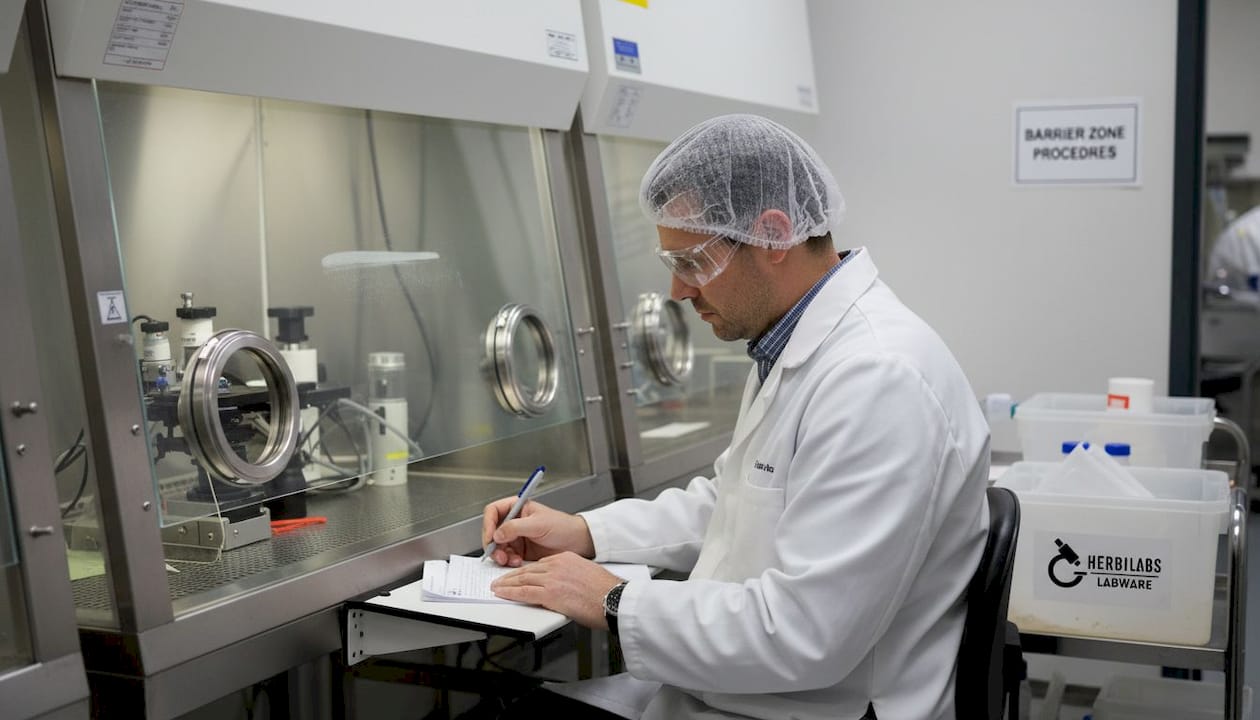
Barrier technologies are the first line of defense. Isolators physically separate the product from the operator, dramatically reducing human-related contamination. Restricted Access Barrier Systems (RABS) offer a middle ground, providing a physical barrier while allowing more operational flexibility than full isolators. Key methodologies include isolators, RABS, PUPSIT, and advanced detection like metal detectors and X-ray inspection systems.
| Feature | Isolator | RABS | Traditional cleanroom |
|---|---|---|---|
| Human exposure to product | Minimal | Low | Moderate to high |
| Contamination risk | Very low | Low | Higher |
| Operational flexibility | Lower | Moderate | High |
| EU GMP Annex 1 preference | Strongly preferred | Accepted | Conditional |
| Setup cost | High | Moderate | Lower |
Sterile filtration using 0.22 micron filters is standard for liquid peptide solutions. Pre-use post-sterilization integrity testing (PUPSIT) is now required under Annex 1 compliance to confirm filter integrity before any product contacts the filter.
Environmental monitoring must be continuous in Grade A zones and regular in Grade B. This includes particle counting, bioburden sampling, and settle plate monitoring. Advanced detection systems, including X-ray and metal detection, catch physical contaminants that standard monitoring misses.
Pro Tip: When choosing water types for reconstitution or dilution steps, always verify that the water grade matches your process requirements. Using bacteriostatic water correctly in lab protocols is a simple but often overlooked contamination control step. Your lab water purity checklist should be reviewed before every reconstitution run.
The numbered steps for implementing a core contamination control methodology:
- Define cleanroom grades and assign processes to appropriate zones
- Install barrier technology matched to your contamination risk profile
- Validate sterile filtration and perform PUPSIT before each production run
- Implement continuous particle monitoring in Grade A zones
- Schedule regular bioburden and settle plate sampling in Grade B and C zones
- Deploy advanced physical detection for finished product inspection
Human factor and process vulnerabilities: Common sources and best practices
While advanced technologies play a role, the human factor and process vulnerabilities remain a major source of contamination. Operators are, consistently, the leading contamination vector in injectable production environments.
Skin particles, respiratory droplets, and improper gowning technique introduce microorganisms directly into critical zones. Workflow design matters enormously. Poor traffic patterns, inadequate airlocks, and rushed procedures all increase contamination probability. Human operators are the leading contamination source, and bioburden limits reflect this reality.
On the chemical side, peptide synthesis introduces its own vulnerabilities:
- Deletion peptides: Incomplete coupling steps create truncated sequences that co-elute with the target peptide
- Oxidation: Methionine and cysteine residues are highly susceptible to oxidative degradation during synthesis and storage
- Deamidation: Asparagine and glutamine residues can deamidate under acidic or basic conditions, altering bioactivity
- Residual reagents: Incomplete removal of coupling reagents or protecting groups contaminates the final product
For more on managing these risks, peptide contamination studies provide detailed data on synthesis-related impurity profiles.
| Contamination type | Primary source | Detection method | Risk level |
|---|---|---|---|
| Microbial | Operators, water, surfaces | Bioburden testing, settle plates | High |
| Particulate | Equipment, packaging | Particle counters, visual inspection | High |
| Chemical (deletion peptides) | Synthesis process | HPLC, mass spectrometry | Moderate to high |
| Oxidation products | Storage, synthesis | LC-MS, UV spectroscopy | Moderate |
| Endotoxins | Water, raw materials | LAL test | High |
Vendor qualification is a non-negotiable part of a holistic CCS. Every raw material, reagent, and piece of labware entering your process is a potential contamination vector. Reviewing lab purity practices for peptide research and maintaining rigorous reagent quality control protocols reduces this risk substantially.
Regulatory framework: EU GMP Annex 1, EMA guidelines, and their practical impact
To truly control contamination, labs must also navigate complex regulatory requirements that shape daily practices. For EU and UK researchers, the two most critical frameworks are EU GMP Annex 1 and EMA guidelines for synthetic peptides.
Annex 1 (revised 2022) introduced the mandatory CCS concept. This is not a single document but a site-wide strategy that integrates facility design, process controls, environmental monitoring, personnel training, and supplier qualification into a single coherent framework. EU/UK researchers must implement site-wide CCS under Annex 1, while the FDA approach remains less prescriptive and more risk-based.
Key Annex 1 requirements for contamination control:
- CCS documentation: Must be site-wide, regularly reviewed, and updated after any process change
- Grade A continuous monitoring: Particle counts must be recorded throughout all critical operations
- PUPSIT: Mandatory for all sterilizing-grade filters used in aseptic processing
- Isolator preference: Annex 1 strongly favors isolators over open cleanrooms for aseptic filling
- Media fill validation: Regular simulations of the aseptic process using growth media
“The FDA allows more flexibility in how contamination control is documented and implemented. Annex 1 leaves far less room for interpretation.”
Pro Tip: When reviewing lab product certifications from suppliers, check whether their manufacturing documentation aligns with Annex 1 CCS requirements. A supplier who cannot provide this documentation is a liability in your contamination control program. Sourcing for safe research means evaluating supplier quality systems, not just product specifications.
The EMA regulatory guidance for synthetic peptides adds further requirements around purity thresholds, impurity characterization, and process validation. Labs that treat these as paperwork exercises rather than operational frameworks consistently underperform on inspection.
What most labs miss: Practical lessons from costly contamination events
Here is the uncomfortable reality: most contamination events that trigger recalls are not caused by catastrophic failures. They trace back to minor, routine oversights. A missed settle plate. An operator who skipped a gowning step. A filter integrity test that was not performed before a batch run. Recalls cost millions, and the data consistently shows that the triggering event is rarely dramatic.
The conventional wisdom says: build a better cleanroom and you solve the contamination problem. We disagree. Cleanrooms are necessary but not sufficient. The labs that maintain the strongest contamination control records are the ones that treat human error as a constant variable, not a fixable flaw. They design processes that assume operators will make mistakes and build in redundancies accordingly.
Isolator adoption is the single most impactful structural change a lab can make. Yet many EU and UK research facilities still rely on open cleanrooms because isolators require higher upfront investment. That calculation ignores the cost of a single recall.
Routine monitoring is where discipline separates good labs from great ones. Reviewing peptide purity practices regularly, not just during audits, builds the institutional habits that prevent contamination before it starts. The labs that get this right do not wait for a problem to review their CCS. They treat it as a living document.
Trusted labware and solutions for contamination control
For those seeking quality resources and practical tools, reliable labware and storage options are key to maintaining contamination control.
At Herbilabs, we supply research-grade bacteriostatic water and sterile reconstitution solutions manufactured to strict purity standards, specifically for peptide development and injectable preparation. Our bacteriostatic water FAQs cover everything from selection to compatibility, and our guide on storing bacteriostatic water safely helps you maintain product integrity between uses. For researchers who need a reliable, contaminant-free diluent, our premium reconstitution solution is manufactured with the same quality controls that demanding research environments require. Quality starts with what goes into your vial.
Frequently asked questions
What are the main sources of contamination in peptide and injectable labs?
Human operators, process design weaknesses, and vendor lapses are the leading causes of contamination. Vendor qualification is a required component of any compliant CCS.
What is the bioburden limit for air in cleanrooms according to EU GMP Annex 1?
Grade A zones require 0 CFU growth during operations, while Grade B allows up to 10 CFU per cubic meter of air sampled.
How do isolators compare to cleanrooms for contamination control?
Isolators reduce human-related risks far more effectively than conventional cleanrooms by physically separating operators from the critical zone during aseptic processing.
How does contamination affect patient safety in injectable solutions?
Even 1% cross-contamination can trigger false immune responses in patients, and contamination events routinely result in costly recalls and serious safety reviews.
What monitoring practices are required for compliance in EU/UK labs?
Continuous particle monitoring in Grade A zones and rigorous CCS documentation updated after every process change are both required under EU GMP Annex 1.