Private Label, White Label, Wholesale partnerships available - EU, USA and UK - Free shipping from €75

Benefits of High Purity Standards in Lab Research
Discover the benefits of high purity standards in lab research. Ensure reliable results, reproducibility, and data integrity for your experiments.
TL;DR:
- Contamination can easily compromise experimental results, especially when high purity standards are overlooked. Maintaining verified, ultra-high-purity materials is essential for reproducibility, data integrity, and safety in sensitive scientific applications. Regular analytical testing and adherence to strict certification standards prevent invisible contamination that could otherwise lead to failed experiments and unreliable data.
Most researchers understand that contamination is bad. What gets underestimated is just how little contamination it takes to compromise an experiment entirely. The benefits of high purity standards go far beyond keeping things “clean.” Purity is the invisible variable that determines whether your data is reproducible, your reagents behave predictably, and your published results hold up to scrutiny. From peptide reconstitution to semiconductor fabrication, the margin between 99.9% and 99.9999% purity is not trivial. It can be the difference between a reliable result and a failed replication nobody can explain.
Table of Contents
- Key takeaways
- What high purity standards actually mean
- The concrete benefits of high purity standards
- Quality control and maintenance practices
- When lower purity creates bigger problems
- My perspective on purity standards in practice
- Why Herbilabs builds purity into everything
- FAQ
Key takeaways
| Point | Details |
|---|---|
| Purity grades are measurable and defined | Standards like 5N (99.999%) and 6N (99.9999%) set precise impurity thresholds for sensitive applications. |
| Reproducibility depends on input purity | Substandard reagents introduce noise that makes experimental results unreliable and difficult to replicate. |
| Certification is non-negotiable | Certificates of Analysis and compliance with USP or ASME BPE standards are the backbone of quality assurance. |
| Maintenance is a continuous process | High purity systems require routine testing with ICP-MS and FTIR to catch contamination before it affects results. |
| Lower purity carries hidden costs | Repeated experiments, failed batches, and compromised data cost more than investing in higher-grade materials upfront. |
What high purity standards actually mean
When scientists talk about purity, they are talking about the proportion of a substance that is the intended compound versus everything else. The “everything else” is what matters most. Even at 99.9% purity, you have 1,000 parts per million (ppm) of uncharacterized impurities. At 99.9999% purity (6N), that drops to less than 1 ppm. The 6N purity threshold is specifically required for ultra-sensitive quantum computing experiments where impurity interference can cause decoherence at millikelvin temperatures.
The grading system used in most research settings follows this scale:
- 5N (99.999%): Common in semiconductor and advanced materials research; supports most high-precision applications
- 6N (99.9999%): Required for quantum computing, cryogenics, and next-generation microelectronics
- >99% assay: The threshold for pharmaceutical intermediates and active pharmaceutical ingredients (APIs)
- USP-grade: Mandated for reagents used in drug formulation, clinical research, and parenteral solutions
Documentation is the proof layer that makes purity claims credible. Certificates of Analysis (CoAs) from third-party testing labs verify purity levels at the batch level. Without them, a “high purity” label on a reagent bottle is a marketing claim, not a quality guarantee. Pharmaceutical labs, for example, require CoAs that trace every raw material to its origin, including the testing methodology used to confirm its assay value.
| Grade | Purity Level | Typical Application |
|---|---|---|
| Technical grade | 90-99% | Industrial processes, non-critical reactions |
| Reagent grade | 99-99.9% | General laboratory use |
| 5N | 99.999% | Semiconductors, advanced materials |
| 6N | 99.9999% | Quantum computing, cryogenic systems |
| USP grade | Specification-dependent | Pharmaceutical and clinical research |
The concrete benefits of high purity standards
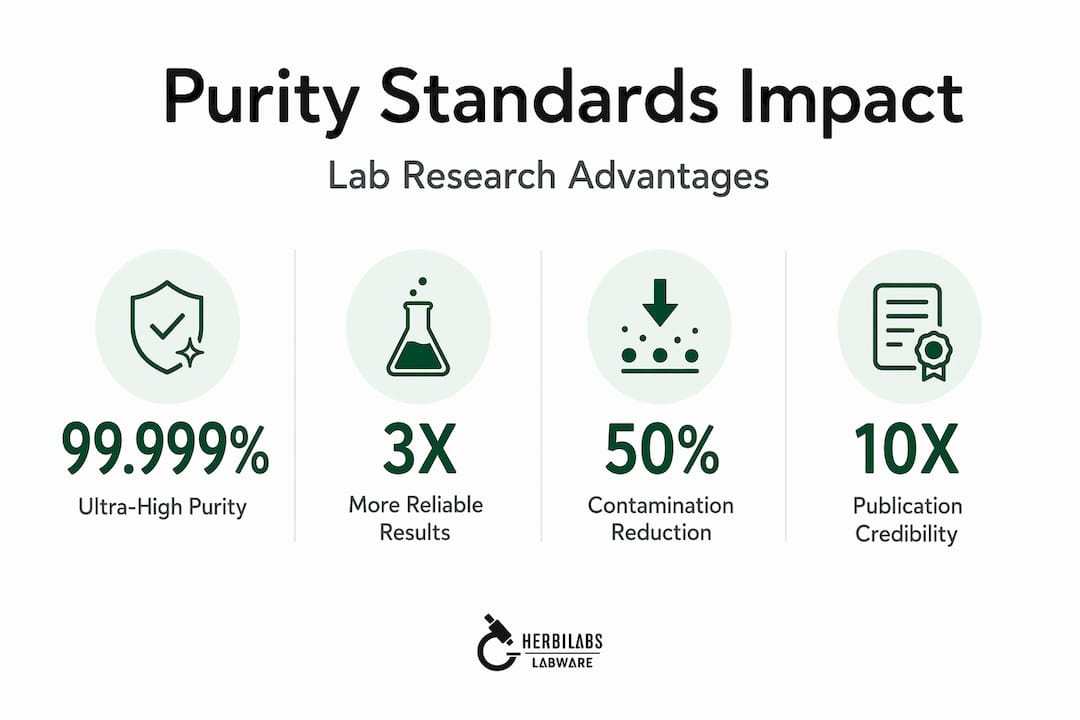
The high purity advantages researchers gain are not abstract. They show up directly in data quality, publication credibility, and the safety profile of anything that eventually reaches human subjects.
Reproducibility is the biggest win. When every batch of a reagent is chemically identical within verified tolerances, experimental conditions stay consistent across runs. Contamination introduces noise that causes experiments to drift in ways that are almost impossible to diagnose, especially when the impurity concentration is low enough to not trigger obvious alarms.
In pharmaceutical research, the stakes are compounded. High assay levels above 99% in active ingredients reduce the risk of impurities interfering with synthesis pathways, decreasing potency, or generating toxic metabolites. Every percentage point below specification increases the probability that a drug candidate fails toxicology testing or produces inconsistent clinical outcomes. The benefits of purity in products at this stage cannot be separated from patient safety.
Performance in physically demanding applications is equally affected. In semiconductor manufacturing, high-purity materials prevent charge carrier interference, which directly improves yield and reduces latent defects that surface only after environmental stress. A single contaminated deposition layer can render an entire wafer batch unusable.
“Impurity control at the ppm and ppb scale is critical in quantum computing and cryogenic applications to avoid decoherence and maintain thermal and electrical conductivity at millikelvin temperatures.” This is not a theoretical concern. It is the reason major research institutions specify materials with third-party verified purity documentation before a single experiment runs.
The global market reflects just how seriously industry has taken this. The ultra-high-purity chemicals market is projected to reach $33.77 billion by 2035, expanding at a CAGR of 15.79%, driven by semiconductor, pharmaceutical, and aerospace demand. That growth trajectory is a direct expression of why high purity matters across sectors.
The high purity standard impact also extends to contamination prevention. When your starting materials are verified clean, you eliminate an entire category of experimental confounds. You are not chasing ghost results caused by unknown trace metals or microbial byproducts. Your lab purity for peptide research depends on this same principle: if your reconstitution solution introduces contaminants, your peptide data is unreliable before the first measurement.
Quality control and maintenance practices
Understanding the importance of purity standards is one thing. Sustaining them over time in an active lab environment is another problem entirely. High-purity systems degrade without deliberate maintenance, and that degradation is often invisible until it affects results.
The key analytical methods used to monitor contamination are:
- ICP-MS (Inductively Coupled Plasma Mass Spectrometry): Detects trace metal contamination at parts-per-trillion levels, critical for water systems and reagent verification
- SEM/EDS (Scanning Electron Microscopy with Energy-Dispersive X-ray Spectroscopy): Identifies particulate contamination and surface elemental composition
- FTIR (Fourier Transform Infrared Spectroscopy): Detects organic contaminants and verifies molecular composition of chemical reagents
Analytical testing for high-purity systems must be treated as a continuous operational requirement, not a one-time qualification event. Contamination can originate from system components, environmental exposure, or process changes that seem unrelated to purity.
On the fabrication side, ASME BPE standards govern the hygienic design, material traceability, surface finish requirements, and weld quality for systems that process high-purity fluids. Non-compliant welds or inadequate surface finishes create dead zones where biofilms and chemical residues accumulate. For pharmaceutical water systems and sterile fluid processing, ASME BPE compliance is the baseline, not an optional upgrade.
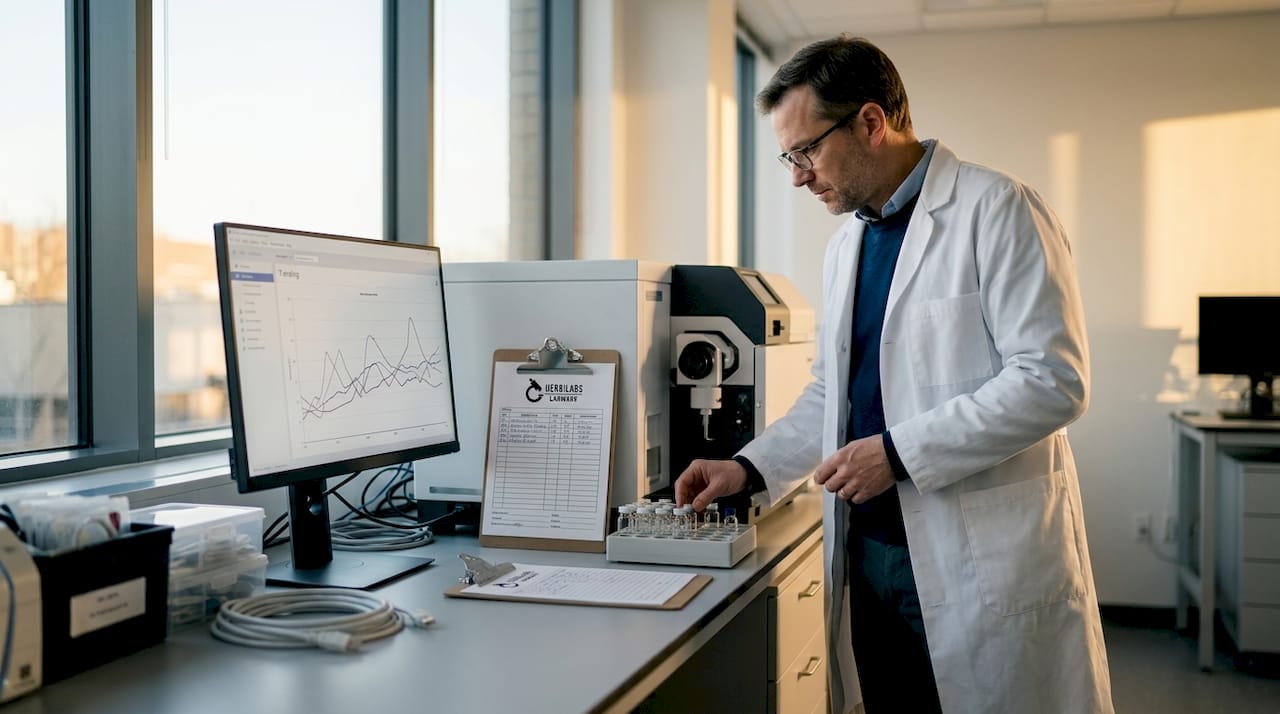
Sustaining consistent water quality in regulated environments also depends on lifecycle management: routine inspection schedules, cleaning validation, change control documentation, and trend analysis of analytical test results over time.
Pro Tip: Set up trending charts for your ICP-MS and FTIR results over time. A single out-of-spec result might be instrumentation noise. A slow upward trend in metal ion concentration is a system telling you something is failing before it becomes a crisis.
| Practice | Ad hoc approach | Systematic approach |
|---|---|---|
| Contamination detection | Testing after problems appear | Scheduled ICP-MS and FTIR trending |
| Documentation | Batch-level records only | Full lifecycle traceability with CoAs |
| Fabrication standards | Unverified suppliers | ASME BPE-compliant fabrication |
| Reagent quality | Lowest-cost supplier | Grade-verified with third-party testing |
When lower purity creates bigger problems
The high purity advantages become most visible in failure mode. Researchers who switch to lower-grade reagents to cut costs often discover the real expense later, buried in repeated experiments and data they cannot publish with confidence.
Common sources of impurity introduction include:
- Trace metals from non-certified water systems
- Microbial endotoxins in reconstitution solutions stored or manufactured without sterility controls
- Organic solvent residues from insufficiently purified chemical intermediates
- Particulate contamination from component wear in pumping and distribution systems
Each of these introduces a variable the researcher did not design into the experiment. When results cannot be replicated, that uncontrolled variable is often the culprit. The quality control for reagents process exists specifically to close that gap.
| Purity scenario | Likely outcome |
|---|---|
| Reagent-grade water in a pharmaceutical synthesis | Trace metal interference with catalytic reactions |
| Non-certified bacteriostatic water for peptide reconstitution | Endotoxin or microbial contamination affecting bioassay validity |
| 5N material used where 6N is specified | Decoherence in quantum experiments, unrepeatable results |
| Unverified reagent without CoA | Unknown impurity profile, uninterpretable data |
The cost-benefit math is not complicated. A failed experiment wastes researcher time, consumables, and instrument access. A failed batch in pharmaceutical manufacturing wastes far more. Investing in lab-grade quality materials upfront is nearly always cheaper than the downstream cost of unreliable results.
My perspective on purity standards in practice
I’ve spent enough time around lab operations to say this with confidence: most contamination problems are not caused by ignorance of purity standards. They are caused by treating purity as a procurement decision rather than a scientific one.
What I’ve seen repeatedly is researchers who understand purity in theory, then approve a lower-grade substitute when a budget cycle gets tight. Three months later, they are debugging an anomaly in their data that nobody can explain. The connection between the substitution and the anomaly is almost never made because the gap in time obscures the causal link.
The hidden cost of ignoring purity standards is not just in failed experiments. It is in the erosion of confidence in your own data. When you know your materials are specification-verified, your analytical thinking goes toward the science. When you are uncertain about your inputs, it goes toward damage control.
The lab water quality guide is one of the most underused references I have come across. Researchers who apply that level of scrutiny to their water systems routinely produce cleaner datasets. My strong opinion is that purity verification is not a bureaucratic formality. It is the foundation that makes every other part of rigorous science possible.
— Ragnar
Why Herbilabs builds purity into everything
Herbilabs supplies bacteriostatic water and research reagents manufactured to strict purity specifications in a dedicated facility, with full documentation for every batch. If your research depends on reproducible reconstitution conditions, you need a supplier who treats purity as a core specification rather than a sales claim. Herbilabs products come with verified quality controls designed for the demands of peptide research, pharmaceutical work, and sensitive biological assays. You can start with the bacteriostatic water FAQs to understand exactly what purity specifications matter for your application, or explore the sterility standards behind the products you use every day.
FAQ
What are the benefits of high purity standards in research?
High purity standards improve experimental reproducibility, reduce contamination-related failures, and produce data that holds up to independent replication. They are the primary control variable that separates reliable science from ambiguous results.
How are purity grades like 5N and 6N defined?
5N refers to 99.999% purity (10 ppm impurities), while 6N means 99.9999% purity with less than 1 ppm impurities. The grade required depends on the sensitivity of the application, with quantum computing and cryogenics typically requiring 6N.
Why does purity matter for pharmaceutical reagents specifically?
Impurities in pharmaceutical intermediates can interfere with synthesis reactions, reduce drug potency, or generate toxic metabolites. Assay levels above 99% are required to meet safety and efficacy standards in drug development.
What testing methods confirm high purity in lab systems?
ICP-MS detects trace metals at parts-per-trillion levels, FTIR identifies organic contaminants, and SEM/EDS characterizes particulate contamination. These methods are used for both initial qualification and ongoing monitoring of high-purity systems.
How often should high-purity systems be tested for contamination?
Testing frequency depends on system use and regulatory requirements, but treating analytical testing as a continuous process rather than a one-time qualification is the standard for regulated environments. Trending results over time is more informative than any single test result.