Private Label, White Label, Wholesale partnerships available - EU, USA and UK - Free shipping from €75

5 key benefits of contaminant-free lab products
Discover 5 key benefits of contaminant-free lab products and practical strategies to protect your peptide research from hidden impurities and failed outcomes.
TL;DR:
- Contaminants in lab products can skew peptide research data and cause irreproducible results.
- Using high-purity reagents and strict handling practices ensures more reliable and accurate experiments.
- Proper supplier verification, storage, and aseptic techniques are essential to prevent contamination.
Contamination is one of the most underestimated threats in modern peptide research. Most researchers focus on protocol design, dosing calculations, and data analysis, yet the quality of the products they use gets far less scrutiny. A single impurity in a reagent or reconstitution solution can quietly skew an entire experimental dataset without triggering any obvious alarm. Recent evidence ties impurities like truncated peptide sequences directly to irreproducible outcomes and flawed conclusions. This guide breaks down what contaminants are, why they matter more than most researchers realize, and how you can protect your work with practical, field-tested strategies.
Table of Contents
- What are lab product contaminants and why do they matter?
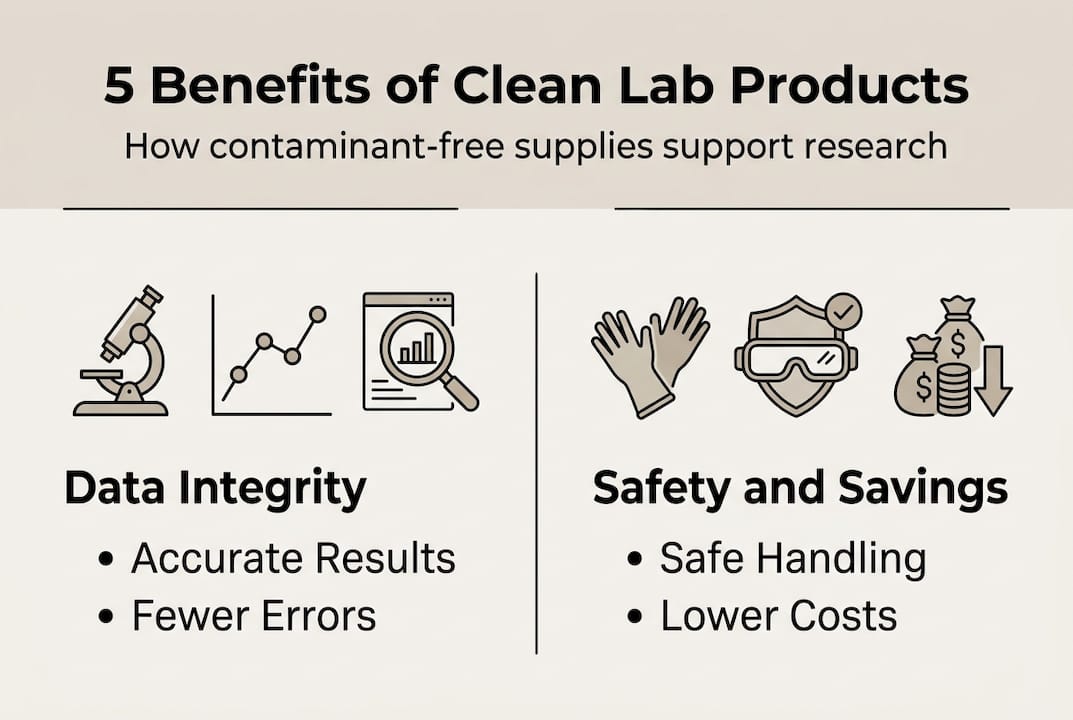
- Critical advantages of contaminant-free lab products
- How contaminants undermine research and health outcomes
- Practical strategies to ensure lab product purity
- Why the obsession with purity often overlooks practical realities
- Where to find high-quality contaminant-free lab products
- Frequently asked questions
Key Takeaways
| Point | Details |
|---|---|
| Lab contaminants disrupt results | Even trace impurities in lab products can cause inaccurate, irreproducible data. |
| Purity protects reputation | Using contaminant-free products boosts your credibility and avoids costly mistakes. |
| Invest where it counts | Focus on purity for critical reagents and tools to maximize your research outcomes. |
| Practical steps make a difference | Follow checklists for sourcing, handling, and storage to keep contamination at bay. |
What are lab product contaminants and why do they matter?
A contaminant is any substance present in a lab product that is not supposed to be there. That sounds obvious, but the category is broader than most people expect. It covers chemical residues from synthesis, biological agents like endotoxins, particulate matter from packaging, and molecular byproducts from degradation. For peptide researchers, the most dangerous contaminants are often molecular, invisible to the naked eye, and capable of producing wildly misleading data.
Contamination enters the workflow at multiple points. Raw materials sourced from low-grade suppliers carry impurities from the start. Peptides stored improperly degrade into truncated sequences or form disulfide-linked aggregates. Reconstitution solutions that are not manufactured under sterile conditions introduce biological agents directly into your sample. Even clean-looking labware can harbor residual detergent or trace metals from manufacturing.
Here is a snapshot of the most common contamination sources and their downstream effects:
| Source | Contaminant type | Research impact |
|---|---|---|
| Low-purity reagents | Chemical residues | Altered reaction kinetics |
| Improper peptide storage | Truncated sequences, dimers | Skewed binding data |
| Non-sterile diluents | Endotoxins, microbial agents | Inflammatory artifacts in assays |
| Reused or shared labware | Cross-contamination residues | False positives or negatives |
| Air exposure during handling | Oxidation products | Protein misfolding, degraded activity |
Impurities like truncated sequences or dimers alter binding affinity, signaling cascades, and lead to irreproducible data, making purity a non-negotiable baseline for valid research.
Beyond the table, there are scenarios that researchers overlook constantly. Using the same pipette tip across different reagents. Leaving vials open during preparation. Storing reconstitution water next to volatile chemicals. Each of these habits creates a contamination pathway that solid contamination control practices are specifically designed to close.
Knowing how to avoid lab contamination starts with recognizing which moments in your workflow are highest risk. Those moments are almost always the ones that feel routine.
- Transferring peptides without a laminar flow hood
- Using bacteriostatic water from unsealed or multi-puncture vials beyond recommended timeframes
- Skipping endotoxin testing on reconstitution solutions
- Thawing and refreezing lyophilized peptides multiple times
- Handling open vials in environments with HVAC airflow
Critical advantages of contaminant-free lab products
Once you understand the risks, the case for high-purity products becomes impossible to ignore. The advantages extend well beyond getting cleaner data points.
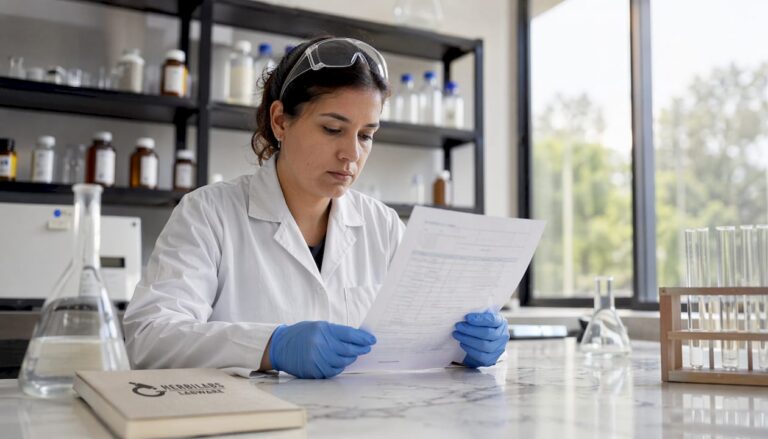
Accurate, trustworthy results. When your reagents and diluents are free of interfering substances, your data reflects actual biological activity. You can trust your dose-response curves, binding assays, and endpoint measurements without second-guessing the baseline.
True reproducibility. Reproducibility is the backbone of credible science. Deletion peptides can lead to false positives, while homo/heterodimers disrupt research outcomes, making it nearly impossible to replicate experiments across batches or between labs unless purity is controlled from the start.
Here is a direct comparison that puts the difference in perspective:
| Factor | Contaminant-free products | Contaminated products |
|---|---|---|
| Data reliability | High | Low to unpredictable |
| Experiment success rate | Consistently higher | Variable, failure-prone |
| Regulatory compliance risk | Minimal | Significant |
| Cost over time | Lower due to fewer reruns | Higher due to wasted resources |
| Researcher safety | Protected | Elevated exposure risk |
Knowing how to ensure lab purity is not just about science. It is about protecting your time, budget, and credibility.
Here is a numbered breakdown of the workflow stages where purity creates the biggest positive impact:
- Sample preparation. Pure diluents prevent background interference before you even begin.
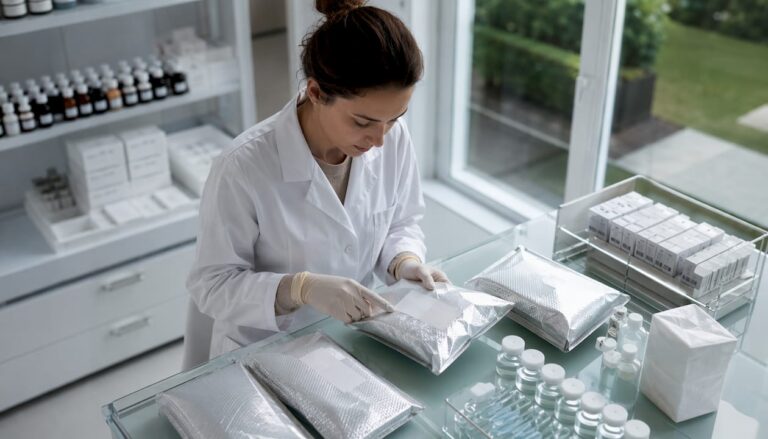
- Peptide reconstitution. High-grade bacteriostatic water maintains peptide integrity from the first mix.
- Assay execution. Clean reagents reduce noise and sharpen signal-to-noise ratios.
- Data interpretation. When confounders are removed, conclusions are clearer and more defensible.
Pro Tip: Calculate the cost of one failed experimental run, including reagents, time, and repeat testing. Most researchers find that premium purity products pay for themselves after preventing just one or two failed batches.
Consider a scenario where a peptide researcher runs a six-week binding study using a reconstitution solution that contains low-level endotoxin contamination. The resulting inflammatory signaling artifacts inflate the binding affinity readings. The study gets repeated at double the cost, and only a detailed audit of input materials identifies the source. That scenario is not rare. It is frustratingly common.
How contaminants undermine research and health outcomes
Contamination does not just affect data. It creates a domino effect across the entire research timeline. A single impurity introduced during reconstitution can invalidate weeks of upstream work, trigger protocol reviews, delay publication, and in more serious settings, raise safety concerns for end users.
The chain reaction typically starts small. A reconstitution solution with trace endotoxins is used to prepare a peptide sample. That sample goes into an in vitro assay. The endotoxins activate immune pathways unrelated to the peptide’s mechanism of action. The researcher records elevated cytokine levels and interprets them as peptide-induced. The conclusion is wrong, the hypothesis is built on flawed evidence, and the next experiment is designed around a false premise.
Impurities can cause irreproducible data and false research conclusions, which is exactly how small compromises in product quality compound into large-scale research failures.
A statistic that should give every independent researcher pause: studies on peptide synthesis quality show that a meaningful proportion of commercially available peptides contain detectable impurities above acceptable thresholds, yet most are sold without full purity disclosure. That means the product looks fine on the label but performs inconsistently in the lab.
Common mistakes that introduce impurities include:
- Purchasing from suppliers who do not provide certificates of analysis
- Skipping endotoxin testing for products used in injectable applications
- Storing water for injection in non-sterile containers after opening
- Using expired reagents or diluents past their validated shelf life
- Failing to validate storage temperatures against product specifications
A good lab water handling guide will flag most of these risks before they become problems. And applying quality control for reagents at the point of receipt, not just at the point of use, dramatically reduces the window for contamination to enter your workflow.
For independent researchers, the health stakes are especially real. Without institutional oversight, the responsibility for product validation falls entirely on you. That makes supplier selection and incoming quality checks non-negotiable, not optional.
Practical strategies to ensure lab product purity
Purity does not happen by accident. It is the result of deliberate decisions made at every stage of the research process, from sourcing to storage to hands-on handling.
Start with your supply chain. Homo/heterodimers from free cysteines and deletion peptides are common and problematic in labs, and they often originate at the synthesis or manufacturing level. That means your supplier’s quality controls are your first line of defense, not your own lab protocols.
Here is a practical numbered checklist to build into your standard operating procedures:
- Verify supplier documentation. Demand certificates of analysis with each batch. Compare lot-to-lot purity data.
- Inspect product upon receipt. Check for visible particulates, seal integrity, and correct labeling.
- Store products per specifications immediately. Temperature deviations during even short transit windows can degrade purity.
- Use aseptic technique during all handling. No exceptions, even for products that seem low-risk.
- Document everything. Track lot numbers, open dates, and handling conditions for every product in use.
- Review and audit periodically. Set a quarterly review of your supplier relationships and in-lab contamination data.
Pro Tip: When auditing a new supplier, ask specifically for endotoxin test results and sterility data alongside standard purity percentages. Suppliers who cannot provide this data quickly are worth replacing before you invest in a long-term supply relationship.
Following solid lab sterilization tips during day-to-day work and applying sterile lab techniques during reconstitution and sample preparation will close the gaps that supplier quality alone cannot cover.
Process validation matters too. Do not assume a product that performed well last quarter will perform the same this quarter without verification. Batch-to-batch consistency requires active monitoring, not passive trust.
Why the obsession with purity often overlooks practical realities
Here is something most purity guides will not tell you: not every product in your lab needs to meet the highest possible purity standard. The obsession with absolute purity across the board can actually divert budget from the places where it matters most.
In practice, purity investment should be risk-stratified. A container used only for waste collection does not need pharmaceutical-grade materials. But a bacteriostatic water solution that contacts your peptide directly absolutely does. The mistake many researchers make is treating these two categories the same, either overspending uniformly or, more dangerously, cutting corners uniformly.
We have seen researchers spend heavily on expensive analytical-grade solvents for low-sensitivity steps while using unvalidated reconstitution water for injectable preparations. That is exactly backwards. Focus your highest-grade purchases on the products with the most direct sample contact and the greatest biological consequence if compromised.
Reviewing essential labware types and understanding how to prepare safe research solutions can help you build a tiered purchasing strategy that protects what matters without wasting resources where the risk is low. Nuanced thinking beats blanket policy every time.
Where to find high-quality contaminant-free lab products
If you are ready to upgrade your results with truly contaminant-free supplies, here is where to start.
Herbilabs stocks a curated range of research-grade products built specifically for peptide researchers and independent users across Europe. Every product is manufactured under strict purity standards, with quality documentation available so you can verify what you are getting before it reaches your lab. From bacteriostatic water to sterile diluents, the Herbilabs shop covers the essentials you need to keep contamination out of your workflow. Browse reliable labware options or review the site’s quality control practices to understand exactly how these products are validated before they reach you.
Frequently asked questions
What problems do contaminants cause in peptide research?
Truncated sequences or dimers alter binding affinity and produce irreproducible or false data in peptide experiments, making even well-designed studies unreliable.
How can I check if my lab products are contaminant-free?
Request certificates of analysis from your supplier and review endotoxin and sterility test results. For critical products, consider in-lab purity testing as a secondary verification step.
Are contaminant-free lab products more expensive?
They can carry a higher upfront cost, but they save significant resources by reducing failed experiments, repeat runs, and wasted reagents over time.
Why is purity especially important for independent researchers?
Without institutional quality controls in place, independent researchers depend entirely on supplier standards and their own handling practices to ensure valid results and personal safety.
What lab products most need to be contaminant-free?
Prioritize products with direct sample contact, including reconstitution solutions, reagents, and solvents, since these have the highest potential to introduce impurities that affect your outcomes.