Private Label, White Label, Wholesale partnerships available - EU, USA and UK - Free shipping from €75

Protect Your Research: Why Secure Labware Ordering Matters
Learn why secure labware ordering matters for independent researchers in Europe and how to source verified reagents and bacteriostatic water safely.
TL;DR:
- Secure labware ordering is essential to prevent contamination and invalid research results.
- Verify suppliers with certifications, batch-specific COAs, and secure payment methods.
- Small labs and independent researchers are especially vulnerable to risks from unregulated sources.
Most researchers assume that if a product ships in clean packaging with a professional label, it’s safe to use. That assumption has ended careers, invalidated grant-funded studies, and wasted months of irreplaceable work. Contaminated extraction kits have introduced foreign RNA into samples, wiping out entire experimental datasets before a single result could be published. Secure labware ordering isn’t a bureaucratic checkbox. It’s the foundation your research stands on. This guide covers what goes wrong without it, what a genuinely secure ordering process looks like, and how to apply it whether you’re running a university lab or working independently.
Table of Contents
- What goes wrong without secure labware ordering?
- Core principles of secure labware and reagent sourcing
- Comparing secure EU ordering to RUO and unregulated sources
- Best practices: How to order labware and reagents securely
- Why secure ordering is non-negotiable for small labs and private researchers
- Order with confidence: Choose labware suppliers that put your research first
- Frequently asked questions
Key Takeaways
| Point | Details |
|---|---|
| Contamination risks are real | Unsecure labware ordering can invalidate results and destroy valuable experiments. |
| Supplier verification is essential | Only order from vendors who provide clear documentation, certifications, and safe payment options. |
| EU-compliant suppliers offer best security | REACH-certified, regulated sources minimize contamination and legal risks. |
| Follow validated ordering steps | A secure process protects every aspect, from ordering to final storage and use. |
What goes wrong without secure labware ordering?
The damage from a bad supply decision rarely shows up immediately. You run your assay, collect your data, and only weeks later realize something was off from the start. By then, you’ve consumed reagents, time, and often irreplaceable samples.
Contamination, trace metal leaching, and compromised reagents remain among the leading causes of failed lab results. These aren’t edge cases. They’re recurring problems tied directly to sourcing decisions. Small independent labs and private researchers are especially exposed because they typically lack the redundancy that larger institutions use to catch problems early. One bad batch can mean a complete restart.
“Extraction kits with foreign RNA can invalidate entire studies, with researchers often unaware until results are already submitted or published.”
Solid lab quality control practices help catch some of these issues, but they can’t compensate for a supplier who never tested their product properly in the first place.
Here’s what can realistically go wrong when you skip secure ordering:
- Contaminated glassware or consumables that introduce foreign particles or biological material into your samples
- Reagents with undisclosed impurities that interfere with assay sensitivity or produce false positives
- Incomplete or falsified testing records, leaving you with no way to verify purity or batch consistency
- Payment and data risks from unsecured e-commerce platforms or unverified vendors
- No regulatory recourse if a product fails, especially with overseas or gray-market suppliers
- Packaging failures in transit that compromise sterility before the product even reaches your bench
For private researchers and small labs, these failures compound. You don’t have a procurement department cross-checking suppliers. You don’t have a quality team running incoming inspections. You’re often the only person standing between a questionable product and your experiment. That’s exactly why the ordering process itself has to be secure before anything else.
Core principles of secure labware and reagent sourcing
Secure ordering isn’t just about choosing a reputable brand. It’s a structured process that covers supplier evaluation, documentation, payment security, and ongoing verification. The LQMS framework emphasizes evaluating suppliers against standardized procedures and maintaining documented purchasing controls. That framework exists for a reason: it works.
Here’s a practical checklist to verify whether a supplier meets the bar for secure ordering:
- Confirm certifications and compliance. Look for ISO, REACH, or equivalent documentation. A legitimate supplier makes these available without being asked.
- Request a Certificate of Analysis (COA) for every batch. This document should include purity data, test dates, lot numbers, and the testing method used.
- Review their manufacturing or sourcing transparency. Can they tell you where the product was made and under what conditions? If not, that’s a red flag.
- Evaluate payment security. Secure checkout, recognized payment processors, and clear refund policies are non-negotiable.
- Check their order history and reviews. Not just star ratings. Look for specific feedback about packaging integrity, delivery accuracy, and documentation quality.
- Ask about their handling of out-of-spec batches. A supplier with no recall or replacement process is one you don’t want to depend on.
Pro Tip: Always request the COA before placing a large order, not after. If a supplier hesitates or provides a generic document without batch-specific data, treat that as a disqualifying sign.
For reliable labware delivery and quality control for reagents, these steps aren’t optional extras. They’re the minimum standard for protecting your research investment.
Comparing secure EU ordering to RUO and unregulated sources
“For Research Use Only” (RUO) is a label you’ll see on a wide range of lab products. It sounds reassuring, like the product was made with researchers in mind. In practice, it means something more specific and more limiting: RUO products carry minimal regulatory controls, which increases contamination and quality risks compared to certified EU-compliant alternatives.
RUO labeling exempts a product from many of the quality and safety requirements that apply to certified reagents. There’s no mandatory purity standard, no required traceability, and often no enforceable recourse if the product fails your experiment.
Pro Tip: Don’t assume a reagent is safe just because it’s labeled “for research use only.” That label describes its intended use category, not its quality level.
Here’s how the two sourcing options compare across the criteria that matter most:
| Criteria | RUO / Unregulated source | EU-verified supplier |
|---|---|---|
| Purity standards | Not mandated | Documented and tested |
| Traceability | Often absent | Batch-level COA required |
| Regulatory recourse | Minimal to none | REACH and EU consumer protections apply |
| Documentation | Variable or generic | Standardized, batch-specific |
| Payment protection | Often limited | Secure checkout, EU consumer rights |
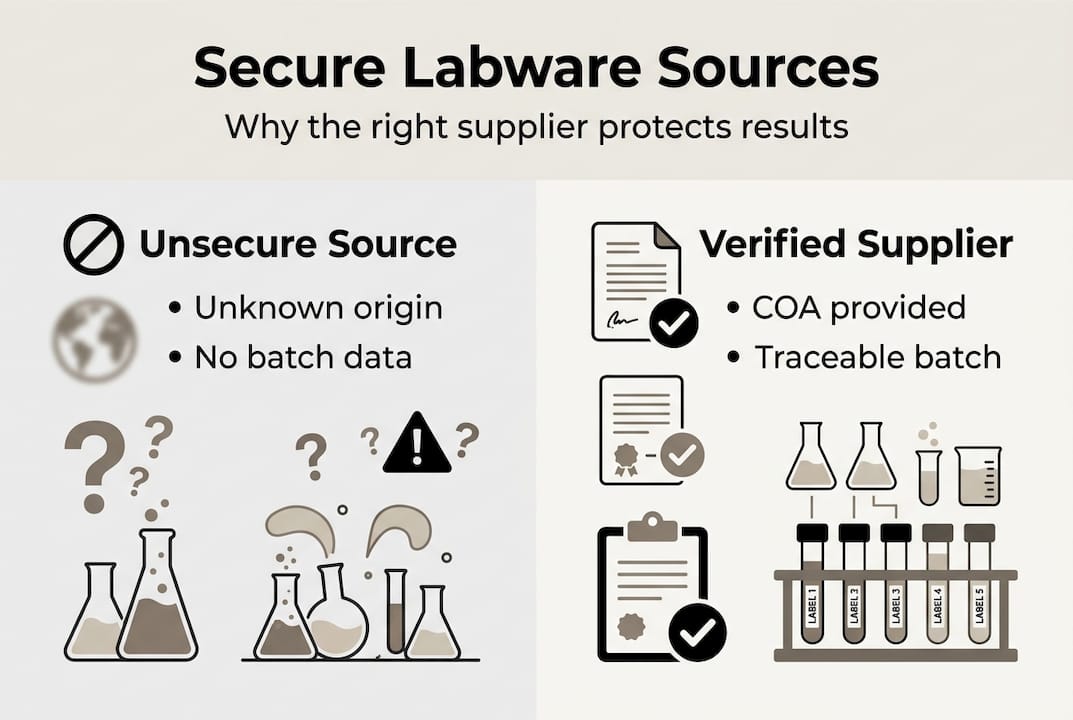
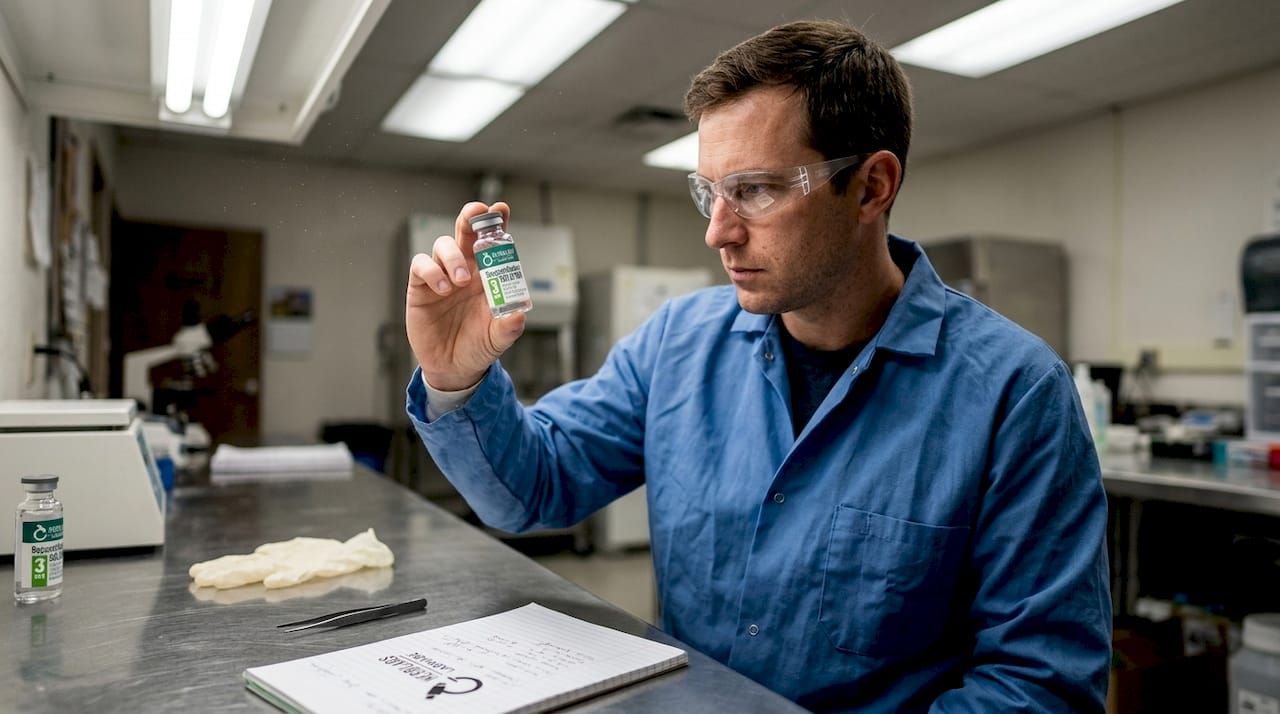
Take bacteriostatic water as a practical example. If you’re reconstituting peptides for research, the sterility and pH stability of your lab-grade bacteriostatic water directly affects your results. A batch sourced from an unverified RUO supplier with no documented endotoxin testing could compromise every reconstitution you perform. Switching to UK-sourced labware from verified suppliers gives you documented purity, faster delivery, and a clear paper trail if anything goes wrong.
Best practices: How to order labware and reagents securely
Knowing the risks and principles is one thing. Having a repeatable process is another. Here’s a step-by-step ordering approach you can apply immediately:
- Research the supplier before ordering. Check for certifications, customer reviews, and whether they publish COAs publicly.
- Request documentation before purchase. Batch-specific COA, safety data sheet (SDS), and any relevant compliance certificates.
- Use secure payment methods. Credit card or verified payment platforms with buyer protection. Avoid wire transfers to unknown vendors.
- Confirm packaging and shipping standards. Cold-chain requirements, tamper-evident seals, and proper labeling should all be confirmed before checkout.
- Inspect on arrival. Check packaging integrity, verify lot numbers against your COA, and document the condition of goods received.
- Store correctly from day one. Follow the supplier’s storage instructions immediately. Improper storage after a clean delivery can still compromise your materials.
Here’s a quick reference table for evaluating key ordering criteria:
| Checklist item | What to look for | Red flag |
|---|---|---|
| Payment method | Secure checkout, buyer protection | Wire transfer only |
| COA availability | Batch-specific, downloadable | Generic or unavailable |
| Packaging quality | Tamper-evident, labeled correctly | Unlabeled or damaged |
| Track and trace | Real-time tracking provided | No tracking information |
Watch for these red flags when vetting any supplier:
- No physical address or contact information listed
- COAs that lack lot numbers or test dates
- Prices significantly below market rate with no explanation
- No returns or replacement policy for out-of-spec products
- Poor labware quality leads to cross-contamination and leaching, so avoid suppliers who can’t verify their manufacturing controls
For deeper guidance, review the guides on essential labware types, the water handling guide, and safe reagent handling to make sure your post-delivery practices match the quality of your sourcing decisions.
Why secure ordering is non-negotiable for small labs and private researchers
Larger institutions can sometimes absorb a contaminated batch. They have backup stock, redundant processes, and teams to investigate failures. Independent researchers and private customers don’t have that buffer. One bad order doesn’t just cost money. It costs weeks of work, the credibility of your data, and sometimes the entire direction of a project.
There’s also an invisible cost that rarely gets discussed: the erosion of trust in your own results. When you’re not certain about your materials, you second-guess every data point. That uncertainty is corrosive. It slows you down and undermines the confidence you need to publish or act on your findings.
The contrarian view here is simple: cutting costs on labware is a false economy. The price difference between a verified supplier and a cheap unregulated one is almost always smaller than the cost of a single failed experiment. Secure sourcing isn’t a premium. It’s the baseline.
Keep purchase records, batch numbers, and COAs organized and accessible. Maintain an ongoing relationship with suppliers who respond to questions and provide documentation without friction. And follow solid lab storage practices to protect the integrity of what you’ve already paid for. The researchers who treat sourcing as seriously as their experimental design are the ones whose results hold up.
Order with confidence: Choose labware suppliers that put your research first
You’ve now got a clear picture of what secure ordering looks like and why it matters. The next step is putting it into practice with suppliers who meet the standard.
At Herbilabs, every product ships with batch-specific documentation, and COA requests are handled as a standard part of the process, not an exception. Whether you need bacteriostatic water for peptide reconstitution or reliable labware options for your next project, you’ll find verified, research-grade products with full traceability in the Herbilabs Shop. Secure ordering starts with choosing the right supplier.
Frequently asked questions
What happens if I order labware from an unverified supplier?
You risk contamination, invalid results, and loss of research investment. Contaminated extraction kits have invalidated entire studies, often without researchers knowing until results were already submitted.
What documents should I request when ordering lab reagents?
Always request a batch-specific Certificate of Analysis, cleaning records, and regulatory compliance certificates. LQMS standards require standardized procedures and secure documentation from all suppliers.
Is ‘For Research Use Only’ (RUO) labeling safe for my experiments?
RUO labeling describes a use category, not a quality standard. RUO products carry minimal regulatory oversight, so always verify documentation and source from EU-compliant suppliers.
How can I check if a labware supplier is secure?
Look for LQMS compliance, REACH certification, batch-specific COAs, and verified payment security. LQMS frameworks emphasize supplier evaluation and standardized purchasing procedures as the foundation of safe sourcing.